
Doctors Discover Large Knife Lodged in Man’s Chest for Eight Years After Hospital Visit for Sore Nipples
The Full Gist

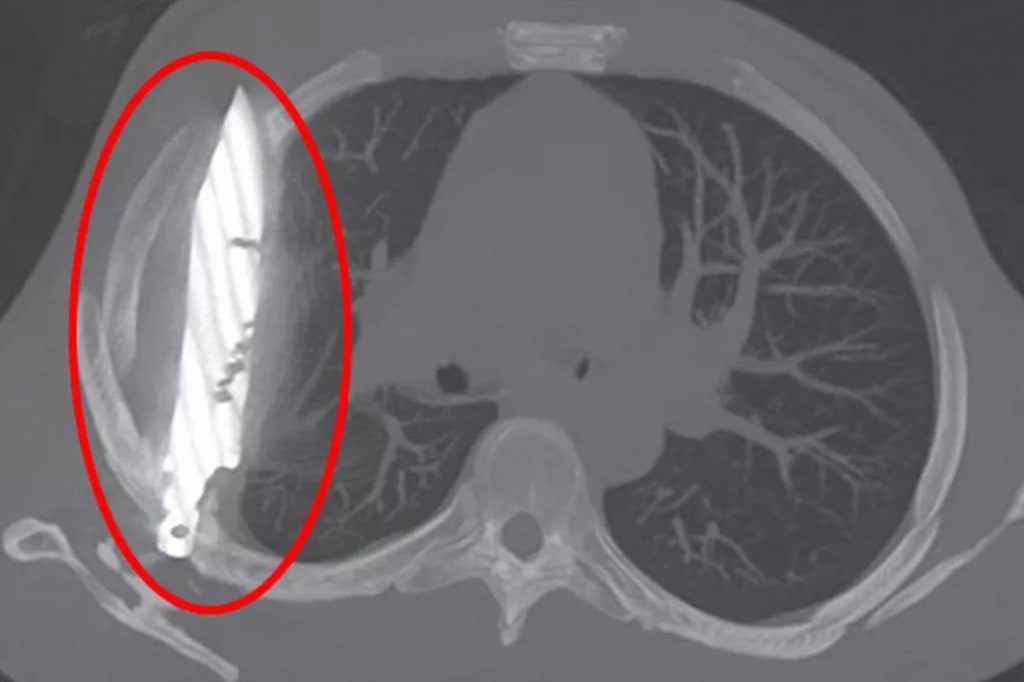
When a man in Tanzania visited the hospital to complain about sore nipples and pus discharge, the last thing doctors expected to find was a knife blade lodged in his chest for eight years. The shocking discovery has since made international headlines and has been reported in the Journal of Surgical Case Reports (July 2025).
This astonishing case demonstrates not only the resilience of the human body but also the unpredictable ways trauma can manifest years after an incident. Let’s dive deep into this incredible story, explore what actually happened, and analyze similar unusual medical cases around the world.
The Unexpected Hospital Visit That Changed Everything
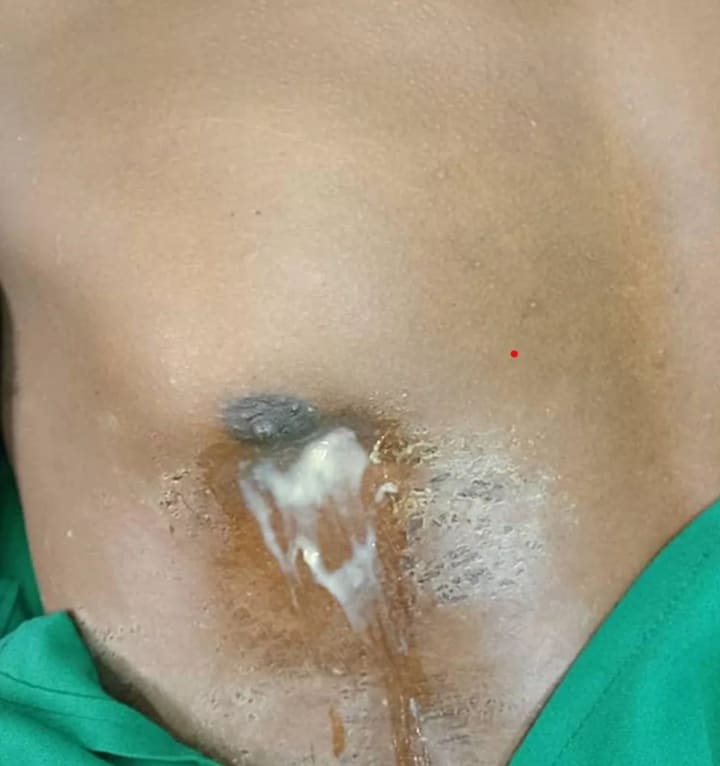
The patient, a 44-year-old man, walked into Muhimbili National Hospital in Dar es Salaam, Tanzania, with what seemed like a relatively minor complaint:
Pus discharge just beneath his right nipple
No chest pain
No difficulty breathing
No fever or cough
Completely normal vital signs
At first glance, this sounded like a case of a simple localized infection. But the sore nipple symptom turned out to be the tip of an iceberg.
How Did the Doctors React?
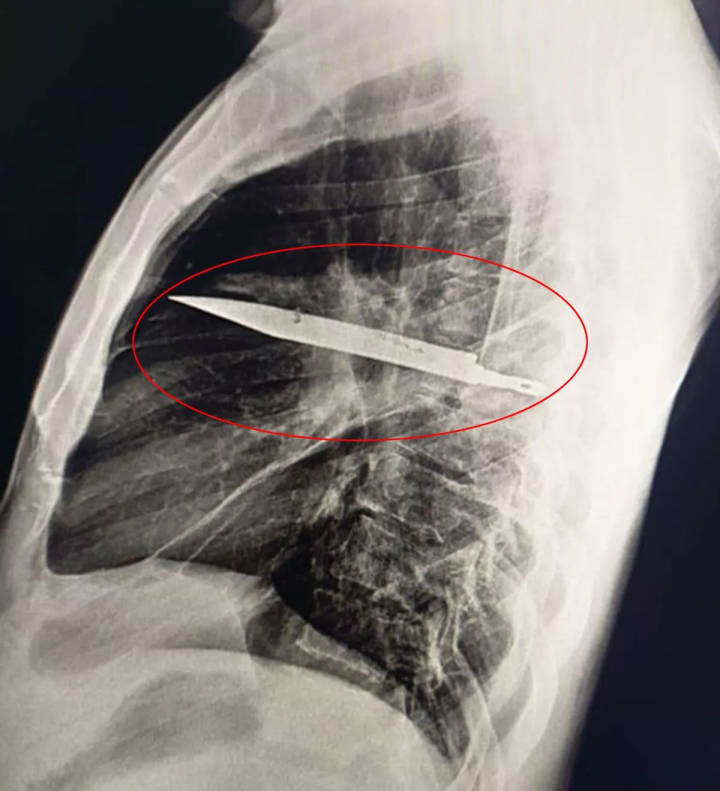
Initially baffled, doctors ran a series of diagnostic tests, including a chest radiograph (X-ray). The results stunned the medical team—there was a large knife blade lodged in the mid-thorax, perilously close to major organs.
The shocking part? The patient had been living without any obvious symptoms for nearly eight years.
The Forgotten Violent Altercation
When questioned further, the man recalled a violent altercation nearly a decade ago. During the fight, he suffered multiple cuts to the:
- Face
- Back
- Chest
- Abdomen
He received medical treatment at the time, but neither he nor his doctors realized that a knife blade had remained embedded in his chest.
Since then, his life had been “uneventful”—until the day he noticed pus coming from beneath his nipple, signaling an infection caused by the dead tissue surrounding the foreign object.
How Did the Knife Not Kill Him?
Most people wonder: How could someone live with a knife in their chest for eight years without even knowing it?
The key lies in the placement of the blade. According to the surgical team, the knife:
Entered through the right scapula (shoulder blade)
Missed major organs, arteries, and the heart
Remained lodged in a way that caused minimal disturbance to surrounding tissues
The body slowly “adapted” to the foreign object, forming fibrous tissue around it, which helped prevent immediate fatal damage.
The Surgery That Saved His Life
Once identified, the surgical team carefully planned a high-risk operation to extract the knife. The procedure involved:
Carefully removing the blade without damaging nearby organs.
Draining pus and infected tissue caused by years of chronic irritation.
Ensuring no internal bleeding or secondary infections developed.
The man was admitted to the Intensive Care Unit (ICU) for 24 hours before being transferred to the general ward. After 10 days of close monitoring, he was discharged in stable condition.
Follow-up reports describe his recovery as “uneventful,” meaning he healed well without complications.
Why Didn’t He Feel Pain for So Long?
The absence of symptoms for eight years raises fascinating questions about human physiology.
Foreign body tolerance: In some rare cases, the body encapsulates foreign objects in scar tissue, reducing inflammation and pain.
Nerve pathways: If the knife avoided nerve-rich areas, the man would not experience sharp or chronic pain.
Adaptation: Over time, the body can “accept” foreign objects until infection develops.
This is a phenomenon sometimes seen in military injuries, where shrapnel or bullets remain undetected for years.
Similar Shocking Medical Discoveries
This case isn’t the first of its kind. Around the world, doctors have reported astonishing discoveries of foreign objects inside the human body years after traumatic events. Here are some examples:
Vietnam War Veteran with Bullet Lodged for Decades
A soldier carried a bullet near his heart for more than 30 years before it was discovered during a routine check-up.
Woman Found with Surgical Scissors in Abdomen
In 2007, a woman in Vietnam complained of abdominal pain, only for doctors to find a pair of surgical scissors left inside her body after a C-section 18 years earlier.
Chinese Man with Knife Blade in Head for 4 Years
A man survived with a 10 cm knife blade lodged in his skull, only discovered after persistent headaches.
Indian Man with 2kg of Metal Objects in Stomach
Doctors removed over 100 nails, bolts, and coins from a man who had swallowed them due to a psychiatric disorder.
These stories highlight the resilience of the human body, but also underscore the importance of comprehensive trauma care and follow-up diagnostics.
Lessons from the Tanzania Knife Case
This shocking case carries several important medical and societal lessons:
1. Never Ignore Unusual Symptoms
Even a seemingly minor issue like pus discharge or nipple pain can signal a deeper underlying condition.
2. Importance of Imaging in Trauma
Had comprehensive scans been done at the time of the original violent altercation, the knife blade might have been discovered immediately.
3. The Body’s Resilience Is Remarkable
The human body has an incredible ability to adapt, heal, and survive even in extreme situations.
4. Follow-up Care Is Crucial
Many trauma patients fail to get long-term follow-up, which can delay the discovery of hidden injuries.
Expert Medical Opinions
Doctors and surgeons commenting on the case highlight several takeaways:
Dr. Amina Said, General Surgeon:
“This is a textbook example of how resilient the body can be. But it’s also a reminder of why thorough examinations and follow-up are critical after major trauma.”
Dr. John Mbele, Radiologist:
“Imaging is vital in trauma patients. What you don’t see could be more dangerous than what you do see.”
Dr. Rachel Kim, Infectious Disease Specialist:
“The infection that finally revealed the knife underscores how the body can quietly harbor foreign objects until bacteria exploit the weakness.”
What This Means for Global Healthcare
Cases like this emphasize the challenges faced by healthcare systems in developing countries, where limited resources sometimes lead to missed diagnoses.
Access to advanced imaging like CT scans or MRIs can be limited.
Violent altercations are common in some regions, making trauma cases frequent.
Follow-up visits are often skipped due to financial or logistical challenges.
This case calls for more investment in emergency trauma care, imaging facilities, and long-term patient follow-up.
Could This Happen Again?
Yes. In fact, similar cases are reported every few years worldwide. While rare, they highlight:
The unpredictable outcomes of penetrating trauma.
The necessity of thorough diagnostic imaging.
The amazing adaptability of human biology.
Conclusion
The story of the 44-year-old Tanzanian man who lived with a knife in his chest for eight years is both terrifying and awe-inspiring. It reminds us that:
The human body is resilient beyond imagination.
Minor symptoms can sometimes mask major issues.
Thorough medical care and follow-up are essential, especially after trauma.
From pus discharge to the shocking discovery of a long-forgotten knife blade, this case is a powerful reminder that in medicine, nothing should ever be taken at face value.
About the Creator
Omasanjuwa Ogharandukun
I'm a passionate writer & blogger crafting inspiring stories from everyday life. Through vivid words and thoughtful insights, I spark conversations and ignite change—one post at a time.
Keep reading
More stories from Omasanjuwa Ogharandukun and writers in Journal and other communities.
Joe Caroff, Creator of the Iconic James Bond 007 Logo, Dies a Day Before His 104th Birthday
The world has lost a quiet creative giant. Joe Caroff, the graphic designer who gave life to one of cinema’s most enduring icons—the James Bond 007 gun logo—has died at the age of 103, just one day before his 104th birthday.
By Omasanjuwa Ogharandukun5 months ago in Journal
The Hour the World Went Quiet
It began with a flicker. Not of light, but of absence. The hum of my devices—the soft chime of messages, the buzz of updates, the endless scroll of curated lives—simply stopped. At first, I thought it was a glitch. I tapped screens. Checked cords. Restarted everything twice. But the silence held.
By KAMRAN AHMAD6 days ago in Journal
How to Succeed at the Benson Directory®
Congratulations and welcome to the Benson Directory® employee #22391! As our newest call handler, you will have the privilege of speaking with dozens of unique and interesting people on a daily basis as well as the opportunity to earn bonuses for high performance. Contained within this handbook you will find a set of ease to follow instructions designed to help you settle in to your new role and begin paving the way to success.
By S. A. Crawford4 days ago in Fiction



Comments
There are no comments for this story
Be the first to respond and start the conversation.