
Do You Really Need a Dedicated Camera and Lens Backpack?
Discover if a dedicated camera and lens backpack is worth it. Learn about benefits, risks, and what to consider before buying.

Introduction
For both novice and seasoned photographers, the question of whether to invest in a dedicated camera and lens backpack often arises. While some may view it as an unnecessary expense, others see it as an essential tool for protecting and organizing their valuable gear. This article explores the benefits and potential drawbacks of using a specialized backpack versus more conventional alternatives, helping you make an informed decision based on your specific needs and circumstances.
Why This Question Arises
Photographers, whether beginners or professionals, often grapple with the decision of investing in a dedicated camera backpack. The primary concerns revolve around cost, necessity, and the perceived benefits over regular backpacks. Additionally, the risks associated with using non-specialized bags, such as inadequate protection and inconvenient access to gear, further complicate this decision.
The Risks of Using Regular Backpacks
Using a regular backpack for camera equipment can pose several risks:
- Regular backpacks lack the padded compartments necessary to protect delicate camera bodies and lenses from impacts and scratches.
- Without custom compartments, gear can shift during transport, leading to potential damage.
- Most regular backpacks are not designed to withstand harsh weather conditions, putting your equipment at risk of moisture damage.
- Quick access to your camera and lenses is often compromised with regular backpacks, which can be cumbersome and time-consuming to open and close.
Key Benefits of a Dedicated Camera and Lens Backpack
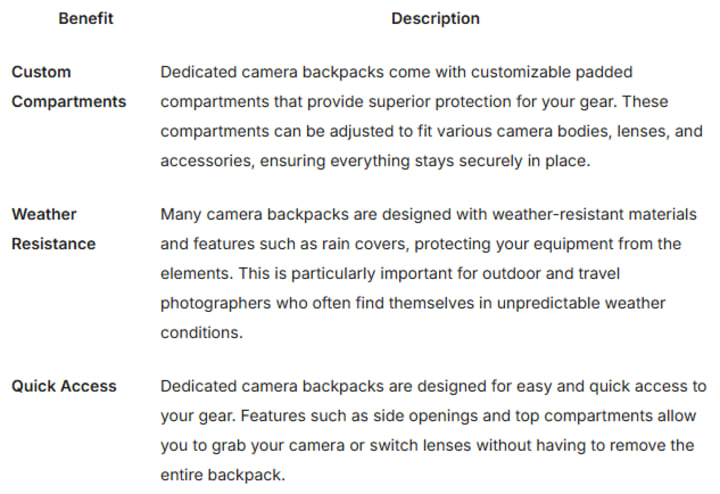
Investing in a dedicated camera and lens backpack offers several advantages that can significantly enhance your photography experience.
Typical Alternatives and Their Drawbacks
While dedicated camera backpacks offer numerous benefits, some photographers may consider alternative options. However, these alternatives often come with their own set of drawbacks.
Hiking or Casual Backpacks: While these backpacks may offer comfort and storage space, they lack the specialized compartments and padding needed to protect camera gear adequately. Additionally, they may not provide quick access to your equipment, which can be crucial in fast-paced shooting environments.
Messenger Bags: Messenger bags can be stylish and convenient for urban photography, but they often lack the necessary padding and organization for camera gear. They can also be uncomfortable to carry for extended periods, especially when loaded with heavy equipment.
DIY Foam Solutions: Some photographers opt to create their own padded compartments using foam inserts in regular backpacks. While this can be a cost-effective solution, it often falls short in terms of convenience, protection, and overall functionality compared to dedicated camera backpacks.
Who Really Needs a Dedicated Camera and Lens Backpack?
Not all photographers will benefit equally from a dedicated camera and lens backpack. Here are some scenarios where investing in one makes the most sense:
Professionals who rely on their gear for livelihoods or those who frequently shoot events will benefit from the organization, protection, and quick access provided by a dedicated camera backpack.
Photographers who often find themselves in rugged environments or traveling to various locations will appreciate the weather resistance and durability of a specialized backpack.
When You Might Skip It
There are situations where a dedicated camera and lens backpack may not be necessary:
Minimalist Setups: If you have a minimalist setup with just one camera body and a single lens, a dedicated backpack may be overkill. A smaller, more compact bag or even a padded insert in a regular backpack might suffice.
Urban or Short-Distance Photography: For photographers who primarily shoot in urban environments or close to home, the need for a specialized backpack may be less critical. A stylish messenger bag or a casual backpack with a padded insert could be a more practical and fashionable choice.
Making the Right Decision for You
When deciding whether to invest in a dedicated camera and lens backpack, consider the following factors:
Budget: Determine how much you are willing to spend. While there are affordable options, premium models often come with additional features and better build quality.
Use Case: Think about where and how you will be using the backpack. If you frequently travel or shoot in challenging environments, a dedicated backpack is likely a worthwhile investment.
Portability: Consider the size and weight of the backpack. Ensure it is comfortable to carry, especially if you plan to use it for extended periods.
Affordable vs. Premium Models: What's Worth It?

Conclusion: Is It Worth It?
In summary, a dedicated camera and lens backpack is a valuable investment for photographers who need superior protection, organization, and quick access to their gear. However, it may not be necessary for everyone, particularly those with minimalist setups or who primarily shoot in urban environments.
For those seeking a more budget-friendly alternative, consider using padded inserts in a regular backpack or opting for a smaller, more compact camera bag. Ultimately, the right choice depends on your specific needs, budget, and shooting habits.
Checklist: What to Look for If You Buy One
When shopping for a dedicated camera and lens backpack, keep the following checklist in mind:
Protection: Ensure the backpack has adequate padding and customizable compartments to protect your gear.
Comfort: Look for ergonomic designs, adjustable straps, and ventilated back panels for added comfort.
Access: Consider backpacks with quick-access compartments and side openings for easy access to your camera and lenses.
Weight: Opt for a lightweight yet durable backpack that won't weigh you down during long shoots or travels.
Modularity: Choose a backpack with modular designs that allow you to customize the interior layout based on your specific gear and needs.
About the Creator
Keep reading
More stories from Susan Scava and writers in Journal and other communities.
Inside the Work of Christian Lingua: A Trusted Christian Translation Agency for Global Ministry
Inside the Work of Christian Lingua: A Global Christian Translation Agency In an increasingly interconnected world, clear and faithful communication across languages has never been more important, especially when it comes to spreading the Gospel. That is where Christian Lingua, a global Christian translation agency, comes in.
By Susan Scava8 months ago in Journal




Comments
There are no comments for this story
Be the first to respond and start the conversation.