
Discovering the Spirit of Chinese New Year: Foods, Traditions, and Celebrations
Celebrate the vibrant traditions of Chinese New Year! Discover the symbolism behind festive foods, the joy of lion and dragon dances, the history of firecrackers, and the tradition of red envelopes in this insightful guide.

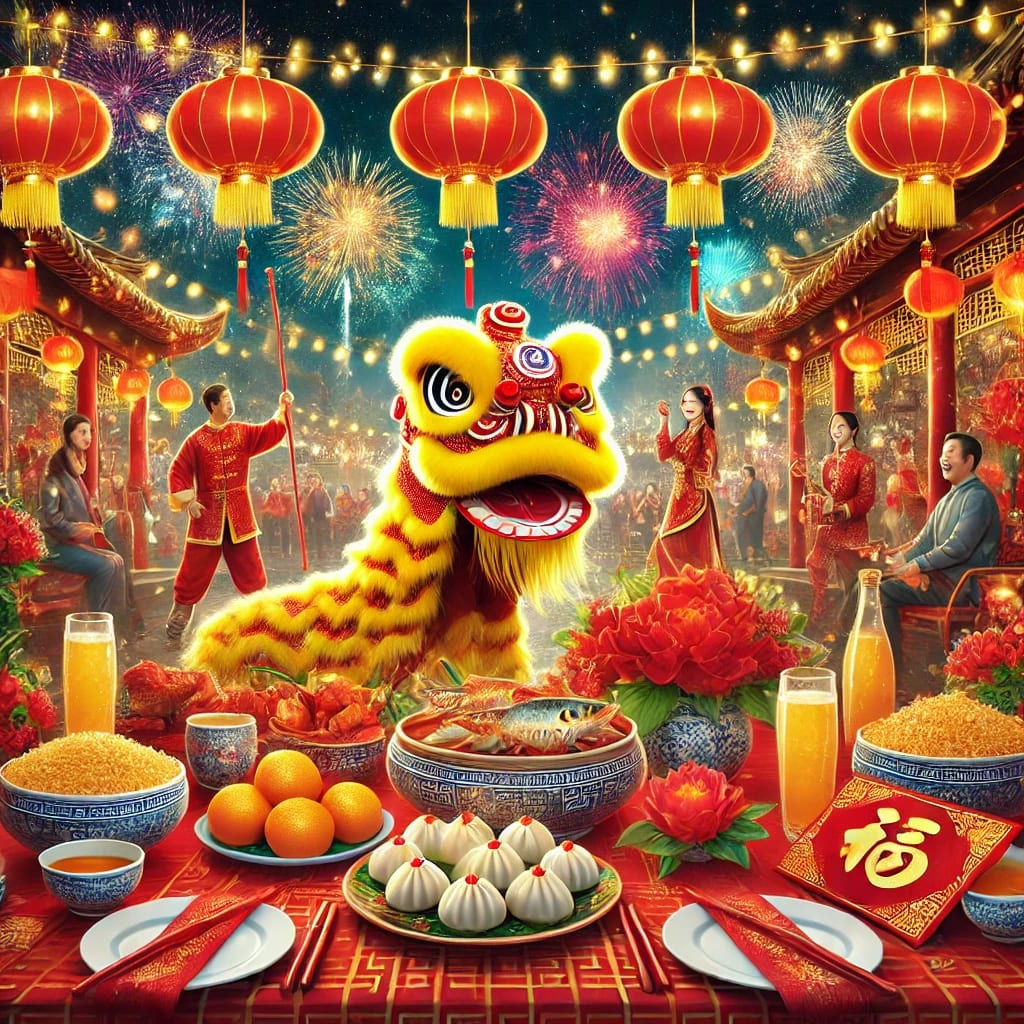
Chinese New Year, also known as the Spring Festival, is one of the most significant cultural celebrations in the world. Marked by vibrant festivities, meaningful traditions, and rich symbolism, this festival unites families and communities. In this article, we’ll explore five key aspects of Chinese New Year: traditional foods and their meanings, how families celebrate around the globe, the captivating lion and dragon dances, the story behind firecrackers, and the cherished red envelopes.
Traditional Chinese New Year Foods and Their Meanings
Food plays a central role in Chinese New Year celebrations. Each dish served during this festive period carries symbolic significance, often tied to prosperity, happiness, and health.
Dumplings (Jiaozi)
Dumplings are a classic Chinese New Year dish, symbolising wealth and prosperity. Their shape resembles ancient Chinese gold ingots, and it’s believed that the more dumplings you eat, the more money you’ll earn in the coming year.
Fish (Yu)
Fish is a must-have on the New Year’s Eve dinner table because the word "fish" in Chinese sounds like “surplus” or “abundance.” Families typically serve it whole to signify unity and a complete year ahead.
Spring Rolls
These golden, crispy rolls represent wealth, as they resemble gold bars. They're a favourite snack during the Spring Festival, especially in Southern China.
Nian Gao (Rice Cake)
This sticky rice cake represents progress and success, as the phrase "nian gao" sounds like “higher year” in Chinese. It's a sweet treat that reflects aspirations for growth.
Mandarins and Oranges
Often exchanged as gifts, these fruits symbolise good fortune and happiness. Their golden colour is also associated with wealth and prosperity.
How Families Celebrate Chinese New Year Around the World
Chinese New Year is not just celebrated in China; it's observed by Chinese communities worldwide. While the traditions may vary slightly, the essence remains the same—family, unity, and hope.
In China
Families gather for a reunion dinner on New Year's Eve, followed by watching the famous CCTV New Year Gala. The festivities continue for 15 days, concluding with the Lantern Festival. Homes are decorated with red couplets, paper cuttings, and lanterns to usher in good luck.
In the United States
In cities like San Francisco and New York, large parades feature lion dances, dragon dances, and cultural performances. Chinatown areas come alive with vibrant celebrations, drawing visitors from around the world.
In Southeast Asia
Countries like Malaysia, Singapore, and Indonesia host grand celebrations with fireworks, street markets, and temple offerings. Families visit each other, exchanging red envelopes and symbolic gifts.
In Australia and Europe
Chinese New Year parades are popular, with fireworks displays and traditional dance performances attracting diverse audiences. Special dishes are served at Chinese restaurants, and families gather to honour their heritage.
No matter where it’s celebrated, the festival remains a time for renewal, hope, and bonding.
Lion Dance vs. Dragon Dance: What's the Difference?
Two of the most iconic performances during Chinese New Year are the lion dance and the dragon dance. While both are spectacular displays of skill and energy, they have distinct differences.
Lion Dance
- The lion dance is performed by two dancers under a lion costume. One controls the head, while the other controls the tail.
- The dance is believed to ward off evil spirits and bring good luck.
- Movements are agile and mimic a lion’s behaviour, accompanied by drums, cymbals, and gongs.
- Often performed at business openings or homes, the lion dance ensures prosperity for the year ahead.
Dragon Dance
- The dragon dance involves a team of dancers holding poles to manipulate a long dragon costume.
- The dragon represents strength, power, and dignity, and the dance symbolises blessings for a fruitful year.
- The dragon is longer and more elaborate than the lion, with movements that mimic the flow of water.
Both dances bring energy and excitement to Chinese New Year celebrations, but they convey different aspects of Chinese culture.
Chinese New Year Firecrackers: History and Safety Tips
Firecrackers are a staple of Chinese New Year, known for their loud pops and vibrant sparks. But where did this tradition originate?
The History of Firecrackers
According to legend, the loud noise of firecrackers was used to scare off Nian, a mythical beast that terrorised villages during the New Year. This tradition evolved into a way to drive away evil spirits and invite good fortune.
In ancient times, bamboo stems were used, which would crackle and pop when set alight. Modern firecrackers, made of gunpowder, add a dazzling visual element to the tradition.
Safety Tips for Using Firecrackers
- Buy from Licensed Sellers: Ensure the firecrackers are from reputable sources to avoid accidents.
- Use Outdoors: Always light firecrackers in open spaces, away from people, animals, and flammable materials.
- Keep Water Nearby: Have a bucket of water or a fire extinguisher on hand in case of emergencies.
- Supervise Children: Ensure children only watch from a safe distance.
- Follow Local Laws: Some regions have restrictions on firecrackers, so be sure to check the regulations.
- Red Envelopes: The Tradition of Giving and Receiving Money
The giving and receiving of red envelopes (hongbao) is one of the most anticipated Chinese New Year traditions. These envelopes, filled with money, symbolise good luck and blessings.
Who Gives and Receives Red Envelopes?
Traditionally, red envelopes are given by married individuals to children and younger, unmarried relatives. Employers may also give them to employees as a gesture of appreciation.
Symbolism Behind the Tradition
The red colour of the envelope represents good fortune and wards off evil spirits. The money inside, no matter the amount, is considered a token of the giver’s best wishes.
Modern Adaptations
In the digital age, e-hongbao has gained popularity. Platforms like WeChat and Alipay allow users to send virtual red envelopes, keeping the tradition alive in a tech-savvy way.
Conclusion
Chinese New Year is a beautiful celebration of heritage, family, and hope. From indulging in symbolic foods to enjoying vibrant performances like the lion and dragon dances, every aspect of this festival is rich in meaning. Firecrackers bring excitement while driving away negativity, and the exchange of red envelopes fosters connections and goodwill.
Whether you're celebrating in China or as part of a diaspora community, the traditions of Chinese New Year remind us of the importance of unity and renewal. So, as you enjoy the festivities this year, remember the stories and meanings behind each tradition—they’re what make this festival truly special.
About the Creator
Minecraft APK Download (Android, Pro Unlocked)
Fast free Minecraft APK Download for Android. Get Minecraft Pocket Edition, mods, and the latest version. Enjoy building and exploring in Minecraft PE. NBS Reborn APK.
Keep reading
More stories from Minecraft APK Download (Android, Pro Unlocked) and writers in Journal and other communities.
Chinese New Year 2025: Celebrating the Year of the Wood Snake
Chinese New Year, also known as the Lunar New Year or Spring Festival, is one of the most significant and widely celebrated festivals in the Chinese calendar. In 2025, Chinese New Year falls on Wednesday, January 29, marking the start of the Year of the Snake, according to the Chinese Zodiac. This guide will walk you through the history, traditions, and ways to celebrate this vibrant festival.
By Minecraft APK Download (Android, Pro Unlocked)about a year ago in Journal
Author’s Advice
If you would’ve asked me 20 years ago did I know I’d become a writer and an author, I would’ve said “nope, ain’t happening”. As fate would have it I did become an author and I can honestly say I’m loving it so far. It really does feel good to be a writer. I’ve learned a lot on this journey and I feel like with even me being as new to this world as I am, there’s some wisdom I need to share with every other aspiring author.
By Joe Patterson5 days ago in Journal



Comments
There are no comments for this story
Be the first to respond and start the conversation.