
Digital Transformation and Its Impact on the Amusement Industry
How Digital Innovation Affect Modern Amusement Parks

Digital Transformation and Its Impact on the Amusement Industry
The amusement industry is entering a new era defined by digital integration, intelligent systems, and data-driven management. As consumer expectations evolve and technology becomes inseparable from daily life, amusement parks and entertainment facilities are embracing digital transformation to enhance safety, efficiency, and guest experience. From automated indoor amusement park equipment to advanced monitoring systems in thrill rides like the swing tower, digitalization is reshaping how the industry operates, innovates, and interacts with audiences.
Digital Infrastructure: Building the Foundation for Smart Operations
Digital transformation begins with infrastructure. The adoption of interconnected networks, intelligent control systems, and cloud-based management platforms forms the backbone of the modern amusement park. Every component of indoor amusement park equipment—from motion sensors to lighting controllers—is now capable of transmitting real-time data. This enables operators to monitor equipment performance, energy consumption, and visitor activity simultaneously.

In large amusement complexes, this infrastructure ensures seamless coordination across multiple zones. Ride queues, ticketing systems, and even temperature regulation can be synchronized and automated through centralized digital dashboards. The result is a cohesive ecosystem where maintenance, energy efficiency, and visitor experience are optimized through data precision rather than manual supervision.
The digitization of operational infrastructure also supports predictive analytics, allowing amusement parks to anticipate demand fluctuations, manage crowd flow, and prevent mechanical failures before they occur.
Smart Equipment and Intelligent Engineering
The new generation of indoor amusement park equipment is designed to be intelligent, adaptable, and self-diagnostic. Embedded sensors measure vibration, load distribution, and power usage during operation. When irregularities are detected, the system automatically alerts technicians or initiates a self-check routine. This minimizes downtime and ensures consistent performance.
For instance, in a high-rise attraction like the swing tower, integrated digital controllers manage ride dynamics in real time, adjusting acceleration and braking patterns based on passenger load and environmental conditions. Such precision not only improves safety but also extends the lifespan of mechanical components.
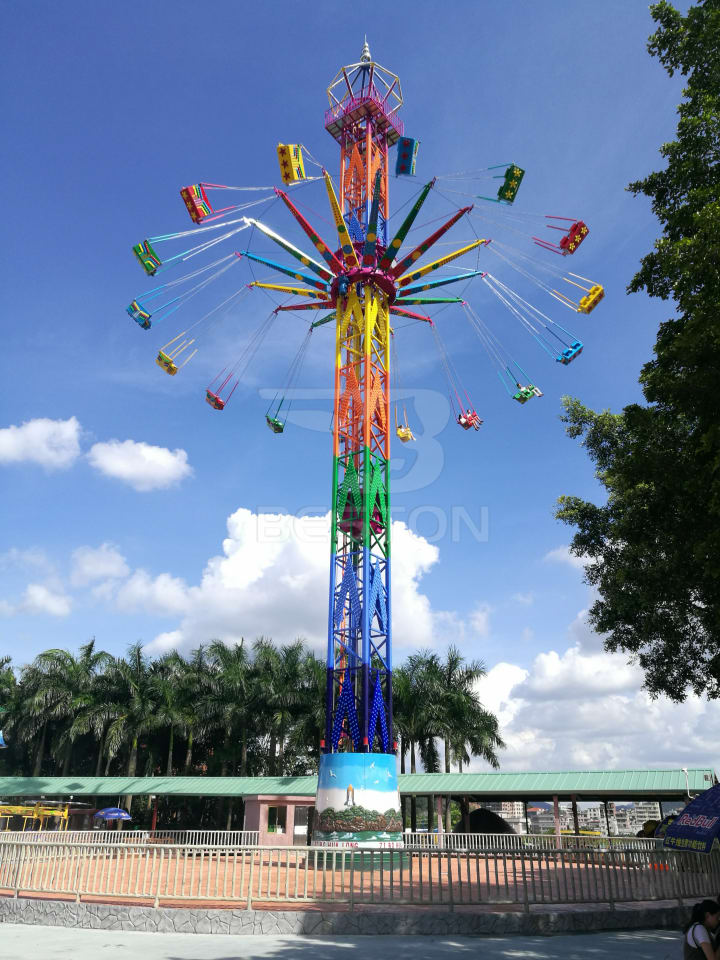
Manufacturers now combine advanced algorithms with mechanical craftsmanship, transforming traditional amusement structures into smart, responsive systems. The transition from mechanical control to digital intelligence marks a major leap toward reliability and sustainability in ride engineering.
Immersive Guest Experience through Digital Interaction
Digital transformation is not limited to backend systems; it directly enhances how visitors experience amusement. Interactive displays, wearable devices, and mobile applications allow guests to personalize their entertainment journey.
Modern indoor amusement park equipment integrates projection mapping, motion capture, and AR/VR interfaces that blur the line between physical and virtual worlds. Riders can interact with themed environments that respond dynamically to their movements and emotions. The swing tower, for example, can synchronize visual effects and surround sound with ride motion, creating an immersive spectacle that evolves in real time.
Through data analytics, parks can also track visitor preferences, enabling customized ride sequences, loyalty programs, and targeted promotions. Digitalization transforms passive spectators into active participants in a continuously adaptive entertainment ecosystem.
Predictive Maintenance and Data Analytics
Data has become one of the most valuable assets in modern amusement operations. Sensors embedded within indoor amusement park equipment collect performance metrics that are analyzed to predict wear patterns, component fatigue, and potential system malfunctions. This proactive approach replaces traditional maintenance cycles with intelligent, condition-based interventions.
For example, a swing tower equipped with vibration and temperature sensors can identify early signs of hydraulic imbalance or motor stress. The digital system then schedules maintenance during low-traffic hours, avoiding unnecessary downtime and reducing operational costs.
Data analytics also supports strategic decision-making. By evaluating ride popularity, wait times, and guest satisfaction scores, operators can optimize layout design and staffing distribution. Over time, this continuous learning process leads to more efficient resource management and better guest retention.
Automation and Operational Efficiency
Automation is the cornerstone of digital transformation in the amusement sector. Ticketing, security, lighting, and queue management systems are increasingly integrated through unified platforms. Within indoor amusement park equipment, automation ensures precise timing, synchronized effects, and controlled motion sequences.
The swing tower, for instance, now employs automated start-up diagnostics and electronic braking systems that minimize human error. Automated safety checks verify every operational parameter before each ride cycle begins. In large parks, autonomous cleaning robots, AI-driven customer support, and contactless payment solutions further streamline operations, reducing labor intensity while enhancing service consistency.
By integrating automation into every operational layer, amusement parks can achieve higher throughput, improved safety compliance, and superior customer satisfaction—all with reduced environmental impact.
Integration of Virtual Technologies
Virtual technologies are transforming the visual and sensory landscape of the amusement experience. Through virtual reality (VR), augmented reality (AR), and mixed reality (MR), traditional attractions gain new dimensions of interactivity.
A VR-enhanced indoor amusement park equipment can transport riders into space, underwater worlds, or historical adventures—all without expanding physical space. Meanwhile, the swing tower can integrate 360-degree panoramic displays and real-time augmented overlays that evolve as the ride ascends and descends.
These technologies not only enhance immersion but also increase repeat visitation, as digital content can be updated regularly. Parks can easily refresh attractions without physically replacing machinery, reducing costs and extending lifecycle value.
Customer Data and Personalized Services
Modern amusement operations depend heavily on digital ecosystems that collect and interpret customer data. Every interaction—from ticket purchase to ride selection—creates a data point that contributes to a deeper understanding of guest behavior.
With indoor amusement park equipment, ride controllers can record participation frequency, dwell time, and engagement level. This information allows operators to design personalized offers, such as tailored discounts or ride recommendations. A visitor who enjoys vertical thrill rides may receive notifications about the swing tower or similar attractions.
Moreover, facial recognition and AI-driven analytics are increasingly applied to enhance guest safety and streamline entry processes. Personalization through data not only improves satisfaction but also builds emotional connection and brand loyalty.
Cybersecurity and Digital Governance
As the amusement industry becomes increasingly digitized, cybersecurity has become a vital concern. The integration of IoT devices, cloud management, and online payment systems exposes new vulnerabilities. Ensuring the protection of customer data and ride control systems is now a top operational priority.
Indoor amusement park equipment connected to centralized control networks must implement encryption protocols and regular firmware updates to prevent unauthorized access. Similarly, the swing tower’s control software is safeguarded by multi-layer authentication and redundant safety systems that maintain operational stability even under digital interference attempts.
Comprehensive digital governance frameworks now guide how amusement facilities collect, store, and process data, ensuring compliance with privacy regulations and maintaining consumer trust.
Future Outlook: From Digital Adoption to Total Intelligence
Digital transformation is not a temporary trend but a continuous evolution. The future of the amusement industry lies in the integration of artificial intelligence, machine learning, and autonomous system design. Intelligent indoor amusement park equipment will self-optimize, learning from every operation to deliver smoother, safer, and more engaging experiences.
Similarly, the next generation of swing tower rides will use AI to adapt motion patterns dynamically to weather conditions, passenger profiles, and real-time feedback. The convergence of data, automation, and intelligent analytics will create amusement environments that are not only entertaining but also self-sustaining and predictive in nature.
As the boundary between technology and emotion continues to dissolve, digital transformation will remain the primary force guiding the industry’s advancement—ushering in an age of precision, efficiency, and endless imagination.
About the Creator
amusementparksolution
Beston Rides - Focus on providing high-quality, customizable amusement rides and offering one-stop amusement park construction services.
Website: https://bestonamusementrides.com/
Keep reading
More stories from amusementparksolution and writers in Journal and other communities.
Human-Centered Design Strategies to Enhance Visitor Safety
Introduction Visitor safety perception is a fundamental determinant of satisfaction and engagement in amusement environments. Beyond structural integrity, human-centered design integrates ergonomics, cognitive psychology, and environmental control to cultivate a sense of security. Attractions such as the crazy mouse roller coaster exemplify how thoughtful design influences both actual and perceived safety. For amusement ride manufacturers, incorporating these principles is essential to meet the dual objectives of operational reliability and guest confidence.
By amusementparksolution5 months ago in Journal
Guard Your Battery
Why are some people so attractive just by standing there? It’s not because they are "likable," but because they don’t need everyone to like them. I realized later that truly charismatic people allow themselves to be criticized, but they never criticize themselves. They never try to please the world; instead, the world stops to watch them.
By Emily Chan - Life and love sharing7 days ago in Poets




Comments
There are no comments for this story
Be the first to respond and start the conversation.