
Designing the Architecture of Control: Incorporating in Lanzo d’Intelvi
How to transform an idea into a company, and a company into control, in the Alpine corridor between Milan and Lugano.

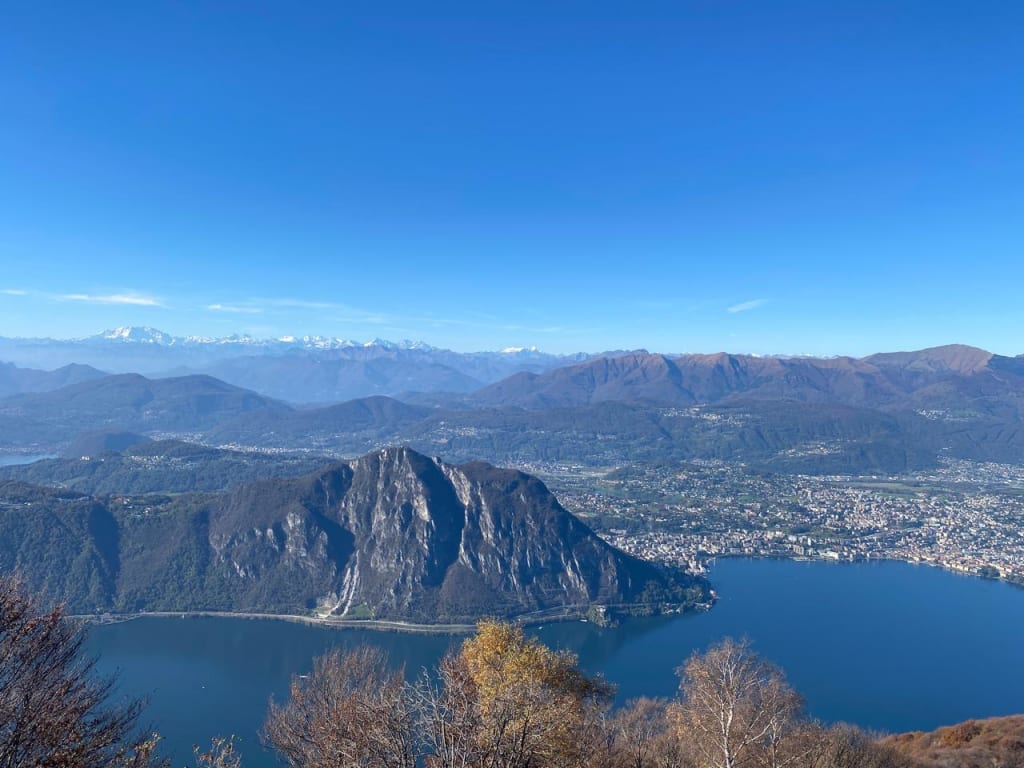
Control is not declared. It is designed.
Before it becomes law, it exists as architecture – a geometry of decisions, jurisdictions, and structures that must be aligned with the same precision that governs a building.
The foundation carries weight.
The load-bearing elements determine resilience. And the address of the structure is never arbitrary.
In recent years, a quiet Alpine town, Lanzo d’Intelvi, has emerged as one of the more interesting places in Europe to anchor corporate structure. It sits between Milan and Lugano, suspended between European Union law and Swiss proximity, between affordability and advantage, between geography and intention.
This article is the continuation of an intellectual arc that began with a simple observation: ownership concentrates risk; structure redistributes it.
In earlier articles, the role of contractual design, jurisdictional alignment, and cross-border corridors was explored individually. Here, they converge.
This article translates philosophy into implementation.
It explores how one might think about incorporating a company in Lanzo d’Intelvi – not as a purely technical act, but as the construction of a legal architecture.
Disclaimer
The content of this article is for informational and educational purposes only. It does not constitute legal, tax, or financial advice and should not be relied upon as such. Laws and regulations differ by jurisdiction and change over time. Anyone considering corporate structuring or cross-border planning should obtain independent advice from qualified professionals in the relevant jurisdictions.
What follows is not a purely theoretical discussion. It is a design framework – a way to translate legal strategy into physical structure. It examines incorporation in Lanzo d’Intelvi not as a mere administrative task, but as the deliberate construction of a controlled, compliant architecture.
1. From Theory to Architecture
Before a company exists, the logic of its existence must be defined. Incorporation is not the first step of structure. It is the consequence of structure. Control does not begin with a registration; it begins with a design. And design begins with intention.
A structure can be understood as an articulation of three elements:
1. a jurisdiction that protects and regulates,
2. a vehicle that holds and organises, and
3. a contract that governs and allocates.
Individually, these elements are inert. Together, when aligned with precision, they can form what might be called a controlled architecture: a legal system whose aim is resilience, continuity, and clarity of decision-making. In such a system, ownership is no longer the sole centre of gravity; governance and design become just as important.
This concept was developed progressively across earlier writings:
• In “A Vehicle for Wealth, Succession, and Asset Protection”, the foundational distinction was drawn between simply holding assets and structuring them. Under both Italian and Emirati legal regimes, regulators often look not only at what is owned but at how it is organised. This is the difference between exposure and insulation – a difference that succession law and civil law can, when used properly, support and recognise.
• In “A Contract Does What Accounting Can’t”, the contractual layer was examined. Accounting describes what has happened; contracts define what must happen. The autonomy granted to contracting parties under EU private law and the UAE Civil Code allows control and risk allocation to be embedded in agreements long before any accounting entry exists. The contract becomes the first expression of structure.
• In “The European Soul, the Emirati Shield”, the geographical logic appeared: Europe offers legal depth, jurisprudence, and institutional continuity; the United Arab Emirates offers operational speed, relatively low taxation, and regulatory clarity. The two together can create a duality that is structurally stronger than either alone, when used transparently and in compliance with local rules.
• In “From the Alps to the Gulf”, the discussion turned to geo-economic corridors. Cities are not isolated markets; they are nodes. Milan, Zurich, and Dubai form a triangle of legal, financial, and operational flows. The role of Lanzo d’Intelvi, centred between Milan and Lugano, becomes legible only when this corridor is understood.
• Then, in “Milan to Lugano: The Hidden Corridor”, the focus narrowed to the micro-geography: the Alpine ridge between Italy and Switzerland does not separate; it connects. It is in this narrow corridor that control becomes portable, banks become reachable, and jurisdictions become complementary rather than competitive.
• Finally, “Owning Nothing, Controlling Everything: The Lanzo d’Intelvi IP Holding Model” crystallised the principle: ownership is a posture; structure is a strategy. Intellectual property, when placed in a well-designed entity within a coherent jurisdiction, becomes one of the clearest examples of how legal design can influence control, risk allocation, and long-term resilience.
Taken together, these articles form an ascending argument:
• control can be engineered, not improvised;
• geography can function as a legal instrument; and
• the structure one builds heavily influences the protections and obligations one ultimately lives with.
The present analysis marks the shift from conceptual to physical.
From principle to execution.
From architecture on paper to architecture in law.
In legal systems across Europe, the UAE, and Switzerland, form often follows intention. Contractual autonomy, corporate governance statutes, conflict-of-law rules, and treaty networks all contribute to the reality that the structure designed before incorporation shapes what the entity becomes after incorporation.
Design precedes construction.
Incorporation is simply the proof.
2. Why Lanzo d’Intelvi: The Alpine Seat of Structure
Not every jurisdiction can support a sophisticated structure. Many can host companies. Fewer can sustain enduring control and governance without unnecessary friction.
Lanzo d’Intelvi is one of the places where these elements can be thoughtfully combined. It is a location where the ideas behind “owning nothing and controlling everything” can be applied in a way that remains compatible with European law and regulatory expectations.
A structure is only as strong as the jurisdiction that hosts it.
A company expresses its design only when the legal environment recognises governance, compliance, and intention – not just balance sheets. Lanzo d’Intelvi is one of the European locations where this principle can be meaningfully implemented.
Its coherence rests on four characteristics.
2.1 A Location Between Power Centres
Lanzo sits between two cities whose strengths do not overlap but complement each other.
• Milan is Italy’s corporate and legal capital – where the notarial system is dense, commercial courts are active, major law firms are concentrated, EU-compliant corporate governance is implemented, and commercial gravity consolidates. Milan gives a structure its legal gravitas and institutional backbone.
• Lugano is Switzerland’s southern financial interface – a centre defined by disciplined anti-money-laundering practice, conservative banking culture, cross-border regulatory expertise, and asset-management precision. Lugano gives a structure financial credibility and access to a respected banking ecosystem.
Lanzo d’Intelvi sits between them:
• a midpoint that links both without inheriting all their burdens;
• a legal anchor between two regulatory systems;
• a structural equilibrium between finance and law.
This is not just geography.
It is geometry – a geometry of access, influence, and intention.
2.2 EU Law with Swiss Proximity
A company incorporated in Lanzo as an Italian limited liability company (commonly known in Italy as an S.r.l.) benefits from:
• the protection of the Italian Civil Code;
• recognition under EU rules on freedom of establishment;
• the case law of the Court of Justice of the EU, which restricts unjustified barriers to cross-border corporate mobility;
• access to EU intellectual-property and trademark systems; and
• relatively predictable regulatory evolution within the EU framework.
At the same time, Lanzo is only minutes from the Swiss border.
This creates a form of jurisdictional balance:
• EU protection with Swiss proximity;
• no need to be a Swiss company to work with Swiss financial institutions;
• full ability to interface with them when substance and compliance are in order.
Italian company law protects governance rights even where asset accumulation is limited, while Swiss financial institutions are primarily concerned with legitimacy, transparency, and substance. Where those factors are present, an EU company can be regarded as a credible counterparty.
In this configuration:
• Italian law can protect the controller through corporate-law tools;
• Swiss systems can validate the structure through banking and compliance;
• EU law can protect mobility and recognition across Member States.
All of this, however, must rest on transparency, documentation, and proper adherence to local rules.
2.3 Rational Real-Estate Economics
Lanzo’s real-estate market, with average prices around €2,000 per square metre, reinforces the structural logic.
• Presence becomes affordable.
• Substance becomes rational.
• Anchoring becomes economic.
Owning or leasing premises in Lanzo allows the company to establish:
• a physical nexus recognised in substance assessments;
• an office or mixed-use space without distorting capital allocation;
• a stable, low-cost presence that enhances credibility.
The registered office is no longer just a line in the corporate register. It becomes a jurisdictional anchor, consistent with a governance-oriented structure that prioritises stability over prestige.
Presence in Lanzo is not ornamental.
It can function as legal substance, recognised under both Italian and EU rules.
2.4 A Quiet Jurisdiction
Lanzo d’Intelvi is not a commercial centre, and it does not attempt to become one. That restraint is part of its structural appeal.
Control benefits from jurisdictions that are:
• predictable,
• administratively stable,
• slow to change, and
• resistant to sudden political shocks.
It benefits from environments where the legal system evolves gradually, where institutions prioritise continuity over spectacle, and where governance is shaped by codified law rather than by shifting economic fashion.
Lanzo d’Intelvi offers this kind of legal quietness: a consistent jurisdiction that does not market itself aggressively or constantly reinvent its rules. Strong structures are rarely anchored in places that compete for attention. They are built in jurisdictions that operate steadily in the background, where silence often signals stability.
In corporate architecture, noise can be risk.
Lanzo d’Intelvi’s quietness is a form of protection.
Control is often best placed in locations that do not compete to be seen – and Lanzo d’Intelvi is one of those locations.
3. Designing the Legal Geometry
Incorporation is not the beginning of the structure. It is the moment when the underlying design becomes visible – the point at which intention crystallises into legal form.
A company is never the structure itself; it is the expression of a structure that has already been conceived. The architecture is drawn long before the notary signs, because an Italian limited company is not a starting point but a result.
Before incorporating in Lanzo, the geometry of the system must be defined with precision. A controlled structure is not assembled from administrative steps but from the alignment of legal roles across jurisdictions:
• what governs,
• what executes, and
• what anchors.
This geometry determines:
• how value flows,
• how risks are allocated, and
• how control is separated from day-to-day operations.
Only once this framework is coherent does the company truly serve its purpose.
Three layers form this architecture, each with its own legal function and each dependent on the others.
3.1 The Ownership Layer: Legally Limited, Structurally Minimal
In many civil-law systems, ownership is not the strongest legal position; it is often the most exposed one.
Italian law limits shareholder liability in a limited-liability company to the amount of their contribution, except in specific situations where formalities are not respected. The law protects the company’s legal personality first; the owner is protected when contributions are properly made and disclosures are properly filed.
This reveals a key asymmetry:
• ownership creates visibility and potential exposure;
• governance creates control and direction.
For this reason, in a carefully designed structure, the ownership layer is intentionally minimal. It exists because the legal system requires owners, not because control requires direct personal possession.
The company does not draw its strength from what the shareholder holds personally. It draws strength from what the company governs institutionally.
Italian doctrine reinforces this separation: governance rights – such as voting rules, appointment of managers, and profit-distribution mechanisms – can be structured in a way that is insulated from many of the shareholder’s personal circumstances.
Ownership carries the legal burden.
Governance carries the steering wheel.
A structure that intends to endure often keeps the ownership layer light, quiet, and strategically simple. The law allows it. The architecture benefits from it.
3.2 The Operational Layer: UAE as the Execution Jurisdiction
If Lanzo is the seat of control, the United Arab Emirates can serve as the engine of execution.
The UAE is built for operational speed, contractual clarity, and commercial efficiency. The foundation of this environment lies in how its Civil Code treats contracts – not only their formation, but their interpretation.
• One core provision states that the basic principle in contracts is the consent of the parties and what they have committed to do. The starting point is the agreement itself.
• Another clarifies that the interpretation of contracts should focus on intentions and meanings, not merely on words or form. Terms are read by reference to their true meaning rather than superficial wording.
Together, these ideas mean that the UAE is highly receptive to well-drafted contracts and cross-border arrangements, so long as mandatory rules are respected.
Free-zone regimes reinforce this logic. They allow companies to operate in an asset-light, revenue-focused way without the same administrative burdens found in many European jurisdictions. UAE company-law rules support variation in corporate governance, profit allocation, and managerial authority. Establishing substance – through leased space, employees, or outsourced arrangements – is feasible and often cost-effective.
The UAE does not need to be the centre of long-term control. It is naturally suited to be the centre of execution.
This aligns well with a structure in which governance resides in Lanzo d’Intelvi: the UAE entity delivers services, generates revenue, bears operational risk, and interfaces with clients, while remaining contractually framed by the architecture defined by the Italian holding company.
In a system built for balanced control and execution:
• the UAE executes;
• Lanzo d’Intelvi governs.
3.3 The Control Layer: Lanzo as the Structural Core
The company in Lanzo d’Intelvi is not merely a holding vehicle. It is the structural core of the entire arrangement.
Italian law provides the tools. The limited-liability company form allows sophisticated internal governance without the complexity of a public company. The law grants broad discretion in defining:
• managerial powers,
• decision-making procedures,
• reserved matters, and
• voting thresholds.
This makes the Lanzo company particularly well suited to centralise control in a tailored, precise way.
It can:
• hold intellectual property (trademarks, software, licensing rights, digital assets);
• grant licences to the UAE operating company under contracts governed by Italian law;
• own real estate in Lanzo to strengthen substance;
• define intercompany pricing and flows;
• set governance rules that bind the entire system.
Swiss financial institutions, operating under Swiss company-law rules and accounting standards, typically evaluate structures based on substance, governance, and cross-border legitimacy. A Lanzo-based company that is properly anchored, transparent, and well governed can fit neatly within these expectations.
In that sense, Lugano becomes the financial interface: it validates – rather than replaces – the architecture built in Lanzo and implemented through the UAE.
In this tri-jurisdictional system, each entity performs a distinct legal function:
• The UAE company is the engine: revenue-generating, client-facing, operationally agile.
• The Lanzo company is the architecture: governance-driven, contract-anchored, legally insulated.
• Switzerland is the interface: compliance-oriented, reputation-enhancing, financially disciplined.
The Lanzo company does not need to be large. It needs to be deliberate.
A company is not just a vehicle.
It is a geometry.
And in this geometry, Lanzo d’Intelvi is the point where control becomes structural.
4. Step-by-Step: How to Incorporate in Lanzo d’Intelvi
The incorporation process in Lanzo d’Intelvi reflects the same precision that defines the architecture of control itself. Every step carries structural meaning, because the company is not being formed as an isolated legal shell, but as the central element of a wider cross-border system.
Step 1 – Choose the Legal Form
The ideal structure is an Italian limited liability company.
Although the law allows a symbolic minimum capital of one euro, a paid-in capital of around €10,000 is generally advisable to satisfy banking expectations and signal stability.
The limited-liability form is flexible:
• management can be centralised or distributed,
• decision-making can be tailored,
• liability of owners is limited to their contribution (if formalities are respected).
Simplified variants exist, but they tend to be less flexible from a governance perspective. In a structure designed for control, form matters, and the standard limited-liability company is usually the better tool.
Step 2 – Establish the Registered Office
Every Italian company must have a legal address – a registered office that forms part of the company’s legal identity. In some countries this is a formality; in Italy, it is more than that.
In Lanzo d’Intelvi, the registered office can be established through:
• ownership of property,
• a long-term rental agreement, or
• a domiciliation service.
Lanzo’s real-estate market, at around €2,000 per square metre, allows the registered office to be more than a compliance requirement. It becomes a physical anchor that supports substance, economic presence, and jurisdictional legitimacy.
Local building rules in many residential blocks also tend to allow quiet, non-disruptive professional use of apartments. This makes it feasible for the company’s registered office to be located in an ordinary apartment, provided use remains compatible with residential purposes – a rare alignment between real-estate rules and corporate needs.
In Lanzo d’Intelvi, the registered office is not symbolic.
It is juridical, economic, and structurally coherent.
Step 3 – Draft the Articles of Association
The Articles of Association are the spine of the company. They:
• define the allocation of power,
• set out the logic of decision-making, and
• describe the structure of governance.
Italian contract law allows broad autonomy, within legal limits, for the parties to decide how their internal arrangements will work. The Articles can specify:
• powers of directors and managers;
• rights of shareholders;
• matters requiring special majorities;
• thresholds for approval;
• rules for transfer of shares or quotas;
• mechanisms for distributing profits.
These are not purely technical clauses. They are legal engineering. The long-term resilience of the company depends less on its initial balance sheet than on the precision of this document.
Step 4 – Sign Before a Notary
Italian corporate law gives notaries a central role in ensuring the integrity of company formations.
The incorporation deed, signed before a notary, is:
• a verification process,
• a check that legal requirements are met, and
• a formal certification of the Articles of Association.
Once executed, the notary registers the company with the Italian business register and the Chamber of Commerce of Como–Lecco. At that moment, the company acquires its own legal personality and can enter into contracts, own assets, and operate.
Step 5 – Obtain Tax Code and VAT Number
After registration, the company receives:
• a tax identification number (equivalent to a fiscal code); and
• a VAT number, if its activities require VAT registration.
This step completes the company’s interface with the Italian tax system. Once both numbers are in place, the company is fully operational under Italian law and recognised for EU tax and reporting purposes.
Step 6 – Open a Bank Account
Banking completes the functional structure.
Italian banks such as Intesa Sanpaolo (with a branch in nearby San Fedele Intelvi) and UniCredit are familiar with Italian limited-liability companies and generally ask for:
• corporate documents,
• information on the business model, and
• evidence of substance and governance.
Switzerland adds a second layer. Swiss banks may accept an Italian company when the structure has:
• a clear purpose,
• transparent ownership,
• proper accounting, and
• real substance.
Swiss company-law rules require accurate, transparent accounts and a clear picture of the company’s financial situation. Compliance departments therefore assess how the structure is built, not just its size.
Step 7 – Accounting Setup
Every Italian company must maintain formal accounts and prepare annual financial statements.
An Italian accountant–tax adviser will typically:
• set up the accounting system;
• ensure VAT compliance, where applicable;
• manage payroll, if there are employees;
• prepare and file annual financial statements.
In Italy, proper accounting is not merely a technical obligation. It is part of the company’s legal architecture. Financial statements become the official record of the company’s life and carry evidential weight in litigation, banking, and cross-border dealings.
Correct accounting transforms the company from a legal shell into a fully recognised corporate body.
5. Integrating Real Estate and Intellectual Property
A structure becomes truly powerful when the legal architecture is supported by assets that reinforce its purpose.
In a system built on control rather than sheer accumulation, the key question is not what the company owns, but why it owns it – and how that ownership contributes to the overall geometry.
In Lanzo d’Intelvi, two categories of assets fit particularly well: real estate and intellectual property.
5.1 Real Estate
Lanzo d’Intelvi’s real-estate market, at approximately €2,000 per square metre, operates at a level that makes ownership strategically rational rather than burdensome.
In many European cities, owning property through a company can be an unnecessary weight. In Lanzo d’Intelvi, it can become part of the architecture.
Real estate provides:
• a stable presence;
• a fixed point of legal connection;
• evidence of substance that courts and tax authorities recognise.
It supports the company’s standing in EU substance assessments and makes its jurisdictional link harder to challenge.
Because local building rules often allow non-disruptive professional use of residential units, the company’s registered office can often be located in an ordinary apartment, without needing a separate commercial building. This is an unusually efficient alignment between property rules and corporate needs.
In a civil-law context, where physical presence often carries legal meaning, real estate becomes more than an asset.
It becomes legitimacy.
5.2 Intellectual Property
If real estate anchors the company physically, intellectual property (IP) anchors it strategically.
When IP is held in a Lanzo-based company, that entity becomes the control hub of the entire architecture. Unlike physical assets, which depend on location, IP derives its value from legal rights – and those rights can be centralised and managed with care.
Examples include:
• trademarks,
• software,
• licensing rights, and
• digital assets.
Once these rights are held in Italy, they benefit from:
• protection under Italian law,
• recognition within the EU framework, and
• the stability of a jurisdiction that takes private-law contracts seriously.
The key advantage appears when these rights are licensed to the UAE operating company. Italian contract law allows parties wide freedom to define their terms, so long as they stay within the bounds of legality and legitimate interests.
Licensing agreements then become the channels through which value flows:
• the UAE company operates, serves clients, and generates revenue;
• the Lanzo company owns and licenses the IP that makes those operations possible;
• Switzerland provides a disciplined banking and compliance environment to support the cross-border flows.
In this configuration, IP is not a mere technical asset.
It is the structural heart of the architecture – the element through which control becomes legal, durable, and enforceable.
6. The Milan–Lugano–Dubai Corridor
A structure is only as strong as the jurisdictions that compose it.
Most companies live inside a single legal environment. True architectures of control operate across several, not by accident, but by design.
Lanzo d’Intelvi sits at the centre of one of the most strategically coherent corridors in the modern economy – a tri-jurisdictional axis where each city contributes a different form of power.
• Milan provides legal gravitas: the authority of courts, notaries, and commercial institutions that form the backbone of Italy’s corporate framework. It is where governance rules are drafted and where corporate identity is rooted. Milan gives the structure its law.
• Lugano provides financial legitimacy: disciplined banking, conservative compliance, and cross-border sophistication. Lugano does not replace EU law; it reinforces it by validating the structure through Swiss expectations. Lugano gives the structure its financial credibility.
• Dubai provides operational efficiency: speed, contract-driven business, free-zone flexibility, and commercial dynamism. Dubai produces revenue, executes contracts, and carries operational risk. Dubai gives the structure its velocity.
Lanzo d’Intelvi, quiet and intentional, becomes the point where these forces meet. It carries none of the burdens of Milan, Lugano, or Dubai individually, yet it benefits from each of them.
Lanzo d’Intelvi is not the financial engine, not the commercial hub, not the legal metropolis – and that is precisely why it can become the seat of architectural control.
It is the neutral centre where governance can be placed without distortion.
What emerges is not just a company, but a system.
A geometry.
A design in which each jurisdiction plays a role and none overwhelms the others.
Milan gives the system its law.
Lugano gives it its credibility.
Dubai gives it its momentum.
Lanzo d’Intelvi gives it its architecture.
When aligned, these four points do not form a map.
They form a strategy.
7. The Architecture of Controlled Ownership
Incorporation is not administration.
It is not just paperwork, registration, or compliance for its own sake.
Incorporation is architecture: the moment when an idea becomes a legal structure and intention becomes enforceable reality.
Most companies are created simply to exist. A Lanzo d’Intelvi company, when designed with intention, can be created to govern.
A company incorporated in Lanzo d’Intelvi is not defined only by the inventory of its assets, but by the geometry of its influence. Its strength lies in how it allocates rights and responsibilities, not merely in what it accumulates.
It is the physical manifestation of a series of decisions:
• to place governance in a jurisdiction that values stability;
• to place execution in a jurisdiction that values speed and contractual clarity;
• to place financial interface in a jurisdiction that values discipline and credibility.
Law, geography, and intention meet here – not by coincidence, but by design.
Control is not a posture.
It is not a marketing label.
Control is a structure – a legal and territorial architecture that determines how rights flow, how assets are insulated, how decisions are made, and how value is protected and reported. It is built through contracts, jurisdictions, and governance, not through ownership alone.
Ownership can be challenged, taxed, questioned, or misunderstood.
Control, when lawfully and transparently structured, tends to be more resilient.
When designed correctly, a Lanzo d’Intelvi company does not simply exist within the law; it uses the law as material. It draws from Italian governance rules, EU corporate mobility, Swiss financial discipline, and UAE operational efficiency to form a structure that can be stronger than any single jurisdiction could provide on its own.
This is what may be called the architecture of controlled ownership:
• a system where the company is not the goal but the instrument;
• where the jurisdiction is not merely a location but a strategic position;
• and where incorporation is not the end of the process,
but the beginning of control – exercised within the boundaries of the law.
When aligned with intention, such a structure can become one of the most durable assets in a person’s or family’s planning – not because it is invisible, but because it is coherent.
It endures not by accident,
but because it was designed to endure.
Originally published on my LinkedIn newsletter, The Quiet Advantage.
About the Creator
Maroun Abou Harb
As a Corporate & Commercial Counsel, I design legal and corporate structures that allow founders, investors, and family offices to protect, scale, and control their assets across borders.
Keep reading
More stories from Maroun Abou Harb and writers in Journal and other communities.
The goals I did not achieve
Every writing goal I made for the year is a wash. It has been this way for a while, but I think it's important to be open about my failures and the reality of how life can get in the way. This is especially true considering the several times I have posted on Vocal about my writing goals, how I was changing my approach, and where I was hoping to be for the upcoming year. I will probably do that again in a couple months, but for now, it is time to acknowledge where I am today.
By Kay Husnick23 days ago in Journal
How AI Is Reshaping the Future of Software Development
Artificial intelligence is no longer an experiment running in parallel to engineering. It has moved directly into the production pipeline. For modern software development companies, AI is changing how code is written, tested, secured, and evolved. This shift is not cosmetic. It is structural. Businesses that treat AI as a feature will fall behind those that redesign their development model around it.
By Alice Carry4 days ago in Journal




Comments
There are no comments for this story
Be the first to respond and start the conversation.