
Designing Engaging Rides for Children’s Interactive Museum Areas
Integrating Themed Amusement Rides to Enhance Educational Engagement in Children’s Museum Spaces

Creating a compelling and educational experience for children within a museum setting requires more than exhibits and placards. The integration of thoughtfully engineered amusement rides—tailored specifically for younger audiences—transforms passive observation into active engagement. When conceptualized with care and precision, ride installations within children’s interactive zones can become not just highlights, but pivotal tools in cognitive development and imaginative exploration.
Purpose-Driven Design Philosophy
At the core of successful ride implementation in a museum lies the synergy between entertainment and education. Ride design in this context is not about thrills or speed, but about narrative immersion, safe interaction, and developmental appropriateness.
Designing for children necessitates a deep understanding of sensory processing, spatial awareness, and emotional responses. Rides must cater to varying age groups, from toddlers with nascent motor skills to older children capable of abstract reasoning. Interactive areas demand ride installations that are inherently intuitive—encouraging tactile exploration, repetitive play, and peer collaboration.
Ride Types: Interactive and Thematic Integration
Two primary categories of rides lend themselves well to museum settings: rotational rides and motion simulation attractions. Among the rotational formats, the carousel the quintessential option.
Carousel Integration in Museum Spaces
A carousel is more than a nostalgic centerpiece. With its gentle rotation and sculptural elements, it can be a canvas for storytelling. Instead of traditional horses or jungle animals, ride designers might opt for figures that represent key aspects of the museum's subject matter—prehistoric creatures in a natural history museum, celestial bodies in a science center, or artistic motifs in a fine arts museum.
Choosing a carousel for sale involves evaluating footprint dimensions, power requirements, user capacity, and customization capabilities. Museums benefit from compact models with low platform heights and silent motor systems, reducing sensory overload for children with sensitivities.
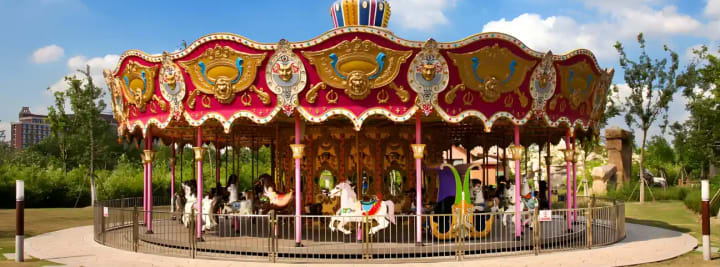
Interactive elements such as embedded audio buttons, rotating steering wheels, or responsive lighting can deepen the engagement. Moreover, material choices—hypoallergenic finishes, rounded edges, antimicrobial coatings—play a vital role in long-term usability and safety.
Pirate Ship Amusement Ride as a Narrative Vehicle
For more adventurous themes, a pirate ship amusement ride offers narrative potential that surpasses simple motion. When adapted to museum contexts, such a ride can be scaled down and themed to explore historical exploration, maritime navigation, or literary fantasy.
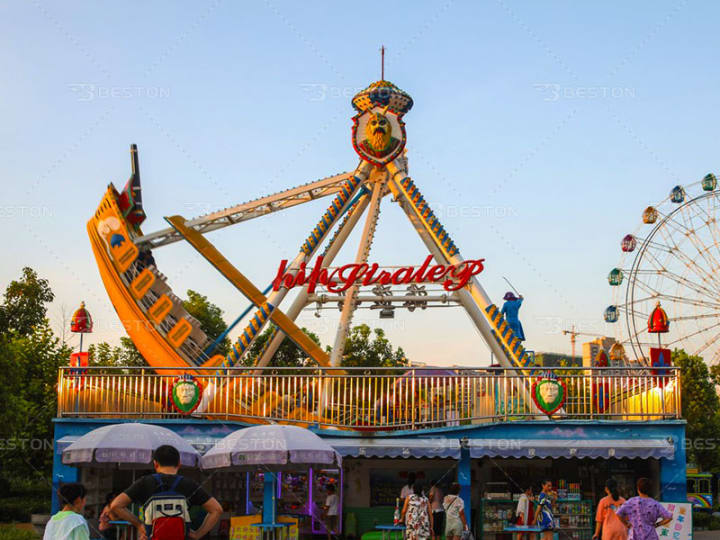
Unlike its theme park counterpart, a museum-integrated pirate ship amusement ride may limit its swing range and passenger load, prioritizing story immersion over thrill. Dynamic soundscapes, interactive control panels, and embedded visual projections can turn the ride into a simulation of sea voyages, complete with educational touchpoints about geography, trade routes, or folklore.
The ship’s physical design should echo the aesthetic language of the museum—whether it's a sleek, stylized form for a contemporary science museum or a wood-textured, weathered finish for a historical site. The goal is integration, not intrusion.
Spatial Considerations and Flow Dynamics
Space planning is paramount. Children’s interactive zones require clear lines of sight, soft barrier demarcations, and generous buffer zones for strollers and caregivers. Rides must be positioned to avoid obstructing foot traffic or overshadowing smaller activity zones.
Ride orientation should encourage curiosity from a distance while rewarding closer inspection. For instance, the carousel’s rotation can be visible from adjacent exhibits, drawing children into the interactive area naturally. Sound levels should be tuned to enrich but not dominate the ambient soundscape.
Safety clearances, emergency stops, and egress planning are non-negotiable aspects of implementation. Rides should be ADA-compliant, allowing inclusive access through ramps, transfer seats, or alternative interaction modes.
Safety, Durability, and Maintenance Protocols
Museum environments require ride systems that operate reliably under high-frequency use with minimal maintenance. This entails the use of industrial-grade components, closed-loop monitoring systems, and remote diagnostic capabilities.
Designers must anticipate wear from thousands of child interactions—buttons, levers, and motion elements must be robust, tamper-proof, and replaceable. The use of modular parts facilitates efficient repair without extensive downtime.
Surface textures must accommodate repeated cleaning cycles using non-toxic disinfectants. Anti-slip platforms, padded restraints, and zero-pinch mechanisms are baseline standards.
Multisensory Interaction and Accessibility
Rides should not merely accommodate children—they should stimulate multiple sensory modalities to maximize engagement. For younger visitors, incorporating vibration, color-changing LEDs, and directional audio can create compelling immersive environments. For neurodiverse users, adjustable ride speeds or opt-in interaction modes enhance accessibility.
The carousel, for instance, can integrate braille story plaques beside each animal figure. Meanwhile, the pirate ship amusement ride might include multilingual narration, touch-activated maps, or real-time video displays simulating oceanic exploration.
Integration with Broader Educational Themes
The most successful ride designs serve as anchors for wider learning experiences. Rather than standalone attractions, they are touchpoints in thematic storytelling arcs. Museums can pair rides with activity stations, digital interactives, or hands-on workshops.
A carousel themed around biodiversity may link to adjacent exhibits on conservation or habitat exploration. Similarly, a pirate ship attraction might be the prelude to a scavenger hunt, digital map navigation, or shipbuilding craft session.
Collaborating with educators, curators, and exhibit designers ensures the ride becomes part of a pedagogical ecosystem rather than a disconnected amusement.
Conclusion
The incorporation of ride systems like the carousel and pirate ship amusement ride into children’s interactive museum areas represents a strategic evolution in experiential learning. These rides, when customized and calibrated for the museum context, enhance visitor engagement, extend dwell time, and support educational outcomes. Far from novelty, they become integral tools in delivering memorable, meaningful, and multidimensional experiences.
Choosing the right ride—whether sourcing a carousel for sale or customizing a pirate ship format—demands a rigorous, child-centered approach. It is a discipline that merges storytelling with mechanical precision, and creativity with compliance. In doing so, museums not only capture imaginations but also cultivate lifelong curiosity.
About the Creator
Beston Amusement Rides
As a leading amusement facility manufacturer, we provide safe and interesting amusement equipment to customers around the world, including roller coasters, Ferris wheels, pirate ships and so on.
Website:https://bestonamusementrides.com/
Keep reading
More stories from Beston Amusement Rides and writers in Journal and other communities.
The Role of Chinese Comics IP in Enhancing Local Amusement Rides
The integration of intellectual property (IP) from Chinese comics into the amusement ride industry is reshaping the landscape of local entertainment venues. This convergence is not merely a superficial branding exercise but a strategic maneuver that leverages cultural resonance, narrative depth, and visual distinctiveness to enhance ride appeal, visitor engagement, and commercial viability.
By Beston Amusement Rides9 months ago in Journal
Three Generations of Ukrainian Women on Soviet Memory, War, Faith, and Independence
By Scott Douglas Jacobsen and Anastasia Bura (Translator, English-Ukrainian) Liubov Polischuk is a Ukrainian interview participant whose recollections focus on Soviet and post-Soviet life. In the conversation, she discusses scarcity, propaganda, military surroundings, restricted travel, prayer, and Ukrainian independence. Her comments emphasize lived experience across political change, including daily survival, faith, memory, and wartime moral perspective over several decades. Tetiana Shuliaka is a Ukrainian interview participant describing civilian life during Russia’s war against Ukraine. In the conversation, she recounts nightly drone threats, prayer, fear of missile strikes, and the pressures of self-defence. Her remarks connect contemporary danger to longer Soviet patterns of military industry and constrained freedom for civilians. Anastasia Bura is the youngest participant in this group discussion and is the translator (English-Ukrainian) in this interview.
By Scott Douglas Jacobsenabout 22 hours ago in Journal




Comments
There are no comments for this story
Be the first to respond and start the conversation.