
Deepfake Pornography: The Dark Side of AI and the Fight for Digital Consent
As artificial intelligence reshapes our world, a disturbing trend exposes how technology can strip away privacy and humanity.

The rise of artificial intelligence has revolutionized creativity, communication, and innovation — but it’s also unleashed a dangerous new form of sexual abuse: non-consensual synthetic intimate imagery, more commonly known as deepfake pornography.
In this new digital landscape, AI can fabricate hyper-realistic images or videos of people — often women — appearing nude or engaged in sexual acts they never consented to. What began as an obscure corner of the internet has exploded into a global crisis of consent, privacy, and psychological harm.
A Hidden Epidemic
A recent multi-country study revealed a chilling statistic: over 2% of adults have been victims of deepfake pornography, and nearly the same percentage admit to having shared or created it. While that number may sound small, the reality is staggering — with billions of internet users worldwide, millions of people may have had their likeness exploited without consent.
Unlike traditional revenge porn, deepfakes don’t require private images to exist. All an abuser needs is a public photo — a social media selfie, a professional headshot, even a video clip — and AI can convincingly place that person’s face onto explicit content.
This makes anyone vulnerable: public figures, influencers, teachers, journalists, or everyday people who simply post online.
The Psychology of Violation
For victims, the emotional toll is profound.
Many describe the experience as a kind of digital assault, leaving them humiliated, fearful, and powerless. The fake content often circulates across adult websites and social media, impossible to erase once shared.
Experts compare the trauma to that of other forms of sexual abuse, because it violates bodily autonomy and consent — even if the act itself never physically occurred.
“Deepfake pornography blurs the line between real and fabricated harm,” says digital ethics researcher Dr. Leah Ramirez. “When your image is weaponized against you, the sense of violation is absolutely real.”

The Legal Grey Zone
Despite its growing prevalence, deepfake pornography remains poorly regulated. In many countries, existing laws on sexual harassment or image-based abuse don’t specifically address synthetic content.
- The United Kingdom recently introduced legislation criminalizing non-consensual deepfake creation.
- Several U.S. states — including California, Texas, and Virginia — have passed laws targeting deepfake porn, though enforcement remains patchy.
- At the federal level, there is still no comprehensive U.S. law protecting victims of AI-generated sexual imagery.
Advocates argue that without clear legislation, perpetrators exploit loopholes while platforms evade responsibility. “Technology evolves faster than the law,” says cyber law expert Rachel Lin. “Until governments catch up, victims will continue to suffer in silence.”
The Role of Tech Companies
Social media and adult-content platforms are increasingly under fire for hosting or failing to remove non-consensual deepfakes. While some, like Reddit and Pornhub, have banned such content, others rely heavily on user reporting — a system that often fails victims.
AI detection tools exist, but they are far from perfect. As the technology behind synthetic imagery becomes more sophisticated, identifying what’s real and what’s fake is becoming nearly impossible.
This leaves platforms with an ethical dilemma: how to balance free expression with protection from digital sexual abuse.
Beyond Technology: The Cultural Problem
At its core, deepfake pornography reflects more than just a tech failure — it’s a cultural failure. It exposes ongoing issues of misogyny, entitlement, and objectification in digital spaces.
Most victims are women, and most perpetrators are men. The anonymity of the internet makes it easy to exploit power dynamics without accountability.
The fight against deepfake porn isn’t just about algorithms — it’s about changing how society views consent and respect in a digital era.
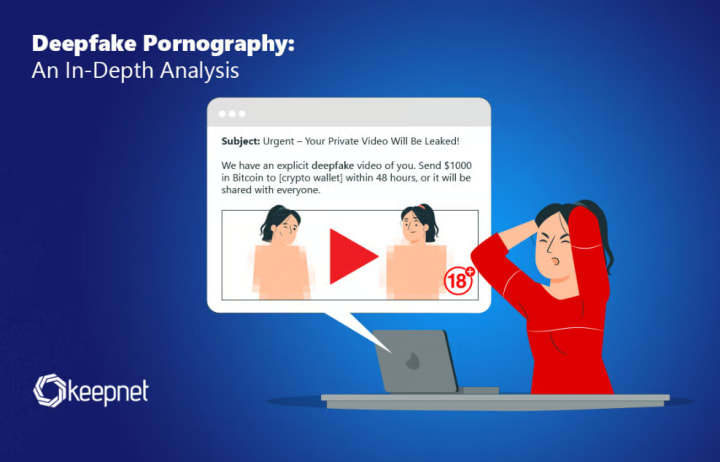
Protecting Yourself in the Age of AI
- While no one can be completely safe from deepfake abuse, a few precautions can reduce risk:
- Limit the number of high-resolution images you share publicly.
- Use reverse image searches to monitor where your photos appear.
- Report and document non-consensual images immediately.
- Support legislation and online safety initiatives that protect digital consent.
Ultimately, the solution must come from education, empathy, and strong legal frameworks — not just technology.
A Call for Accountability
Deepfake pornography is a warning sign of how powerful — and dangerous — AI can be in the wrong hands. It’s not just about fake videos; it’s about real harm, real trauma, and real people losing control of their digital selves.
In the end, the question isn’t just what AI can create, but what kind of society we want it to serve. Until consent becomes the foundation of our digital future, technology will continue to blur the line between innovation and violation.
#DeepfakePorn #DigitalConsent #AIandEthics #OnlineSafety #SexualPrivacy #TechAbuse #WomenOnline #CyberLaw
About the Creator
Shakil Sorkar
Welcome to my Vocal Media journal💖
If my content inspires, educates, or helps you in any way —
💖 Please consider leaving a tip to support my writing.
Every tip motivates me to keep researching, writing, sharing, valuable insights with you.
Keep reading
More stories from Shakil Sorkar and writers in Journal and other communities.
The Rise of Sex Positivity: From Taboo to Empowerme
For decades, sex was a topic whispered about in private, shrouded in shame, and often misunderstood. From conservative societal norms to outdated educational systems, talking openly about sexuality was taboo. But today, a sex-positive movement is reshaping the conversation — encouraging openness, consent, and empowerment for people of all genders and sexual orientations.
By Shakil Sorkar2 months ago in Journal
The goals I did not achieve
Every writing goal I made for the year is a wash. It has been this way for a while, but I think it's important to be open about my failures and the reality of how life can get in the way. This is especially true considering the several times I have posted on Vocal about my writing goals, how I was changing my approach, and where I was hoping to be for the upcoming year. I will probably do that again in a couple months, but for now, it is time to acknowledge where I am today.
By Kay Husnick24 days ago in Journal
Wild Card Weekend Recap: What Happens Now?
I think I figured out why I love Wild Card Weekend so much. It's because it's the first playoff anything of the calendar year. The NFL season starts in the fall, and once upon a time, the champion was crowned either on or slightly before New Year's. The evolution of the NFL schedule has resulted in the playoffs starting just into the New Year, and currently, the final week of the season falls on the first weekend of the New Year, with Wild Card Weekend coming a week after that. So yes, chronologically, the NFL's Wild Card Weekend serves as the first playoff anything of the calendar year.
By Clyde E. Dawkins6 days ago in Unbalanced




Comments
There are no comments for this story
Be the first to respond and start the conversation.