
Decoding the World of Politics: An Introduction to the Mechanics of Power and Governance
Unlocking the Fundamentals of Political Systems and Decision-Making


The process of making decisions that affect members of a group, such as a community, society, or country, is referred to as politics. Laws and policies that govern various aspects of life, such as taxation, education, healthcare, and criminal justice, can be included in these decisions. Politics is also concerned with how power and resources are distributed within a society. This includes not only formal government institutions, but also various interest groups, civil society organisations, and other actors who have an impact on the political process.
The role of politics in society is to provide a framework for making decisions that affect the collective well-being of citizens. This includes establishing laws and policies that provide for the common good, such as protecting individual rights and promoting economic prosperity, as well as providing for the basic needs of citizens through public goods and services. Politics also plays a key role in maintaining social order and stability. This includes protecting citizens from crime and external threats, and resolving disputes among different groups and interests. Politics also provides a way for citizens to participate in the decision-making process and hold their leaders accountable through the process of voting and other forms of political engagement. It also creates the platform for citizens to express their opinions and advocate for the issues they care about.
There are several different types of political systems that have been used throughout history, each with their own unique characteristics and features. Some of the most commonly recognized types include:
1. Democracy: A system of government in which the power is held by the citizens through the process of free and fair elections. In a democracy, the citizens have the right to vote, run for office, and participate in the decision-making process. There are different types of democracy, such as direct democracy and representative democracy.
2. Republic: A system of government in which power is held by elected representatives of the citizens, rather than by the citizens themselves. The representatives are usually elected through the process of free and fair elections. It can be seen as a form of representative democracy with a separation of powers between the branches of the government.
3. Monarchy: A system of government in which power is held by a single ruler, usually a king or queen, who inherits the position by birth or by tradition. Monarchs usually have a ceremonial role, with the real power held by an elected government or a prime minister.
4. Authoritarianism: A system of government in which power is held by a small group of individuals or by a single person, and there is little or no political opposition or democracy. In an authoritarian system, individual rights are often restricted and the government typically uses force to maintain control.
5. Theocracy: A system of government in which power is held by religious leaders, and state and religious authority are intermingled. In a theocracy, the laws and policies of the state are based on religious doctrine.
6. Communism: A system of government in which the state owns and controls all property and resources, and the means of production are used to produce goods and services for the benefit of the community. It aims to abolish private ownership and create a classless society.
7. Federations: A system of government in which the power is divided between a central government and regional or state governments. In a federation, each level of government has its own sphere of authority and responsibilities.
8. Confederation: A system of government in which the power is divided between a central government and regional or state governments, but where the regional governments have more power and autonomy than in a federation. In a confederation, the central government has only limited power over the regional governments.
Each of these political systems has its own strengths and weaknesses, and the type of system that is used can have a significant impact on the functioning and stability of a government and the rights and freedoms of citizens.
Government functions can be broadly classified into several key areas:
1. Creating and enforcing laws and policies: Creating and enforcing laws and policies that govern various aspects of life in a society is one of the primary functions of government. Making decisions on issues such as taxation, education, healthcare, and criminal justice is part of this. It also entails the establishment and management of public institutions such as schools, hospitals, and police departments, which are in charge of delivering public goods and services.
2. Representation and citizen representation: The government is also responsible for representing citizens' interests and giving them a voice in decision-making. This includes electing officials at all levels of government, as well as developing mechanisms for citizens to participate in the political process and hold their leaders accountable.
3. Political Participation: The government can also encourage and facilitate citizen participation in politics. This includes allowing citizens to vote, run for office, and participate in the democratic process. Furthermore, the government provides a forum for citizens to express their views and advocate for issues that are important to them.
Political Participation can take different forms, such as:
1. Voting: The most basic form of political participation is the act of voting. Voting allows citizens to choose their leaders and representatives and to have a say in the direction of their government.
2. Running for office: Citizens also have the opportunity to run for office and become leaders and representatives themselves. This allows individuals to directly shape policy and decision-making.
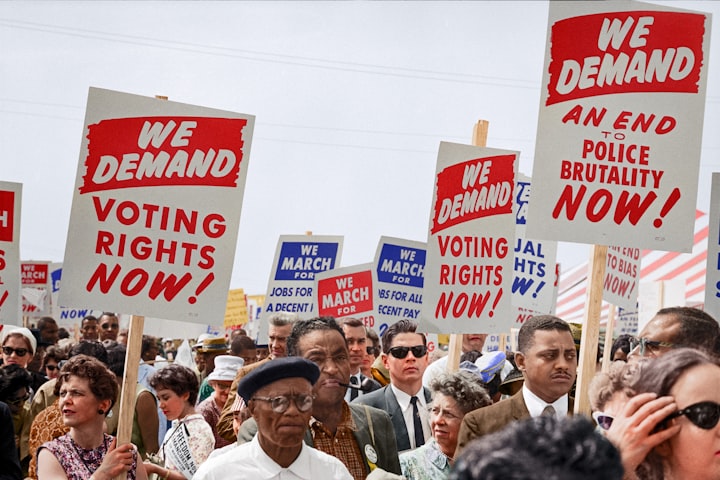
3. Activism: Citizens can also participate in politics through activism, such as participating in protests, joining interest groups, or working with community organizations to advocate for specific issues or causes.
Political Participation can take different forms, such as:
1. Voting: The most basic form of political participation is the act of voting. Voting allows citizens to choose their leaders and representatives and to have a say in the direction of their government.
2. Running for office: Citizens also have the opportunity to run for office and become leaders and representatives themselves. This allows individuals to directly shape policy and decision-making.
3. Activism: Citizens can also participate in politics through activism, such as participating in protests, joining interest groups, or working with community organizations to advocate for specific issues or causes.
Overall, the functions of government are essential for maintaining stability and providing.
Political parties and interest groups play critical roles in the functioning of democratic societies by representing various interests, perspectives, and points of view within a society.
1. Political parties serve as organisations that bring together people who have similar political views and beliefs. They play an important role in democratic societies by allowing citizens to express their political preferences and vote in the election of leaders and representatives. They also influence the political agenda by promoting their ideology, policies, and platforms. Political parties play an important role in the formation of governments and policies.
2. Interest groups are organisations that represent specific interests or causes. They are also known as special interest groups or lobby groups. They advocate for a specific group or sector of society's rights and interests, such as businesses, labour unions, environmentalists, or ethnic or religious groups. They lobby government officials, organise campaigns, and raise public awareness about their cause in order to influence government policies.
Both political parties and interest groups play an important role in the democratic process by representing diverse interests, perspectives, and views within a society. They also play a role in promoting accountability by holding elected officials accountable to their platforms and ideologies, as well as to the interest they represent respectively. It is important to note that while both parties and interest groups serve a valuable role in representing the diversity of views and interests in a society, an excess of these groups or an imbalance in representation can lead to political polarization, gridlock, and lack of compromise.
In conclusion, Politics is the process of making decisions that affect individuals in a group. It is a fundamental aspect of society because it shapes the distribution of power and resources and affects nearly every aspect of our lives. Understanding the fundamentals of political systems, government functions, and political participation allows us to better understand the world around us and make informed decisions about our own political engagement.
About the Creator
Laktish Rouben
By continuing to read my blog geo-politics, you'll gain a better understanding of the forces shaping the world today. My posts provide a unique perspective on the most pressing issues and stay up to date on the latest developments.
Keep reading
More stories from Laktish Rouben and writers in Journal and other communities.
What is an election, and why is it important?
An election is a procedure through which the people of a nation, state, or other political entity select their leaders and representatives by casting ballots. Elections can be held at all levels of government, including the federal, state, and local ones, and they can be used to choose representatives for a range of posts, including president, governor, mayor, and members of Congress or parliament.
By Laktish Rouben3 years ago in Journal
My ChatGPT Breakthrough: How Going From "User" to "Director" 10X'd My Content Output
From Overwhelmed to Overachieving: How I Finally Made ChatGPT Work For Me (And How You Can Too) Let me be brutally honest for a second. When ChatGPT first exploded onto the scene, I felt a knot in my stomach. It wasn’t excitement—it was dread. Everywhere I looked, someone was shouting about how it was going to revolutionize everything. My inbox was flooded with courses promising "AI Mastery," my social feeds were a blur of complex, perfect-looking prompts, and my competitors seemed to be churning out content at an impossible rate.
By John Arthor2 days ago in Journal
How to Succeed at the Benson Directory®
Congratulations and welcome to the Benson Directory® employee #22391! As our newest call handler, you will have the privilege of speaking with dozens of unique and interesting people on a daily basis as well as the opportunity to earn bonuses for high performance. Contained within this handbook you will find a set of ease to follow instructions designed to help you settle in to your new role and begin paving the way to success.
By S. A. Crawford4 days ago in Fiction



Comments
There are no comments for this story
Be the first to respond and start the conversation.