
Crystalline Confections: The Culinary Craft of Captivating Candy
Where Science Meets Sweetness: The Sparkling World of Edible Crystals

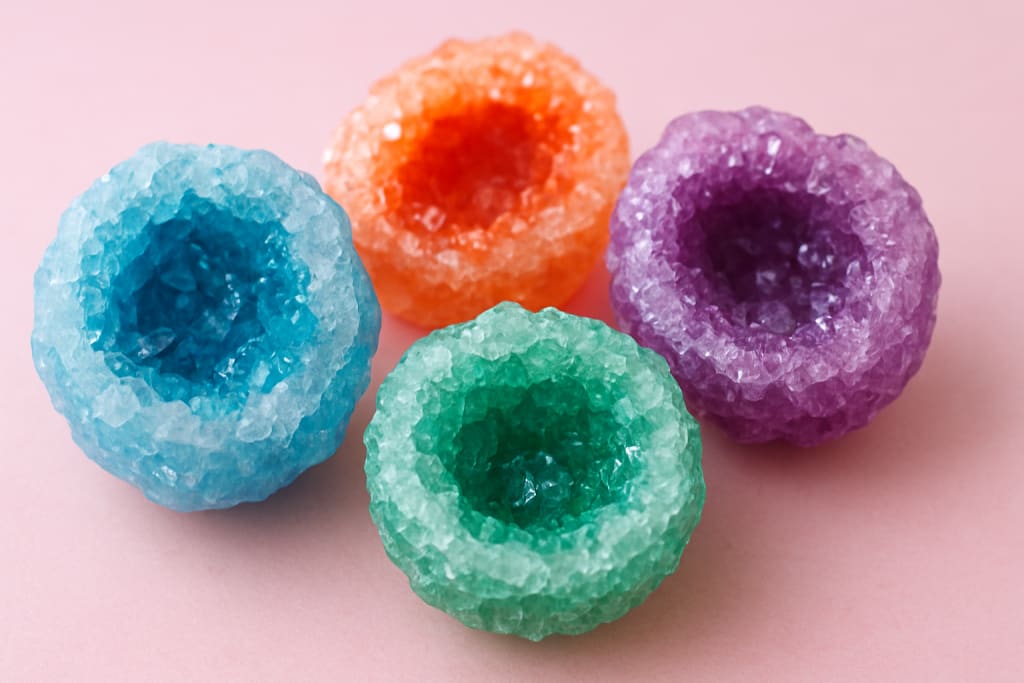
In the ever-evolving landscape of culinary art, where innovation and aesthetics converge, a new and mesmerizing trend has taken the world by storm: crystal candies. These sparkling confections, which look remarkably like edible geodes or polished gemstones, are more than just a treat for the taste buds; they are a feast for the eyes and a testament to the beautiful possibilities that arise when science meets confectionery. This unique art form captivates the imagination, turning simple ingredients into a dazzling display of crystalline structures. The process of making this candy is a fascinating journey that requires patience, precision, and a bit of scientific know-how. It's a craft that transforms the ordinary into the extraordinary, offering a truly unique sensory experience.
The Scientific Sparkle: Understanding Crystallization
The foundation of crystal candy lies in the fundamental scientific principle of crystallization. It's the same process that forms natural rock candy, but refined and elevated to an art form. At its core, crystallization is the process by which a solid forms from a liquid or a gas, or from a solution. In the case of this particular confection, it involves the careful manipulation of a supersaturated sugar solution.
• A supersaturated solution is created by dissolving more sugar into water than it would normally hold at room temperature, typically by heating the mixture.
• As the solution cools, the sugar molecules are no longer able to stay dissolved and begin to come out of the solution.
• These molecules need a point to attach to in order to start forming a crystal lattice. This is where a "seed" crystal or a nucleation point becomes crucial.
• Over time, more and more sugar molecules attach to this seed, building upon it layer by layer to form the larger, more intricate crystal structures we see in the finished product.
This slow and deliberate growth is what gives the candy its characteristic geode-like appearance, with large, well-formed crystals that catch the light and create a stunning visual effect. The size and clarity of the crystals are directly influenced by the cooling rate of the solution and the environment in which the crystallization occurs. A slower, more controlled process typically yields larger, more impressive crystals.
The Art of Flavor and Form
Beyond the scientific precision, crafting this special type of candy is an artistic endeavor. The color and flavor palettes are as diverse as the gemstones they mimic. Artisans can use a wide array of food-grade dyes and flavorings to create confections that not only look like amethysts, sapphires, or emeralds but also taste like their chosen essence, whether it's lavender, rose, citrus, or something more exotic.
The process often begins with a base of sugar, water, and corn syrup, which helps prevent the sugar from re-crystallizing too quickly and keeps the final product smooth and clear. Once this base is heated and the sugar is fully dissolved, the magic begins.
• Coloring: Food coloring, often in gel or liquid form, is added to the hot sugar solution. The concentration and type of coloring can drastically change the final appearance, from a deep, saturated hue to a light, ethereal tint.
• Flavoring: High-quality food-grade flavor extracts are introduced. It is important to add these after the solution has cooled slightly to prevent the heat from diminishing the flavor's potency.
• Creating the "Geode": The artistic part involves shaping the candy as it cools. Some methods involve pouring the sugar solution into molds, while others create a hollow shell that is then filled with the crystalline mixture. The most popular method involves creating a "cave" or hollowed-out section within a larger candy structure to mimic the interior of a geode.
The drying process is equally critical. The candies must be left undisturbed for several days to a week, or even longer, in a cool, dry place. This patient waiting period is what allows the crystals to form and harden properly, ensuring the final product has the desired crunch and visual appeal.
A Glimpse into the Past: The Ancestors of Modern Confections
While the modern rendition of this crystalline delight is a recent phenomenon, its roots can be traced back to the ancient art of candymaking. The concept of creating rock candy, a predecessor to the contemporary version, has existed for centuries.
1. Ancient Roots: Early forms of rock candy were known in various cultures, from India to Persia, where it was often used for medicinal purposes or as a simple sweet.
2. Medicinal Uses: Historically, rock candy was sometimes used as a throat soother or to sweeten herbal remedies.
3. The Industrial Revolution: The mass production of sugar in the 19th century made candymaking more accessible, leading to the popularization of rock candy as a common treat.
4. Modern Twists: The contemporary movement elevates this traditional method by incorporating intricate designs, vibrant colors, and sophisticated flavors, transforming it from a simple confection into an edible work of art.
The evolution from simple rock candy to this complex, visually stunning art form highlights the continuous innovation in the culinary world. It shows how traditional techniques can be re-imagined to meet modern aesthetic sensibilities, resulting in a product that is both nostalgic and avant-garde.
The Science of Sweetness: Beyond the Surface
The appeal of this candy extends beyond its striking appearance. The texture and taste are a unique experience in themselves. Unlike traditional hard candies that can be sharp and brittle, this confection offers a delicate, satisfying crunch. The large crystals provide a different mouthfeel, allowing the flavor to slowly release as the sugar dissolves.
The flavors are often more subtle and complex than those found in mass-produced candies. Artisans often use natural extracts and high-quality ingredients to create a more nuanced taste profile. The lack of artificial preservatives and the simple list of ingredients (sugar, water, corn syrup, flavorings, and coloring) also contribute to its artisanal appeal.
This type of candy also provides an excellent opportunity for a hands-on, educational experience. For home bakers and culinary enthusiasts, it serves as a fun and delicious way to explore basic chemistry principles. It teaches the importance of precision, patience, and observation, making the process as rewarding as the final product.
The Rise of a Social Media Sensation
The visual nature of this confection has made it a viral sensation on platforms like Instagram, Pinterest, and TikTok. The hashtag #crystalcandy and related terms are filled with stunning photos and videos of the candy-making process, from the creation of the sugar solution to the final reveal of the finished geode.
• Aesthetic Appeal: The glittering, jewel-like appearance of the candy is perfectly suited for visual-centric platforms.
• "Oddly Satisfying" Content: Videos of sugar crystals growing and being harvested are often shared for their calming and visually satisfying nature.
• DIY Culture: The craft-oriented aspect of making the candy appeals to the large and active community of DIY and home-baking enthusiasts.
• Shareable Content: The unique and beautiful nature of the product makes it highly shareable, contributing to its rapid spread and popularity.
This digital footprint has not only popularized the confection but has also created a global community of makers and enthusiasts who share tips, techniques, and inspiration, further fueling the trend and pushing the boundaries of what is possible with sugar.
Conclusion: A Fusion of Art and Science
The art of creating this crystallized confection is a testament to the beautiful possibilities that emerge when science and artistry are combined. It’s a craft that turns simple sugar into a dazzling display of edible gems, each one a unique creation born from a meticulous process. The appeal lies in its stunning visual aesthetic, its unique textural experience, and the satisfying journey of watching something so beautiful take shape. It’s a sweet treat that nourishes not only the body but also the soul, proving that the most extraordinary creations often come from the simplest of ingredients and a touch of scientific magic.
Frequently Asked Questions (FAQ's)
Q1: How is crystal candy different from traditional rock candy?
A1: While both are made from crystallized sugar, crystal candy is a more refined and artistic version. It often involves more intricate shaping, vibrant colors, and a wider variety of flavors. The goal is to create a visually stunning piece that resembles a geode or gemstone, whereas rock candy is typically simpler in form.
Q2: What is a "supersaturated" sugar solution?
A2: A supersaturated solution is a solution that contains more dissolved solute (in this case, sugar) than it would normally hold at a given temperature. This is achieved by dissolving the sugar in hot water and then allowing the solution to cool slowly, which forces the excess sugar to crystallize and form the candy.
Q3: Is crystal candy difficult to make at home?
A3: While the process requires patience and precision, it is entirely possible to make this candy at home. The key steps are creating the supersaturated solution, having a nucleation point (like a string or a small piece of sugar), and allowing enough time for the crystals to grow undisturbed.
Q4: How long does it take for the crystals to form?
A4: The crystallization process can take anywhere from a few days to a week or even longer, depending on the desired size of the crystals. A slower cooling process and a stable, undisturbed environment will generally result in larger, more well-defined crystals.
Q5: What flavors and colors can be used?
A5: The possibilities are endless! You can use any food-grade flavor extract or essential oil, and a wide range of gel or liquid food colorings. Popular choices include fruity flavors like strawberry or lemon, floral notes like rose or lavender, or more unique options like coffee or spiced tea.
About the Creator
Keep reading
More stories from Daily Blog and writers in Journal and other communities.
Free Property Appraisal: Darwin's Best Option
When it comes to determining the value of your property, obtaining a professional and reliable home property appraisal is paramount. In today's competitive real estate market, especially in a unique location like Darwin, Australia, it's essential to understand the worth of your property to make informed decisions - whether you’re planning to sell, rent, or simply reassess your investment portfolio.
By Daily Blog7 months ago in Journal
Author’s Advice
If you would’ve asked me 20 years ago did I know I’d become a writer and an author, I would’ve said “nope, ain’t happening”. As fate would have it I did become an author and I can honestly say I’m loving it so far. It really does feel good to be a writer. I’ve learned a lot on this journey and I feel like with even me being as new to this world as I am, there’s some wisdom I need to share with every other aspiring author.
By Joe Patterson4 days ago in Journal
The $152B Ice Cream Market Is Changing Fast
The freezer door opens with a familiar chill. A spoon scrapes gently across the top of a fresh tub, carving out a creamy swirl of chocolate, vanilla, or mango. For a brief moment, everything slows down, stress fades, and the sweetness feels like a small celebration.
By Harvey Specter6 days ago in Journal



Comments
There are no comments for this story
Be the first to respond and start the conversation.