
Counting Inches, Chasing Silence: How Snowfall Totals Took Over My Winters
I used to treat snowfall totals like sports scores. Somewhere between broken rulers, busted forecasts, and late‑night driveway shoveling, they turned into a quiet measure of time, memory, and control.

I measure winter in inches.
Not in months, or holidays, or even in heating bills, but in the blunt little numbers that crawl across the bottom of the TV screen: 3–5 inches, 8–12 inches, locally higher amounts. Living in upstate New York, I’ve learned that you can ignore a lot of seasonal noise if you want to, but you can’t ignore snowfall totals. They sneak into every conversation, every commute plan, every half‑hearted small talk at the grocery store. Somehow this simple number—8 inches, 14 inches, a dusting—has become the metric I instinctively reach for when I think about my winters, and if I’m honest, about my life here.
As a kid, those totals felt like a scoreboard between the adults who wanted me in school on time.
I would sit cross‑legged in front of the TV, hoping to see big numbers. Ten inches meant power. Ten inches meant the principal had lost. When the meteorologist said “1–3 inches,” I remember the immediate disappointment, like someone had canceled Christmas but forgotten to send an official memo. I didn’t care about the science behind the forecast. All I heard were the stakes: enough snow to shut everything down, or just enough to make the bus ride slow and miserable.
It didn’t take long to realize that snowfall totals are lying, or at least half‑truths dressed up as certainty.
I learned that lesson with a plastic ruler and a sense of indignation. The weatherman promised “up to a foot,” and I waited all day, watching the sky. By evening, I tromped out to the backyard in my too‑big boots, ruler in hand, determined to verify the prophecy. Six inches, if I were generous. I measured again, somewhere else. Five and a half. I felt cheated, like I had uncovered a conspiracy. That was the first time I understood that “up to” is a loophole wide enough to drive a snowplow through, and that accumulation maps look precise only if you never go outside and check them.
As an adult, I still watch the totals, but I’ve stopped expecting them to tell the whole story.
Now, 4–6 inches doesn’t mean “play day” or “no school” to me. It means: Do I need to shovel twice, once mid‑storm and once after, or can I get away with one brutal session at the end? It means: Can I risk leaving the car at the bottom of the driveway, or will the plow bury it in a frozen rampart I’ll regret at 6 a.m.? The same number that once felt like a ticket to freedom now looks more like a to‑do list.
And yet, I still cling to those numbers like they’re some kind of assurance.
I think part of it is control. The world is vague and messy; snowfall totals pretend not to be. They’re quantifiable, trackable, and archivable. “We got 18 inches during that big storm in 2010,” someone says, and the number anchors the memory. It doesn’t matter that none of us actually measured it properly. We say the number like an agreed‑upon myth, a shortcut for “roads closed, power flickering, everyone huddled inside, time moving differently.”
The irony is that snow itself refuses to be pinned down to a single statistic.
I’ve seen 2 inches deliver more chaos than 10, just because of timing and temperature. A wet, heavy 4 inches at rush hour can paralyze an entire region, while a powdery foot that falls overnight feels almost gentle—just a white reset button by morning. But the totals flatten those nuances. We talk about “18 inches” like it was an event, not a texture, not a sound, not the way it absorbed the usual hum of traffic and made the whole neighborhood sound like it was holding its breath.
I notice that every winter, my relationship with the tape measure becomes slightly more obsessive.
I tell myself I’m just curious, but there’s something almost ritualistic about stepping outside in the middle of a storm, squinting against the flakes, and stabbing a ruler into the drift. I’ll text people: “Already at 7 inches here.” Someone replies with their own number, usually higher, often exaggerated. We turn the storm into a competition: whose house is getting “hammered,” who “dodged a bullet.” It’s never just snow; it’s always a narrative about luck or resilience or suffering.
Meanwhile, the snow is just falling, indifferent to all our comparisons.
Lately, I’ve started to question why I’m so hooked on the totals in the first place.
Part of it is cultural. Around here, snowfall is identity. We boast about how much we “can handle,” about the storms we “survived,” as if endurance could be converted into moral superiority. More inches equals more toughness. To admit that 6 inches of heavy snow wiped you out feels like a confession of weakness in a place where everyone has a story about digging out from 3 feet or driving through whiteout conditions that sound frankly reckless in retrospect.
But there’s something else too: the numbers let me dodge the emotional side of winter.
It feels easier to say, “We got 14 inches last week,” than to admit, “By day three of gray skies, I was tired to my bones, and everything felt slow and slightly pointless.” I can talk precisely about accumulation while staying vague about the accumulation of small isolations: canceled plans, tricky commutes, days when the cold air starts to seep into my mood. It’s tidier to say “big storm” than “I felt off for days and I’m not sure why.”
The strangest part is that snowfall totals also measure a kind of beauty I’m reluctant to name.
Some of the most peaceful moments of my life have happened in the middle of storms I complained about endlessly beforehand. There’s a silence that only arrives when the snow is heavy and steady, when it has already started to bury every sharp edge and loud color. Streetlights catch the flakes at odd angles, and for a while, the world feels both unfamiliar and completely contained. I don’t think “We’re at 9 inches” in those moments. I just stand there and listen to a quiet so thick it feels almost physical.
The totals only become relevant again when it’s time to work.
Shoveling has its own sloppy math. I calculate the weight of each scoop in my head, judging by how quickly my back starts to complain. Six inches of powder is fine. Six inches of slush is like lifting wet concrete. Those details never make it into the storm summaries. The records will say “Storm brought 7.8 inches to the region,” as if 7.8 inches is the same experience on every porch, to everybody, in every life.
Still, I write the numbers down.
Sometimes it’s in a note on my phone, sometimes in a notebook I pretend is about “home maintenance” but is really about memory. Year by year, the entries accumulate: 9 inches in December, 3 inches in early March, 20‑something over three days that one year. It’s an unremarkable archive, but it comforts me. In a world that often feels disjointed and fast, these little data points give my winters a spine.
I notice, too, how the totals have changed the way I think about the future.
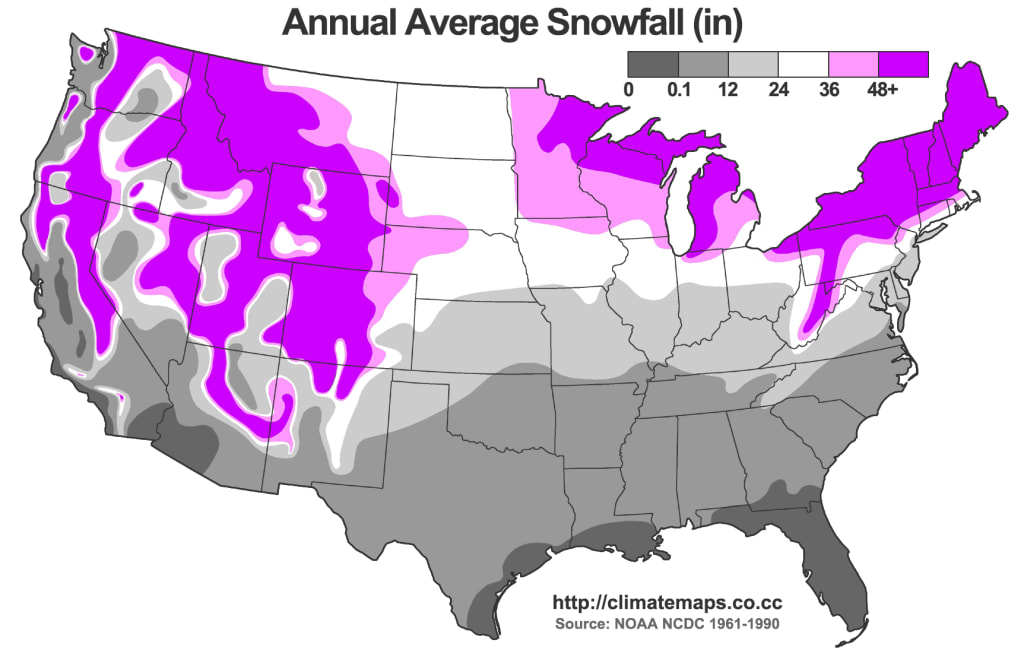
When I hear long‑term forecasts talk about declining snow seasons and shifting storm tracks, the abstract climate conversation becomes personal in an odd way. I wonder what it would mean to live here with winters that bring more slush and rain than real snow, more gray than white. I’m not romantic about shoveling or white‑knuckle driving, but there’s a part of me that can’t imagine a January without checking the radar and mentally converting colors on a map into potential inches in my backyard.
Maybe that’s what snowfall totals really are for me: a language I’ve learned to use for time, place, and a kind of reluctant belonging.
Every winter, the numbers return. Sometimes they overpromise, sometimes they shock me, sometimes they quietly match the way the world looks outside my window. I’ll keep measuring, complaining, boasting, and quietly marveling. And somewhere in between the official totals and my crooked ruler in the yard, I’ll keep trying to remember that the number is just a hint, not the story.
The story is the 5 a.m. scrape of a shovel on concrete, the muffled laugh of a neighbor across the street, the way the world shrinks to the circle of light around a streetlamp and a sky full of falling brightness. The inches are just how I count them. The meaning lives in everything I can’t quite measure.
About the Creator
Trend Vantage
Covering the latest trends across business, tech, and culture. From finance to futuristic innovations, delivering insights that keep you ahead of the curve. Stay tuned for what’s next!
Keep reading
More stories from Trend Vantage and writers in Journal and other communities.
How Skyscraper Live Turned Fear Into Fascination
When I first watched Skyscraper Live, the Discovery Channel special where Nik Wallenda walked a tightrope between two Chicago skyscrapers without a safety harness, I didn’t feel excitement. I felt anxiety—the kind that sits in your stomach and makes you question why you’re participating, even passively. Yet I couldn’t look away. For two hours, I sat transfixed by a screen showing a man who seemed to understand risk better than most of us understand routine.
By Trend Vantage2 days ago in Journal
🅼🅸🅳🅽🅸🅶🅷🆃 🆂🅽🅰🅲🅺🆂
"It's 10 in Tuscon! We all know what that means... It's Time for Midnight Snacks with your man, Gerald Gee! Ready to spend the night together? Me too! I'm full of snacks and can't wait to regurgitate them all back into your hungry ears. Crack a brew! Pop some corn! Anything to get ready for one hell of a show where the talk maybe cheap but the words cut deep...
By Lamar Wiggins3 days ago in Fiction


Comments
There are no comments for this story
Be the first to respond and start the conversation.