
Coronavirus: Changes to furlough and mass redundancies
Coronavirus employment law updates from senior solicitor, Alex Monaco.

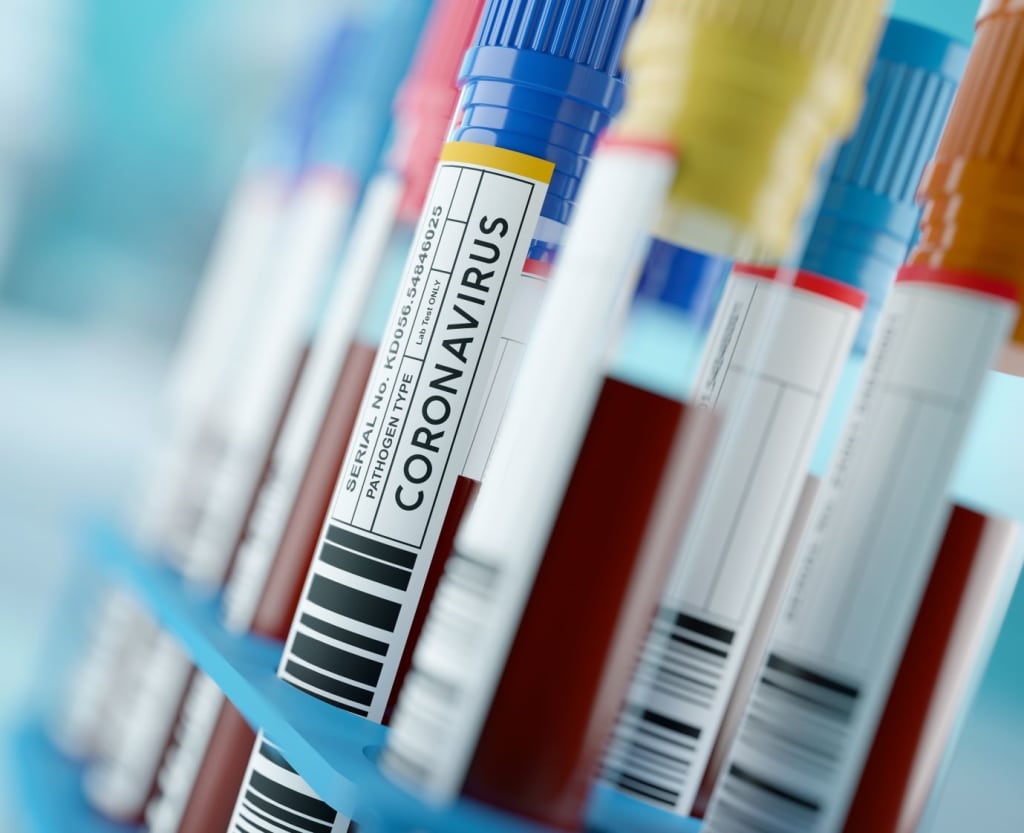
There have been unprecedented impacts on employees’ rights during this coronavirus pandemic, including the right to health and safety and the right to be paid.
If your employer has cut your pay because you have refused to attend an unsafe workplace or you have been unfairly dismissed, read our article here.
What is the furlough scheme?
The Coronavirus Job Retention scheme, also known as furlough has been able to help employers whose business has been affected by COVID-19.
This scheme allows employers to let you stay at home, as the government will pay your employer 80% of your salary up to £2,500 per month. These payments will continue until the end of August 2020, being reduced to 70% in September and 60% in October.
Accepting only a percentage of your wage or 100% (with no upper limit) is something that your employer should have agreed with you in advance. They can’t just put you on the scheme without your agreement, although, you could be made redundant if you didn’t agree.
More detailed information on this can be found in our practical guide on the furlough scheme.
Self employed support
To summarise the scheme available to the self employed:
The deadline for the first grant available has now passed (13th July 2020)
The second grant available is worth 70% of your average monthly profits. Applications for this grant can be applied for from 17th August 2020 and is capped at £6,570.
For more detailed guidance, see our article here.
If I am vulnerable, or a danger to a vulnerable person, can my employer force me to attend work?
Hopefully, if you are pregnant, old, or suffer from a disability or ill-health, your employer will already know about this and be receptive to proposals for you to work remotely where possible.
Forcing you to attend work if you live with someone in any of the above categories could also be breaking the law.
The law in relation to the coronavirus is not yet entirely clear, however, we advise that your employer could be acting unlawfully in insisting that you attend work as it may be subjecting you to:
Constructive dismissal or
Discrimination relating to pregnancy, age or disability or
Breach of health and safety law
If I am self-isolating and not coming into work, can my employer dismiss me?
No! You could be disciplined by your employer for doing so, but you can’t legally be dismissed. Any attempt by your employer to do so would amount to automatically unfair dismissal under s.100 Employment Rights Act 1996.
This kind of dismissal was seen in the case of Harvest Press Ltd v McCaffrey 1999 ILRL 778. Despite not directly relating to the coronavirus, this is a good example of automatically unfair dismissal.
Our more detailed guide on unfair dismissal during the coronavirus is available here.
Can my salary be reduced?
If your employer is justified in doing so, they can reduce your salary. During the coronavirus, we have seen many employers telling employees to take a pay cut. This can be easily justified if other people are also being asked to take a pay cut.
Employers could simply hand you your notice and another contract of employment with a reduced salary. They could then tell you that if you don’t agree to work the new contract, your employment will end when your notice period is over.
Should I be paid whilst self-isolating?
If you have symptoms or have been advised to self-isolate by a doctor or other medical authority, you are legally entitled to Statutory Sick Pay (SSP). Isolation notes can be obtained online on the NHS 111 website.
If you are self-isolating despite not showing any symptoms, the current legislation does not entitle you to SSP.
The current legislation again does not entitle you to SSP if you are vulnerable, for example, old or with underlying health conditions. Again, we would advise that you get an isolation note online on the NHS 111 website mentioned above, which would entitle you to SSP.
Employers have to conduct a risk assessment if you are pregnant. Where it is unsafe for you to attend work, you must be suspended on full pay. At that point, if within 6 weeks of your due date, you will be entitled to start your maternity leave as per the legislation here.
If it is possible to work remotely and your employer agrees to let you do so, then you will be entitled to your usual pay.
Before you take any action, you should talk to your employer about any concerns you may have and try to agree on the best way forward.
This latest legislation is contained in The Statutory Sick Pay (General) (Coronavirus Amendment) Regulations 2020.
If my employer tells me to stay off work, am I entitled to pay?
If there is a good reason to ask you not to attend work, for example, you have recently returned from a country badly affected by coronavirus, or had contact with someone with the virus, your employer can ask you to stay away.
If your employer closes your place of work or reduces your hours of work, then you are entitled to pay as normal, without any reduction. Millions of employers are supported in doing so by the government furlough scheme (see above).
(See S151 Social Security, Contributions and Benefits Act 1992 and S147-154 Employment Rights Act 1996 for relevant legislation)
Taking time off work to care for dependents
The government extended the Coronavirus Job Retention Scheme in April to those with childcare responsibilities due to coronavirus restrictions. This has to be agreed with your employer as furlough is not an automatic right, but this is great news for parents.
Automatic rights are set out in pre-existing legislation, Section Section 57A-57B Employment Rights Act 1996. This legislation provides that in an emergency, you have a right to reasonable time off work to care for dependents. This applies where your dependents themselves are unwell or their usual school/carers/other providers can’t operate because of the COVID-19 restrictions.
Unless you have an employment contract or insurance policy that provides for payment in these circumstances, this time off is unpaid. A reasonable amount of time off depends on your circumstances, but your employer is required to consider your case regardless of the inconvenience or disruption your absence could cause the business.
Undoubtedly, the coronavirus does count as an emergency, and what is ‘reasonable’ is ongoing as long as the schools and nurseries are shut, at least. But if you have not managed to get placed on the government’s furlough scheme before it closed on 10th June, your first port of call should be to ask for full pay.
Will I get sick leave and pay entitlements if I get coronavirus?
You will be entitled to sick leave and entitlements as with any other sickness if you have been diagnosed with coronavirus or are suspected by medical authorities as having it.
(See S151 Social Security Contributions and Benefits Act 1992)
Redundancies due to COVID-19
Where making over 20 employees redundant, employers usually have to consult for a period of 90 days.
However, coronavirus could constitute ‘special circumstances’ which would compress this period, so that employers probably wouldn’t have to consult for the full 90 days. Consulting for a reasonable time is probably still necessary, but what is reasonable is not clear. If they don’t consult, then it would be procedurally unfair dismissal.
The duty to consult is not defined in statute if less than 20 people are being made redundant. However, this duty generally includes more than one meeting and an opportunity for you to make some reasonable input into the decision.
I have been laid off because of COVID-19 but can I choose redundancy if I want to leave my job?
You can write to your employer asking for statutory redundancy payment and your notice pay if you have been laid off for 4 weeks in a row, or for 6 weeks in a 13 week period. If they don’t reply, you have to give your notice as per your notice period (the longer period of either your contract or statutory notice period) and you can resign. This will give you a claim for statutory redundancy pay.
Next Steps
If you think you are being subjected to any of the situations outlined above, Monaco Solicitors may be able to help.
In addition to our various articles and guides, we also have a free coronavirus employment rights app. This app provides individuals with a written advice letter for you and a template letter addressed to your employer.
Monaco Solicitors.
About the Creator
Keep reading
More stories from Monaco Solicitors and writers in Journal and other communities.
Coronavirus absence from work: your right to get paid
The impact of Coronavirus (Covid 19) on employees at work This blog is based on a selection of questions that we have recently received from employees about absence from work and pay/sick pay rights related to Coronavirus – also known as Covid 19.
By Monaco Solicitors6 years ago in Journal


Comments
There are no comments for this story
Be the first to respond and start the conversation.