
Containers Fall From Ships During Storm Goretti, Raising Alarms Over Maritime Safety
How Storm Goretti Exposed the Growing Risks Facing Global Shipping and the World’s Oceans”


Storm Goretti has left a trail of disruption across land and sea, but one of its most serious and less visible impacts unfolded far offshore. As violent winds and towering waves battered shipping routes, dozens of cargo containers were reported to have fallen from commercial vessels, reigniting global concerns about maritime safety, supply chain resilience, and environmental risks.
A Storm That Tested the Seas
Storm Goretti arrived with little mercy. Meteorological agencies warned of hurricane-force gusts, sudden pressure drops, and waves reaching dangerous heights. While coastal communities braced for flooding and transport chaos, cargo ships already at sea had no choice but to ride out the storm.
Modern container ships are engineered to withstand rough weather, but Goretti proved unusually volatile. Rapid shifts in wind direction and wave patterns caused ships to roll violently, placing extreme stress on container stacks. In several confirmed incidents, lashings failed, stacks collapsed, and containers were swept overboard.
What Happens When Containers Fall?
A single container can weigh up to 30 tonnes when fully loaded. When dozens fall into the sea, the consequences are immediate and long-lasting.
Some containers sink quickly, but others float just below the surface, becoming invisible hazards for fishing boats, ferries, and yachts. Maritime authorities issued navigation warnings after reports confirmed drifting debris along major shipping lanes.
Beyond navigation risks, the contents of the containers pose another threat. While many carry consumer goods, others may hold chemicals, plastics, electronics, or industrial materials. When submerged, these items can leak, break apart, or disperse across marine ecosystems.
Environmental Risks Beneath the Waves
Environmental groups have raised serious concerns about the ecological impact. Lost containers often release microplastics, packaging materials, and synthetic fibers that persist in the ocean for decades. Marine animals can ingest debris or become entangled, leading to injury or death.
Past incidents have shown how container spills can wash ashore months later, scattering household goods, footwear, and packaging across coastlines. Cleanup efforts are expensive, slow, and often incomplete, leaving local communities and wildlife to bear the long-term cost.
Storm Goretti’s container losses have once again highlighted how extreme weather events amplify environmental vulnerabilities at sea.
A Growing Problem in Global Shipping
Container losses are not new, but their frequency appears to be rising. Experts point to several contributing factors: larger ships, higher container stacks, tighter shipping schedules, and increasingly severe weather linked to climate change.
Modern mega-ships carry more containers than ever before, stacked higher to maximize efficiency. While this reduces transport costs, it also raises the center of gravity, making vessels more susceptible to rolling in extreme seas.
Storm Goretti exposed how even well-equipped ships can be pushed beyond their limits when weather systems intensify faster than forecasts predict.
Impact on Global Supply Chains
The immediate loss of cargo disrupts supply chains already under strain. Businesses waiting for goods face delays, shortages, and insurance claims. Ports may experience congestion as damaged ships are rerouted for inspections or repairs.
For smaller companies, a lost container can be financially devastating. Even with insurance, claims can take months to resolve, affecting cash flow and customer trust.
In an interconnected global economy, what happens hundreds of miles offshore can ripple through markets, prices, and delivery timelines worldwide.
Calls for Stronger Regulations
In the aftermath of Storm Goretti, maritime safety experts are calling for stricter international standards. Proposals include improved container lashing systems, better real-time weather routing, and limits on stacking heights during storm seasons.
Some argue that shipping schedules should allow more flexibility, enabling vessels to slow down or change course without financial penalties. Others emphasize the need for improved tracking technology so lost containers can be located and recovered more quickly.
There are also renewed calls for transparency, as container losses are often underreported unless they pose immediate danger.
Climate Change and the Future of Shipping
Storm Goretti is part of a broader pattern. Scientists warn that warming oceans are fueling stronger and more unpredictable storms. As extreme weather becomes more common, shipping companies may face an uncomfortable choice: adapt rapidly or accept growing losses and risks.
The shipping industry moves nearly 90% of global trade. Ensuring its safety is not just a commercial issue—it is a global priority.
A Wake-Up Call at Sea
Containers falling from ships during Storm Goretti serve as a stark reminder that even the most advanced global systems are vulnerable to nature’s force. What appears as an isolated maritime incident is, in reality, a complex challenge involving safety, environment, commerce, and climate resilience.
As investigations continue, one thing is clear: storms like Goretti are no longer rare exceptions. They are becoming the new test of how prepared the world truly is for a changing climate—and whether lessons at sea will be learned before the next storm arrives.
About the Creator
Fiaz Ahmed
I am Fiaz Ahmed. I am a passionate writer. I love covering trending topics and breaking news. With a sharp eye for what’s happening around the world, and crafts timely and engaging stories that keep readers informed and updated.
Keep reading
More stories from Fiaz Ahmed and writers in Journal and other communities.
Indonesia Calls in Military to Accelerate Forest Clearance Amid Environmental Concerns
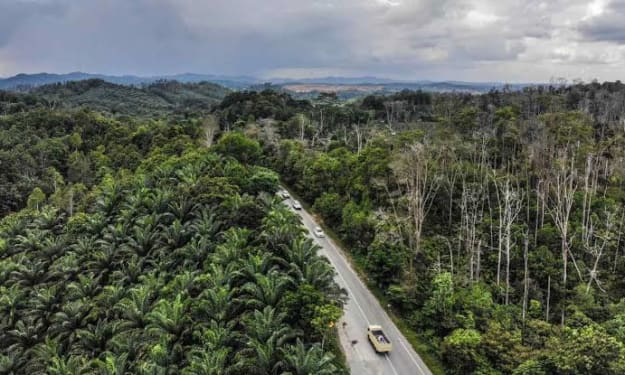
Indonesia, a country renowned for its rich biodiversity and sprawling tropical forests, has recently taken the controversial step of calling in its military to assist in clearing forests at a rapid pace. The move, aimed at accelerating land conversion for agriculture and infrastructure projects, has sparked widespread discussion about balancing economic development with environmental protection. A Strategic Decision The Indonesian government’s decision comes amid mounting pressure to boost economic growth and meet domestic demands for land for farming, plantations, and urban expansion. Officials argue that military involvement will ensure efficiency, discipline, and a structured approach to large-scale land clearing projects, which have traditionally faced logistical challenges. Military personnel are being deployed to several provinces, particularly in regions like Sumatra and Kalimantan, where forest cover is dense but under increasing pressure from agricultural expansion, notably palm oil plantations. The government claims this initiative will help streamline development projects while maintaining law and order during land conversion processes. Economic Ambitions vs Environmental Concerns Indonesia’s forests are vital not only for the country’s ecology but also for global climate regulation. They act as carbon sinks, store vast amounts of biodiversity, and sustain local communities. The rapid clearance of forests, even under military supervision, raises concerns among environmentalists, scientists, and international observers. Critics argue that using military forces may prioritize speed over sustainability, potentially exacerbating deforestation, soil degradation, and habitat destruction. Environmental groups warn that such measures could accelerate the loss of endangered species and contribute to global climate change by releasing stored carbon dioxide into the atmosphere. On the other hand, the Indonesian government maintains that careful planning and oversight will mitigate ecological risks. Officials emphasize that cleared land will be used for essential infrastructure and agricultural projects to meet food security goals and provide employment for thousands of citizens. Historical Context of Deforestation in Indonesia Indonesia has long grappled with deforestation, primarily driven by palm oil cultivation, logging, and urbanization. According to recent studies, the country has lost millions of hectares of forest in the past two decades, causing soil erosion, flooding, and increased greenhouse gas emissions. Past efforts to curb deforestation through regulations and conservation programs have often faced enforcement challenges due to the scale of the forests and the economic incentives for clearing land. By deploying the military, the government hopes to achieve faster results, leveraging the organizational capabilities and manpower of armed forces to manage large-scale operations efficiently. Global Reactions and Sustainability Questions International organizations have expressed cautious concern over Indonesia’s approach. Experts note that while the country’s economic development goals are valid, the ecological costs could be significant if forest clearance is not managed sustainably. Climate scientists emphasize the importance of maintaining tropical forests as critical components of the global ecosystem and urge Indonesia to adopt innovative methods that balance growth with conservation. Some environmentalists have suggested alternatives such as reforestation programs, agroforestry, and precision land management techniques that allow development without wholesale destruction of natural habitats. These strategies could provide economic benefits while reducing the environmental footprint. Military Role and Public Perception The involvement of the military in non-traditional roles such as forest clearing has sparked debate within Indonesia itself. Supporters argue that the military can bring discipline, coordination, and manpower to projects that would otherwise face delays. Critics, however, worry about the militarization of environmental management and the potential neglect of ecological expertise in favor of rapid results. Public opinion is divided. While some citizens welcome faster land development that could improve infrastructure and generate jobs, others are concerned about long-term environmental consequences and the loss of Indonesia’s natural heritage. Looking Ahead Indonesia’s decision to deploy the military for forest clearance reflects a broader tension between economic ambition and environmental stewardship. As the country moves forward with these initiatives, it will need to carefully balance growth with sustainability, ensuring that development does not come at the expense of ecosystems and local communities. Experts suggest that transparency, rigorous environmental assessments, and collaboration with conservation organizations will be critical in mitigating risks. The world will be watching closely, as Indonesia’s approach could serve as a model—or a cautionary tale—for other nations facing similar development pressures. Conclusion The deployment of Indonesia’s military to accelerate forest clearance marks a significant moment in the country’s development trajectory. While it aims to drive economic growth and meet domestic demands, it also highlights the ongoing challenge of harmonizing human progress with environmental responsibility. The coming months will be crucial in determining whether this strategy can deliver both economic and ecological benefits, or whether it will exacerbate one of the world’s most pressing environmental concerns.
By Fiaz Ahmed 3 months ago in Journal
Author’s Advice
If you would’ve asked me 20 years ago did I know I’d become a writer and an author, I would’ve said “nope, ain’t happening”. As fate would have it I did become an author and I can honestly say I’m loving it so far. It really does feel good to be a writer. I’ve learned a lot on this journey and I feel like with even me being as new to this world as I am, there’s some wisdom I need to share with every other aspiring author.
By Joe Patterson2 days ago in Journal
Thief In The Night
To the thief in the night that took and replicated what once was mine: Honestly, I feel kind of bad for you. It’s funny, because we hardly know each other. I only know of you through the magazines you’ve written and the broadcasts you have televised in the past — as well as through the public mentions of you from your show business connections there.
By Snarky Lisa6 days ago in Humans



Comments
There are no comments for this story
Be the first to respond and start the conversation.