
Conglomerate Rock in Geology
Meaning, Uses, Facts, & Color

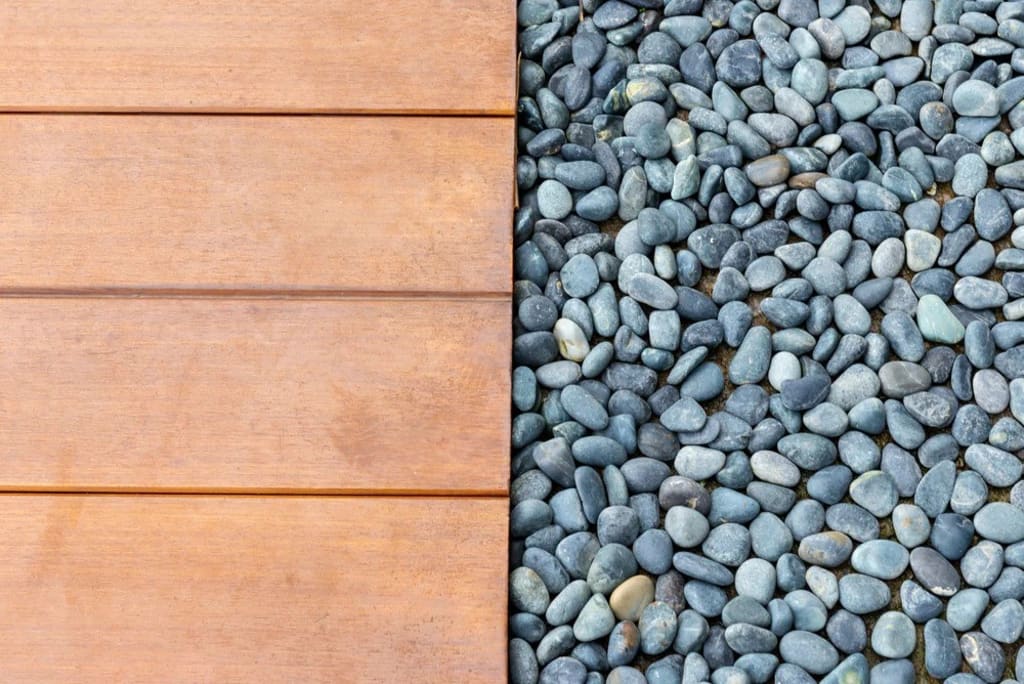
In this knowledge-rich series of knowing rocks, we are going to know Conglomerate rocks, which are kind of sedimentary rocks and have some commercial values in different industries, particularly in construction businesses.
What Type of Rock Is Conglomerate
In geology, a conglomerate considers as a Clastic Rock. Here, clastic derived from the Clasts. The gravel-size pebbles, which are greater than 2 mm in diameter termed Clasts.
When the Matrix made of sand, silt, and clay particles and filled the gaps between clasts and also glues the clasts’ objects together, the formation of conglomerate takes place.
What Is Conglomerate Made Of?
The composition of conglomerate rocks have two major components:
Clasts:
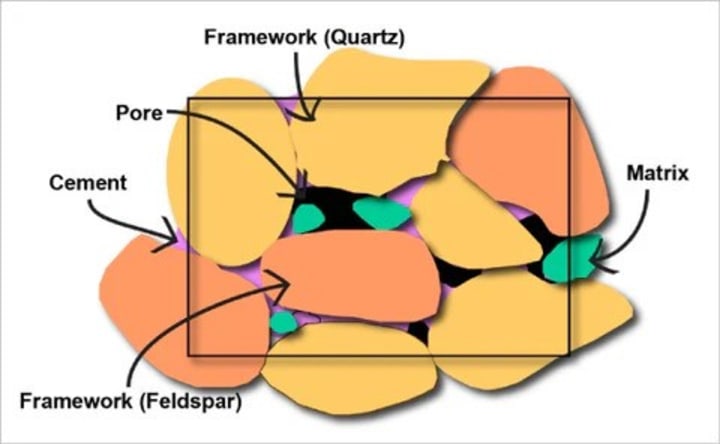
In conglomerate rocks, the main framework grains are clasts, and those are always rounded or semi-rounded in shapes. [If clasts in a sedimentary rock have sharp corners, it is known as Breccia.] If a mixture of both kinds of clasts occurs in sedimentary rock, it refers to Breccia—Conglomerate Rock.
• Rounded clasts may be mineral particles including Feldspar or Quartz.
• The clasts may be fragments of Metamorphic or Igneous rocks.
• The most common rocks forming clasts are
• Quartzite
• Sandstone
• Limestone
• Granite
• Basalt
• Gneiss
Matrix:
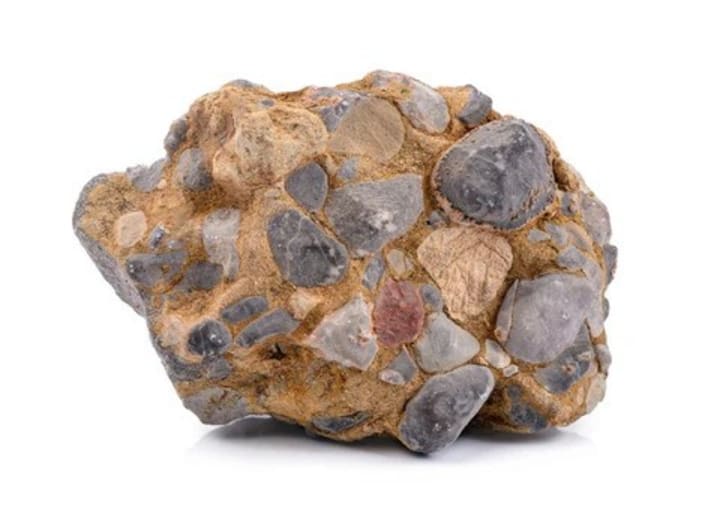
The following components are forming a matrix of the conglomerate rocks.
• Sand
• Silt
• Clay/mud
• Chemical cement
Cementing chemicals like NaCl and CaO bind the clasts together.
How Old Is Conglomerate Rock?
Jack Hills in Australia is a classic site where conglomerate rocks deposited in huge quantities. Upon geological tests, experts have revealed the fact that the oldest zircon crystals on the planet earth are embedded in the strata of these hills. The layers of Meta-conglomerate rocks have an age of more than four billion years, so it believes the oldest conglomerate rock on the planet.
Where Are Conglomerate Rocks Found?
We know the formation of conglomerate rocks takes place in the areas where an abundant supply of water from various water bodies is possible. Those water bodies may be
- Lakes
- Rivers
- Sea Beaches with Strong Currents/Waves
- Glaciers
Conglomerate Classification According to Percentage of Cement
Paraconglomerate
It is a matrix-supported type of conglomerate rock. When the percentage of the matrix in the rock is at least 15% and more, it terms as matrix supported.
This type of rocks is further classified into laminated (Cemented Clasts) & non-laminated. Tillites & Tilloids are respective examples of both.
Orthoconglomerate
On the contrary, these types of rocks have less than 15% matrix, and mass is dominated with clasts. Therefore, its terms as a clasts-supported conglomerate
Conglomerate Classification Based on Resistance
Petromict Conglomerate
Many natural stones have less withstanding capacities against weathering than others. When such clasts are present in conglomerate rocks those term as Petromict. Limestone, dolomite, shale, and similar stone clasts have low resistance power.
Oligomict Conglomerate
On the contrary, some clasts have high-resistance capacities and withstand against natural erosion and weathering impacts. For instance, quartz, chert, basalt, and others. When such clasts exist in the rock, those are term as Oligomict conglomerates.
Meta-conglomerates
The resulting rocks have an inter-growth texture between the clasts, which used to found in low-metamorphosed stones. For example, when a sandstone converted to marble and clay in the rocks turned into slate.
Such metamorphosed conglomerate rocks are known as Meta-conglomerate.
Conglomerate Rock Colors
The colors of conglomerate rocks depend on the colors of clasts and matrix. If you find uniformity in the rock, the following colors are common.
- Beige
- Black
- Brown
- Buff
- Light to Dark Grey
- Orange
- Rust
- White
- Yellow
How the Formation of Conglomerate Rocks Takes Place?
We know that conglomerate rocks always have rounded or semi-rounded clasts of a minimum of two millimeters in diameter. It means various rock fragments must be tumbled or transported in the streams or currents/waves of water, so those rock particles get a rounded shape.
About the Creator
Worldofstonesusa
World of Stones USA is a leading natural stone supplier for sandstone paving, tumbled pavers, porcelain paving, riverstone, treads, copings, steps, fire pits. https://worldofstonesusa.com/
Keep reading
More stories from Worldofstonesusa and writers in Journal and other communities.
5 Ways to Prevent Weed Growth Between Paving Stones
Oops! Weeds between Pavers So, you have installed your patio paving using the high-quality natural stone pavers looking gorgeous. Now, one year has passed, and it started getting dreadful due to the unwanted growth of weeds. You might wonder how weeds emerged instantaneously in your garden paths, patio pavers, or driveways. If you have a look closely at your stone-brick patio, which has crevice in between the pieces and growth of grass between pavers.
By Worldofstonesusa11 months ago in Journal
The Geology of a Proud Step: How to Stay True to Yourself Abroad
They say that living in a foreign country is a process where you slowly lose yourself, until you become a shadow of what you once were. I say it is a geological process. We do not disappear; we merely settle into new layers, becoming harder, more resilient, and crystallizing under the pressure of unfamiliar streets.
By Magma Starabout 20 hours ago in Journal
My First Time Skiing and I Got Lost, Alone, in the French Alps
Looking back, I can trace some of my life’s biggest adventures to a simple action from my sister. She’d introduced me to Tommy (a very long time ago), a colleague of hers, who had overshared his penchant for Italian-looking women, and I ticked that box.
By Chantal Christie Weissabout 5 hours ago in Humans


Comments
There are no comments for this story
Be the first to respond and start the conversation.