
Comparing Ball Bearing Inserts and Flange Bearing Inserts
Know the difference between ball bearing and flange bearing inserts for higher durability. Find the material quality used in flange bearings for higher longevity.

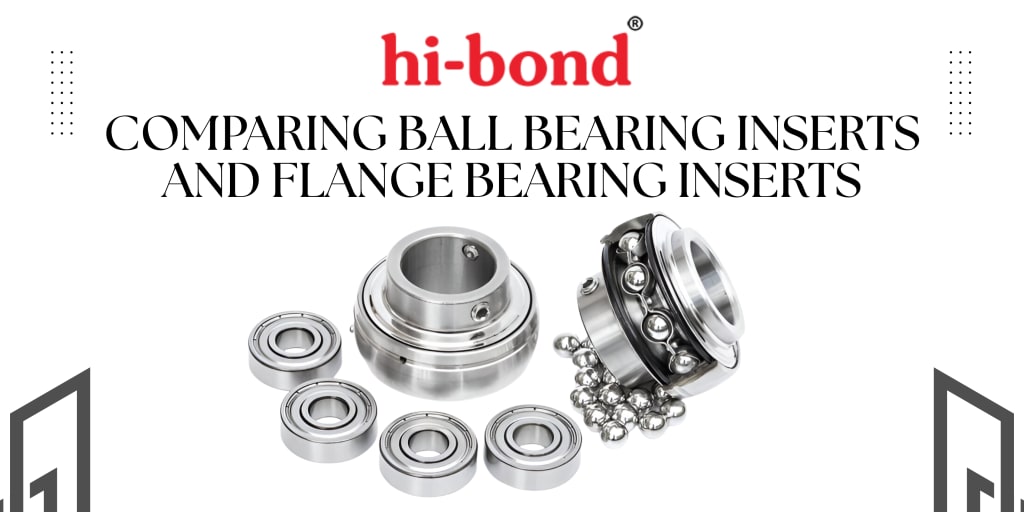
The latest advancements and innovations in mechanical engineering and machinery enable smoother movement and better performance. For this reason, choosing the correct bearing solution is crucial for improving machinery's durability.
This blog will discuss the differences between ball bearing inserts and flange bearing inserts. The flange bearings are vital in many applications, providing secure stability and reliable mounting.
This detailed debate will provide insights into the primary mechanical components like eccentric locking collars, pillow blocks, and mounting units.
These best practices resolves issues like load capacity, high-speed operation, and application needs.
Understanding The Fundamentals Of Bearing Basics
Bearings are integral to the operation of countless machines and mechanical systems. They are primarily engineered to support rotating and oscillating motion while reducing friction and wear on interacting components. Two common bearings used in many industrial environments are flange and ball bearing inserts.
Ball bearing inserts are specially designed to be versatile. They are frequently used in multiple scenarios where reducing friction and delivering smooth, high-speed rotation are prerequisites.
These inserts are primarily constructed with high-quality materials and feature a precision-machined outer ring, also known as an outer race, to maintain alignment and reduce wear.
The ball bearing insert is often joined with set screws in multiple housing units to ensure a secure fit and maximum performance, under dynamic operational conditions.
On the contrary, flange-mounted bearings showcase a flange design that allows for direct mounting onto a surface.
This design saves space usage in installing compact assemblies, offering added stability.
They are helpful in diverse applications where mounting units offer flexibility and support, especially during integration with pillow blocks and other related precise mounting mechanical components.
Primary Design Considerations That Define Bearing Performance
When selecting between flange and ball bearing inserts, several design and performance criteria must be considered.
Some crucial factors to consider for the perfect selection include:
Increasing Load Capacity For Improved Operational Efficiency
Load capacity is an essential factor in choosing the perfect bearing.
Both types of insert bearings are engineered to manage varying load capacities.
Ball bearing inserts are mainly designed to handle various applications involving complex radial loads, where the bearing loads are applied perpendicular to the axis of rotation.
Flange bearing inserts provide a unique design that supports both radial and axial loads. This process makes it suitable for high-load applications that require improved security.
Precision And Reliability In High-Speed Operations
In multiple applications where high speed is necessary, insert ball bearings are usually the preferred option due to their design optimized for fast rotational movement.
Their low-friction ball elements allow smoother and more efficient operation at increased speeds.
Many flange-mounted bearings are specially engineered to support high-speed operations in machines.
When these types of bearings are combined with materials and design principles that prioritize precision engineering.
Checking Mounting Flexibility In Bearings
Bearings should be installed and mounted to ensure alignment and reliability.
A flange-mounted bearing from a reliable bearing manufacturing company, featuring an integrated flange, offers a significant advantage by simplifying the mounting process.
This results in easier integration with mounting and housing units. The ball bearing inserts rely on eccentric locking collars or set screws for secure fastening. It provides additional flexibility in assembling bearing units in different configurations.
Customized Bearing Solutions Created For Unique Application Needs
The primary decision to use flange or ball bearings often comes down to the specific application needs.
Multiple parameters like temperature variations, operating environment, and space limitations should be taken into account.
For example, in applications requiring a compact housing unit, the design of flange-mounted bearings can be more beneficial.
In contrast, the inserted ball bearings provide the necessary performance edge in machines that require extended operational cycles at high speeds.
Material Quality and Better Engineering Precision
The quality of the materials used in manufacturing these mechanical components is non-negotiable to ensure long-term performance and reliability. Both types of bearing inserts are produced from high-quality alloys and engineered components to withstand rigorous operational conditions.
Precision machining in outer race manufacturing ensures these mechanical components maintain integrity under higher stress.
This high level of precision is necessary to maintain low friction levels and avoid premature wear in critical applications.
The use of advanced manufacturing process refers small components like set screws or components like eccentric locking collars are perfectly aligned and designed to offer the desired load support and capacity.
Combining these engineered components and their respective functions is a testament to the precision engineering of modern machinery.
A Wide Range Of Industrial Applications
Customizable bearing solutions have become invaluable across various industrial sectors, including automotive, manufacturing, aerospace, and agricultural industries.
Flange and ball bearing inserts are selected for different applications to maximize machinery's safety, efficiency, and longevity. There are a few primary examples that include:
Powering Performance: Bearing Solutions for the Automotive Industry
In the automotive industry, insert ball bearings are used in multiple components where smooth rotation and high speed are necessary, such as in engine components or transmission systems.
On the contrary, flange bearings find applications in environments where a strict mounting configuration is crucial. For example, it is used in auxiliary systems for stable and secure attachment.
The Crucial Role Of Bearings In Heavy Industrial Machinery
Industries that manufacture heavy-duty machinery rely on bearings with a mounted flange due to their versatility in supporting axial and radial loads.
The mounted flange design provides a reliable solution for addressing gaps in critical, space-limited environments.
Ball bearing inserts are found in applications such as conveyor systems, where continuous high-speed motion is required.
High Performance Bearings In The Aerospace Sector
Aerospace applications demand incredibly high durability and precision. Due to severe operational conditions and rigorous performance requirements, both types of inserts are customized to specific requirements.
Ball bearings are used in various components where reducing friction at high speeds is crucial.
In contrast, flange-mounted bearings ensure mounting integrity in aerospace systems, where vibration damping plays a vital role in operating equipment.
Proven Installation Techniques That Maximize Bearing Efficiency
The integration and installation of bearing units should follow best practices for optimal durability and performance. Professionals should carefully consider the compatibility of each component within the complete assembly.
There are several best practices to achieve seamless integration.
The Role Of Alignment and Clearance In Bearing Life
Ensure the bearing assembly's outer ring and outer race are correctly streamlined during installation. Improper alignment can result in friction errors and instant wear of the bearing surfaces.
Secure Fastening Techniques for Reliable Component Assembly
Use high-quality set screws and eccentric locking collars to maintain a secure fit for the insert ball bearing, while ensuring that flange-mounted bearings are firmly attached through their integrated flange design. This process is necessary when the units of these mechanical components are subjected to high-speed or heavy load conditions.
Keep The Bearings In the Top Position
Implement scheduled maintenance protocols that involve checking for wear or misalignment.
This simple process includes detecting additional components, like pillow blocks or other mounting units impacts system performance.
Regular maintenance practices ensure that flange and ball bearing inserts from reputable flange bearing manufacturers continue to operate within their specified load capacities and performance limits.
Popular Trends And Innovations Affecting The Future Of Motion
Advancements in technology will continue to increase innovation in the design and manufacturing of bearing solutions.
The evolution of material science has led to the development of advanced coatings and composite materials that improve the durability, load capacity, and friction resistance of both flange and ball bearing inserts.
In addition, innovations in additive manufacturing and precision machining enable the creation of even more complex designs, which can further optimize performance for specific application scenarios.
Innovative trends toward automated and digitally monitored machinery are increasing the focus on precision-engineered insert bearings.
The integration of sensor technology into mounting and housing units can provide real-time performance data, enabling predictive maintenance and an extended operational lifespan.
These advancements are set to redefine how industries manage machine health and efficiency in the future years.
Maintain Durability and Achieve Peak Performance In Machines By Selecting The Perfect Bearing Inserts
Both flange and ball bearing inserts offer distinct advantages, and selecting the ideal option can impact the lifespan, efficiency, and performance of the machine.
Ball bearing inserts are suitable for high-speed, lower-load environments with flexible mounting requirements.
Understanding the variations, such as using eccentric locking collars, outer rings, pillow blocks, and mounting units, can help streamline installation and maintenance while ensuring reliability.
As a reputable bearing manufacturing company, you can ensure that your bearing inserts are made from excellent materials designed to suit your unique environment. This process will reduce downtime and increase the productivity of machinery.
About the Creator
What I Noticed When Light Stopped Feeling Sharp
I never would have described the light around me as a problem. It was bright enough. Clean. Modern. Exactly what you expect in a well designed indoor space. If someone had asked me whether the lighting felt uncomfortable, I probably would have said no.
By illumipure5 days ago in Journal



Comments
There are no comments for this story
Be the first to respond and start the conversation.