
Charlie Kirk Memorial 2025
Trump, JD Vance, and Tens of Thousands Gather in Arizona to Honor a Fallen Conservative Voice

Introduction: A Nation Pauses for Charlie Kirk
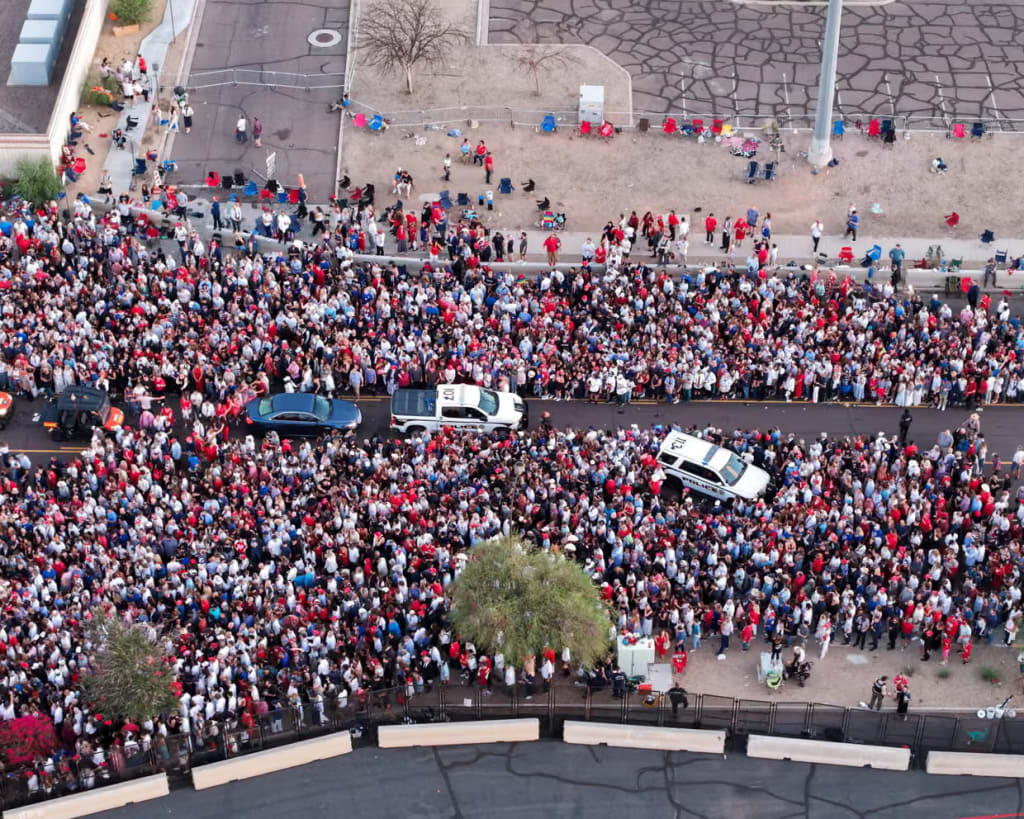
On September 21, 2025, the American conservative movement gathered in Glendale, Arizona, for one of the largest political memorials in recent history. More than 100,000 people filled the State Farm Stadium, home of the Arizona Cardinals, to mourn the death and celebrate the life of Charlie Kirk—the 31-year-old conservative activist, commentator, and founder of Turning Point USA, who was tragically shot dead just days earlier.
The event drew a guest list that could rival a presidential inauguration: Donald Trump, Vice President JD Vance, White House officials, conservative media figures like Tucker Carlson, and Charlie’s widow, Erika Kirk, who has now stepped into the role of leading Turning Point USA.
The memorial wasn’t just a funeral. It was a political moment, a cultural rallying cry, and a test of how America mourns in the age of deep political division.
Who Was Charlie Kirk? The “Youth Whisperer” of the Conservative Movement
Before his untimely death, Charlie Kirk had become one of the most polarizing—and influential—voices in American politics.
Founder of Turning Point USA (TPUSA): Kirk launched TPUSA in 2012, aiming to mobilize conservative students across college campuses. By 2025, it had grown into one of the largest right-wing youth organizations in the country.
Close Trump Ally: Kirk’s loyalty to Donald Trump was unquestionable. He regularly appeared at rallies, campaigned for Trump’s policies, and positioned himself as the bridge between Trumpism and America’s younger generation.
Media Force: His podcast, speeches, and social media presence made him a conservative celebrity, but also a frequent target of criticism for his fiery rhetoric, unapologetic nationalism, and battles against what he called “woke culture.”
Critics dismissed him as a provocateur. Admirers hailed him as a patriot. Either way, Charlie Kirk was impossible to ignore.
The Tragic Death in Utah: A Nation Shocked
On September 10, 2025, Charlie Kirk was shot and killed during an appearance at Utah Valley University.
The Scene: Kirk had just started the first stop of his “American Comeback” campus tour, addressing an audience of over 3,000 students.
The Attack: Prosecutors say Tyler Robinson, a 22-year-old Utah resident, pulled the trigger, striking Kirk with a single fatal shot.
The Charges: Robinson faces multiple counts, including aggravated capital murder. Prosecutors have announced they will seek the death penalty.
The attack stunned both Republicans and Democrats. While both parties condemned the killing, its political aftermath has deepened divisions in Washington.
Political Fallout: Grief, Retribution, and the Question of Free Speech
The killing immediately triggered a firestorm.
Republican Response: Trump officials vowed vengeance—not just against the suspect, but also against individuals and groups they believed disrespected Kirk’s death. Vice President JD Vance even endorsed a “doxing campaign” to expose and punish critics.
Cancellations and Penalties: In the days following the killing, dozens of Americans—teachers, students, journalists, even Jimmy Kimmel, whose late-night show was yanked off air—faced consequences for remarks about Kirk.
Democratic Dilemma: While Democrats condemned the murder, they wrestled with how to respond to a Republican resolution in Congress honoring Kirk. Ultimately, a majority supported it, though dozens abstained or opposed.
Civil liberties advocates warn that the crackdown risks sliding into government censorship, ironically resembling the “cancel culture” Kirk himself once condemned.
The Memorial at State Farm Stadium: A Gathering of the Movement
The memorial service in Glendale wasn’t just a reflection of personal grief—it was a demonstration of political strength.
Attendance: Over 100,000 people arrived, far exceeding the 63,400 fixed seats of the stadium. Overflow crowds filled the Desert Diamond Arena nearby.
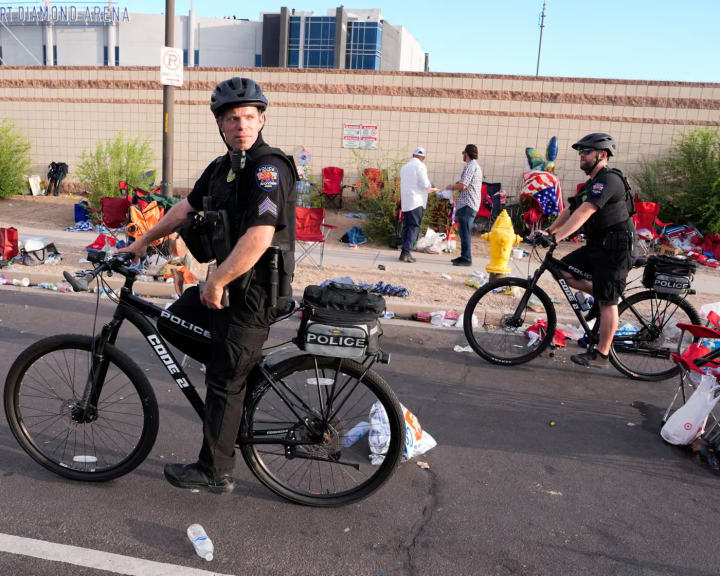
Security: The Department of Homeland Security gave the event a Special Event Assessment Rating Level 1, the same as a Super Bowl or presidential inauguration. Metal detectors, drones, and a massive police presence turned Glendale into a fortress.
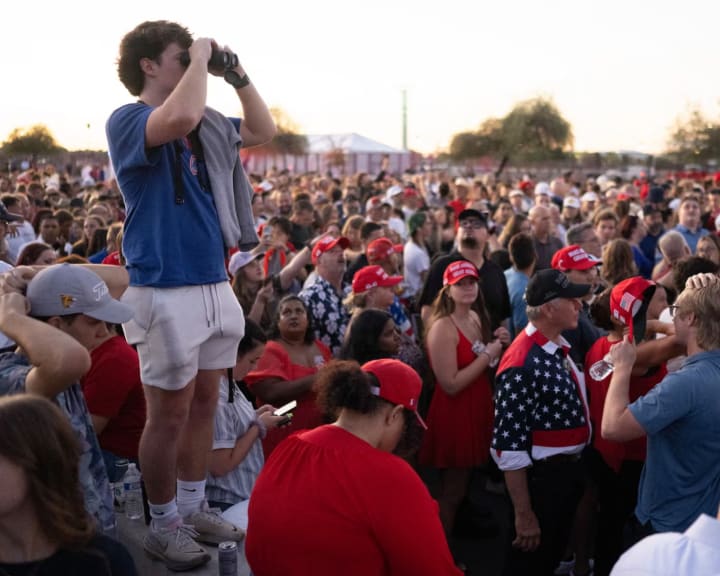
Atmosphere: People camped out overnight to secure spots. Flags, banners, and “Justice for Charlie” signs painted the event as both memorial and rally.
Trump’s Role: The Final Speaker
Donald Trump, now back in the White House, boarded Air Force One to Arizona to deliver what many anticipated would be the most powerful speech of the day.
“We’re here to celebrate the life of a great man. Really a great man. A young man. That something like this could’ve happened is not even believable. This will be a very tough day.” – Trump, before leaving the White House
Trump was scheduled as the final speaker, cementing his role not just as president but as the symbolic leader of the movement Charlie Kirk helped inspire.
JD Vance: From Protégé to Vice President
Vice President JD Vance, once an Ohio senator and now Trump’s running mate turned VP, spoke emotionally about his friendship with Kirk.
“Last week, we brought my dear friend Charlie Kirk home one last time. Today, we return to Arizona to remember Charlie and honor his sacrifice. May he eternally rest in peace, and may God watch over Erika and their beautiful children.”
For Vance, Kirk wasn’t just a political ally—he was a friend, a peer, and in many ways, a reflection of the youthful energy behind the MAGA movement.
Erika Kirk: Carrying the Torch
Perhaps the most emotional speech came from Erika Kirk, Charlie’s widow. Recently announced as the new head of Turning Point USA, Erika’s presence symbolized both personal resilience and the continuation of her husband’s mission.
Observers note that her leadership could reshape the conservative youth movement, infusing it with both grief and renewed determination.
The Guest List: Who’s Who of Conservative Politics
The memorial drew a roster that underscored its significance:
Susie Wiles – White House Chief of Staff
Marco Rubio – Secretary of State
Robert F. Kennedy Jr. – Health Secretary
Tulsi Gabbard – Director of National Intelligence
Tucker Carlson – Former Fox Host, commentator
Stephen Miller – White House Deputy Chief of Staff
Sergio Gor – U.S. Special Envoy for South and Central Asia
Alongside them were grassroots supporters, college students, and ordinary Americans who felt Kirk gave them a political voice.
Legacy and Questions for the Future
Charlie Kirk’s death leaves behind a divided legacy:
To Supporters: He was a patriot who inspired millions of young conservatives.
To Critics: He was a polarizing figure who deepened America’s culture wars.
To Historians: He may be remembered as one of the first political influencers who blurred the lines between activism, media, and celebrity.
But his death also raises questions:
Will his movement grow stronger under Erika’s leadership?
Will Republicans’ response to his killing lead to long-term restrictions on free speech?
Will America see more political violence in the years ahead?
Why This Story Matters
The Charlie Kirk memorial 2025 isn’t just a conservative event—it’s a story about:
The intersection of grief and politics.
The power of mass movements in the digital age.
The fragility of free speech in a hyper-partisan environment.
For readers searching terms like “Trump Arizona memorial 2025,” “Charlie Kirk funeral live,” “JD Vance tribute,” “Erika Kirk Turning Point USA leadership”, this blogpost provides a comprehensive overview.
Conclusion: Mourning in the Age of Division
The scene in Glendale was both somber and electric. Tens of thousands wept, prayed, and applauded. Trump spoke as the movement’s patriarch. JD Vance spoke as the emotional friend. Erika Kirk emerged as the symbol of continuity.
But beyond the speeches and the ceremony, the memorial reflected something bigger: America’s struggle with grief in a fractured political era. Charlie Kirk’s death is now part of U.S. political history—not just for the tragedy of his murder, but for the movement it may yet fuel.
About the Creator
Omasanjuwa Ogharandukun
I'm a passionate writer & blogger crafting inspiring stories from everyday life. Through vivid words and thoughtful insights, I spark conversations and ignite change—one post at a time.
Keep reading
More stories from Omasanjuwa Ogharandukun and writers in Journal and other communities.
Itsekiri vs. Ijaw in Ogbe-Ijoh — Legal History, Court Rulings, and Ownership Disputes
Itsekiri vs Ijaw: Legal Verdicts on Ogbe-Ijoh Land Ownership & History Focus Keywords: Ogbe-Ijoh ownership Warri land ownership cases Itsekiri legal rights Warri Ijaw tenure Warri Suit W/148/56, SC/450/65, W/116/56
By Omasanjuwa Ogharandukun4 months ago in Journal
The goals I did not achieve
Every writing goal I made for the year is a wash. It has been this way for a while, but I think it's important to be open about my failures and the reality of how life can get in the way. This is especially true considering the several times I have posted on Vocal about my writing goals, how I was changing my approach, and where I was hoping to be for the upcoming year. I will probably do that again in a couple months, but for now, it is time to acknowledge where I am today.
By Kay Husnick20 days ago in Journal


Comments
There are no comments for this story
Be the first to respond and start the conversation.