
Catching Cancer Early | Colon Screening Market Accelerates as Awareness and Compliance Rise by 2030
The growing emphasis on early detection and the need for accessible, non-invasive diagnostic options are expected to play a major role in propelling the colon screening market during the forecast period.

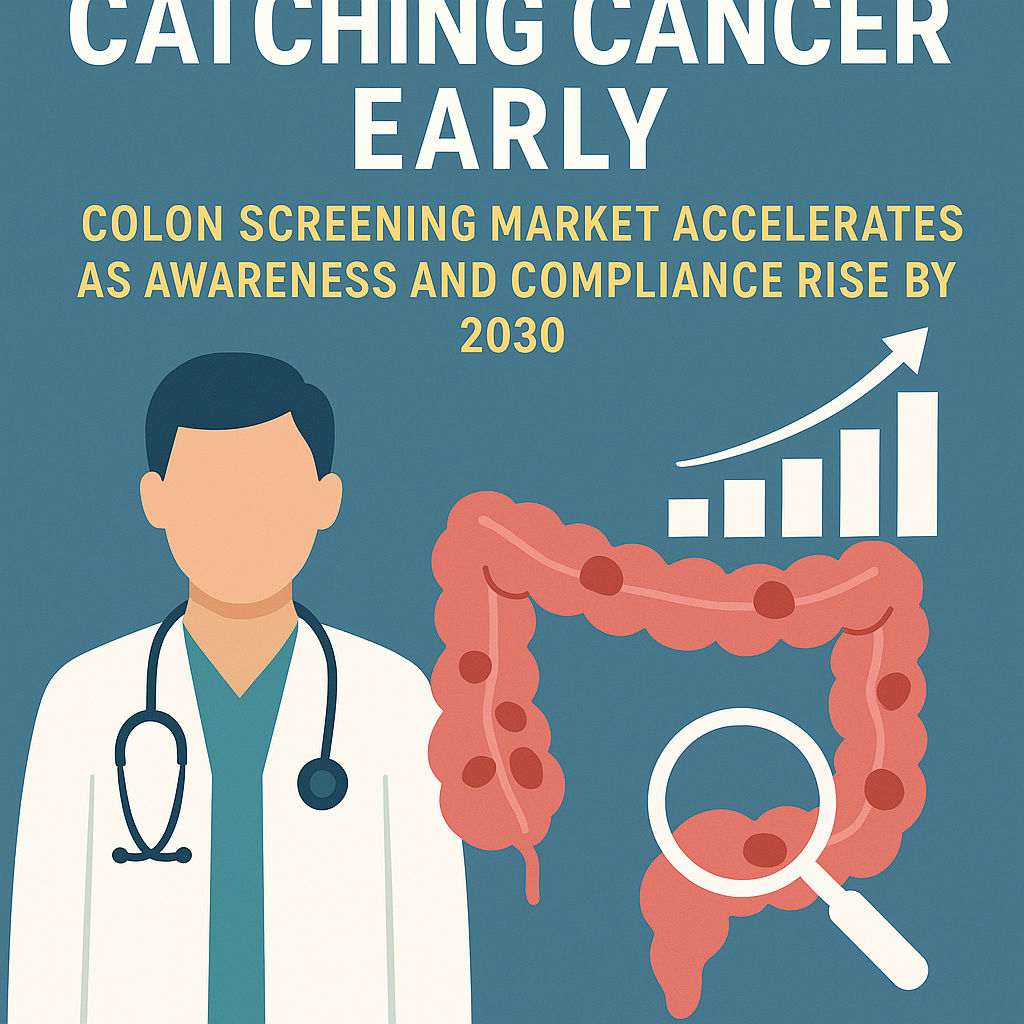
After decades of low compliance and public awareness, colon cancer screening is becoming mainstream as the cornerstone of preventative medicine. By 2030, widespread screening, technological breakthroughs, and public health initiatives will be lifesaving and catapult the colon screening market to new heights.
Overview: The fight against colorectal cancer
Colorectal cancer is the third most common cancer and the second leading cause of cancer death globally. While late-stage colorectal cancer has a poor prognosis, if caught early, the five-year survival rate is over 90%. Despite these statistics, most cases are diagnosed in advanced stages due to a lack of awareness or access to screening.
As healthcare systems, government agencies, and advocacy groups ramp up awareness campaigns and encourage regular screenings, public perceptions are changing. Routine colon screening is moving from discretionary to mandatory in many care models.
Drivers of Colon Screening Market Growth
1. Increased Awareness and Screening Compliance
Awareness campaigns and recommendations from the World Health Organization (WHO), Centers for Disease Control and Prevention (CDC), and national cancer societies are translating to higher compliance with screening guidelines. Initiatives like starting colonoscopy at age 45 instead of 50 are expanding the addressable market.
2. Emerging Screening Technologies
The market is experiencing a boost from the adoption of non-invasive and convenient screening options such as:
- Fecal Immunochemical Tests (FIT)
- Stool DNA tests (Cologuard)
- CT colonography
- Blood-based biomarkers in development
These alternatives to traditional colonoscopy are key for patient engagement and early detection of asymptomatic individuals or those averse to conventional screening methods.
3. Policy and Reimbursement
Routine colorectal screening is now covered by national health programs and insurance providers worldwide. In the U.S., the Affordable Care Act requires private health insurance providers to cover preventive screenings. Meanwhile, several European and Asia-Pacific countries are launching or expanding population-based screening programs and initiatives to make these tests accessible to all.
4. Home-Based Testing and Digital Health Adoption
The COVID-19 pandemic increased demand for at-home, remote diagnostics and healthcare touchpoints, including over-the-counter colon screening kits. Telehealth visits for screening discussions and digital reminders and nudges are improving test adherence, while lab automation and AI tools are enabling faster processing and high accuracy.
Regional and Country Analysis
North America and Europe are the largest markets due to high public awareness and strong healthcare systems with integrated care models. Asia-Pacific, however, is the fastest-growing region due to expanding healthcare access, urbanization, and a growing cancer burden in China, India, South Korea, Indonesia, and other developing markets.
Countries like Japan and South Korea are developing national screening programs to tackle their growing colorectal cancer rates. In China and India, government initiatives to strengthen primary care and prevention are helping overcome logistical and cultural barriers to testing.
Global Colon Screening Market Size and Trends 2030
The colon screening market is projected to register a CAGR of over 4.39% through 2030, driven by population aging and initiatives to improve early detection in the face of rising colorectal cancer incidence and mortality. Investments in AI-driven tools, liquid biopsy technologies, and predictive risk assessment platforms from startups and established players are pushing the envelope on what’s possible in early cancer screening.
Challenges and Considerations
Despite these positive trends, the market still faces obstacles such as:
- Colonoscopy and stool test hesitancy due to discomfort or social stigma
- Access and adoption in rural or underserved communities
- Test accuracy and false-negative rates, particularly with non-invasive tests
- Disparities in access and health outcomes among minority and lower-income groups
Addressing these challenges and the overall barriers to population-wide screening will require ongoing investments in public education, healthcare infrastructure, and innovation.
The Takeaway
Colorectal cancer is a growing global health threat. The only way to reverse this trend is to catch the cancer earlier. The colon screening market is shifting from a reactionary model to a more preventive, patient-centric, and technology-driven one. Widespread screening, innovative tools, and public-private partnerships by 2030 will be life-saving and transform how we fight colorectal cancer.
Colonoscopy is not just a recommendation. It’s a lifesaving imperative.
About the Creator
Silvie Karson
Passionate storyteller exploring the world of trends. With a background in digital marketing, I craft compelling narratives that inform and inspire. Whether diving into deep-dive features, growth analysis, or trend analysis.
Keep reading
More stories from Silvie Karson and writers in Journal and other communities.
Keeping It Cool, Delivering Care | Healthcare Cold Chain 3PL Market Poised for Growth Through 2030
With an increasing reliance on temperature-sensitive products in healthcare systems across the globe, the Healthcare Cold Chain Third-Party Logistics (3PL) Market is set to experience significant expansion. Ranging from biologics and vaccines to cell therapies and diagnostic samples, the rising demand for dependable and efficient cold chain logistics solutions is revolutionizing the way lifesaving medicines are stored, transported, and delivered to patients everywhere.
By Silvie Karson7 months ago in Journal
The Future of Work in the Age of AI
AI changed the workforce faster than any other technology. Artificial intelligence has become such a big part of our daily lives that most of us don’t even realize it. But what happens when AI comes into your work? Companies are investing in AI right now because it’s cheap to operate and runs nonstop.
By Mark Arthura day ago in Journal



Comments
There are no comments for this story
Be the first to respond and start the conversation.