
Calcutta as Kolkata - History
A history that the name of the place tells

Calcutta is the capital of the Indian state of West Bengal. The second largest city in India by area.. The city is situated on the banks of the Hooghly river. Considered to be the third most populous city in India. The population of the city is around 1.5 crore. It is the eighth largest city in the world by area.
Calcutta was the capital of India till 1911 during the British rule. At that time there was excellence in education, science, industry, culture, and politics.
Kolkata was economically backward after 1954 due to political violence and problems. After 2000, there has been little economic growth.
However, compared to other Indian cities, Kolkata still lags behind in tackling the problems of poverty, environmental pollution and traffic congestion.
Kolkata's role in India's freedom struggle is significant. Besides, the city of Kolkata differed from other Indian cities in several political and social changes such as the dominance of leftist parties and the growth of trade unions.
The current name of Kolkata and the old name of Calcutta are derived from the ancient name of the earlier Kalikatta Chitur, and various reasons are said for this name. Some also believe that the name Kaligatta may have originated from the name Kalisetra.
The name of the city, which used to be Calcutta, was changed in 2001 to the Bengali pronunciation of Kolkata. The name of this city was always called Calcutta by the Bengalis, but the British called it Calcutta. Thus its official name was given as Calcutta.
In 2001, Kolkata changed its own name to its official name. Excavated symbols found in a small town near the city of Kolkata indicate that the area has been inhabited since the second century BC. However, a clear history of the city can be traced back to the arrival of the British East India Company in the region after 1690. The credit for creating this city goes to "Job Cammock" who served as a high official of the East India Company.
Kolkata is located near the mouth of the Ganges in eastern India. It is situated along the Hooghly river along its south-north direction. Like many other parts of the Ganga plains, the region is rich in rich alluvial soils and clays. According to the Geological Survey of India, the location of the city is in the third earthquake zone, so the area is likely to be affected by earthquakes.
Also, the region is the most vulnerable region to tropical storms, according to the United Nations Development Programme's report, covering an area of about 185 square kilometers within the Kolkata Municipal Corporation. Including the suburban areas, the area of Kolkata city is at least 1750 square kilometers. It includes 72 cities and 527 major towns. The city is generally divided into three parts, North, Central, and South.
North Kolkata area is the oldest part of the city.. South Kolkata is the area developed after the independence of India. The area is mostly seen as an affluent area. Kolkata has a subtropical climate with dry and wet seasons. The average temperature of the year is 26.8 C. The region receives monsoon rains from the southwest monsoon. Environmental pollution is a major problem of Kolkata city.
The city of Kolkata is more affected by pollution than any other Indian city. Due to toxic substances, people are suffering from lung cancer and tuberculosis. Kolkata is the commercial and financial center of eastern India.
Calcutta Stock Exchange is the second largest stock exchange in the country. . The largest international airport in the region is located in the city of Kolkata. The city of Kolkata, which was leading in all fields like economy, science and art in the past, fell behind due to various reasons after the independence of India. Many industries were closed.
Many industries have shifted to other cities After 1990 the industries are making little progress due to the liberalizing policy introduced by the Indian government. There are only 928 females per 1000 males. This is lower than the national average.
It is said that the reason for this is that many men from rural areas leave their families behind and live alone in the city. Kolkata's literacy rate is 81 percent. Bengalis constitute 55 percent of the population here, followed by Marwaris and Bihar 20 percent.
Other communities living in Kolkata include Tamils, Nepalis, Oriyas, Telugus, Assamese, Gujaratis, Anglo-Indians, Armenians, Tibetans, Marathas, Punjabis and Parsis. Important languages spoken in Kolkata are Bengali, Hindi, Urdu, English, Oriya, Bochpuri. According to the census, 80 percent of the people living here are Hindus.
25 percent Muslims, 0.88 percent Christians and 0.46 percent Jains live here. A case in point is the theatrical tradition known as "Chatra" in Kolkata. People love to watch Bengali movies and Hindi movies. The place called "Daliganj" here is the center of Bengali film production. This is why the Bengali film industry is also called "Tollywood".
Kolkata's film industry has given many renowned directors to the film world. Rice and fish curry are important dishes of Kolkata. Kolkata is also famous for desserts like rasagulla, sandesu and sweet curd.
About the Creator
Federal Man
The man next to you
Keep reading
More stories from Federal Man and writers in Journal and other communities.
CHENNAI - India
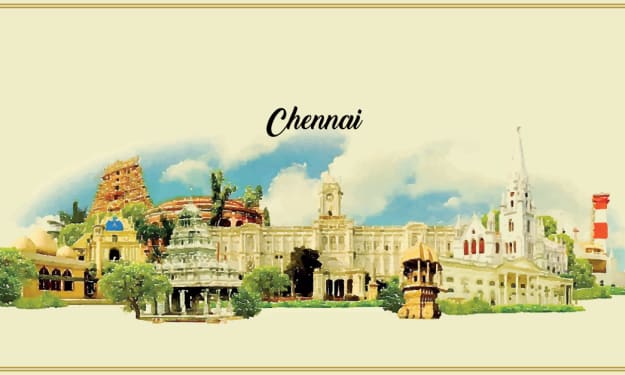
Chennai : History It is the largest city in India after Delhi, Mumbai and Calcutta. Gateway to South India. Capital of Tamil Nadu. One of the best port cities in India. 2000 years old. It is a great center of arts, culture and culture. The city has the world's second longest and most beautiful beach (marina). Excellent transport connectivity not only to Indian cities but also to countries around the world.
By Federal Man3 years ago in Journal



Comments
There are no comments for this story
Be the first to respond and start the conversation.