
Buffett Hoards $380 Billion in Cash Before Exit: Legendary Era Closes, Abel Era Begins
The $380 Billion Question: Can Greg Abel Steer the Berkshire Fortress Without Its Legendary Architect?

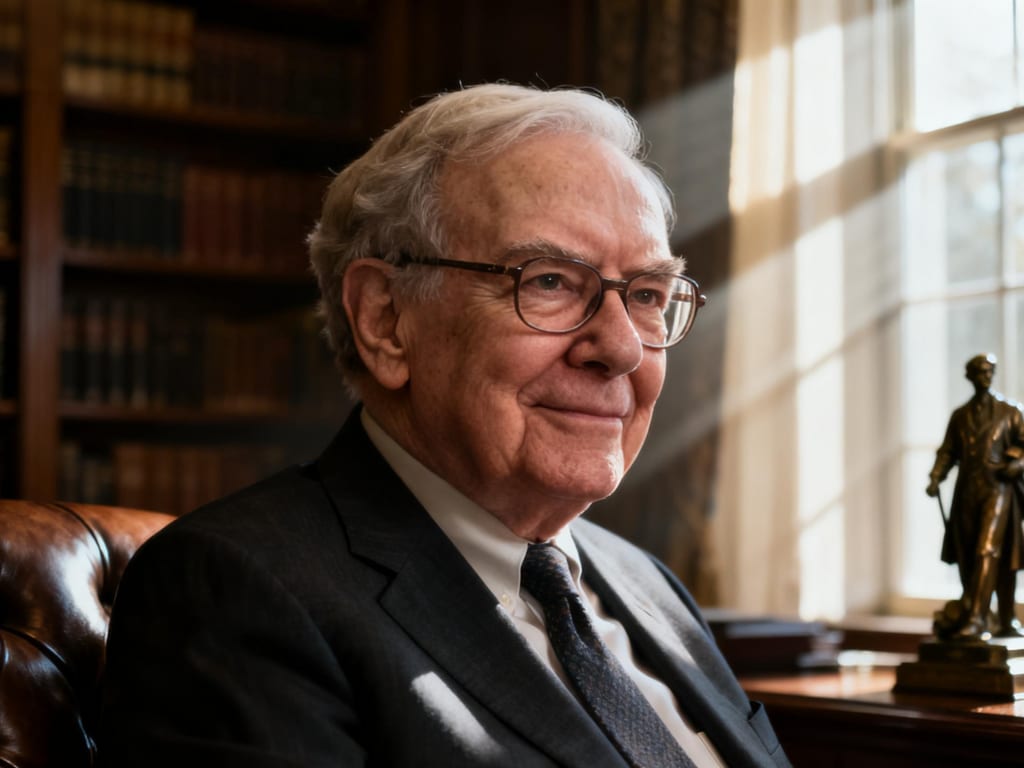
Curtain Call Strategy: Trillion-Dollar Cash and Accelerated Philanthropy
Buffett’s exit involves not only a leadership transition but also meticulous capital and wealth arrangements.
The Q3 earnings report released on November 1 revealed that Berkshire’s total revenue reached $94.972 billion, exceeding expectations, with net income of $30.796 billion — a 17% year-over-year increase. Operating profit surged 33.65% to $13.485 billion, driven primarily by insurance underwriting profits that skyrocketed 200% year-over-year.
Most notably, the company’s cash and cash equivalents reached $381.67 billion, while it has net sold stocks for 12 consecutive quarters — underscoring Buffett’s cautious stance amid the S&P 500’s record highs.
Portfolio adjustments proceeded in parallel: the top five holdings (American Express, Apple, Bank of America, Coca-Cola, Chevron) still accounted for 66% of the portfolio, while reducing holdings in Apple (nearly 70% cut year-to-date) and Bank of America.
The company fully exited T-Mobile, Citigroup, and BYD (held for 14 years), while systematically increasing positions in healthcare stocks like UnitedHealth and infrastructure/manufacturing stocks like Nucor Steel, adhering to its value investing logic of low valuations and high cash flow.
Regarding wealth succession, Buffett accelerated his charitable giving by converting 1,800 Berkshire Hathaway Class A shares into 2.7 million Class B shares, donating over $1.3 billion in stock to four family foundations.
To date, his total charitable donations exceed $60 billion, fulfilling his pledge to dedicate 99% of his wealth to philanthropy. Simultaneously, he retains sufficient Class A shares to bolster shareholder confidence for successor David Abel.
Power Transition: Abel’s Legacy and Challenges
At 63, Abel had long been designated by Buffett as his successor. This executive, who joined from PwC when the firm was acquired by Berkshire in 1999, became CEO of Berkshire Hathaway Energy in 2008 and was promoted to Vice Chairman of Non-Insurance Operations in 2018.
Under his leadership, the energy division has achieved 15 consecutive years of revenue growth, maintaining a debt-to-equity ratio consistently below 45% — significantly lower than the industry average. Buffett has lavished praise on him, stating that his “understanding of the insurance business far exceeds that of most seasoned executives” and that he is the best person to manage shareholder wealth.
Abel has explicitly stated his commitment to upholding Berkshire’s core values and “fortress-like financial” principles, emphasizing that the company’s massive cash reserves represent “a tremendous strategic asset.”
Compared to Buffett, Abel demonstrates greater openness to new technologies, leading market expectations that he may expand investment layout in the tech sector while maintaining the company’s value investing foundation.
Yet skepticism persists: Since Buffett announced his succession plan in May, Berkshire’s stock has fallen 16%, underperforming the S&P 500’s 11% gain over the same period. KBW analysts even issued a rare “sell” rating, expressing concerns over the fading “Buffett premium” and uncertainty surrounding his successor.
Market Game: Where Will the $380 Billion Ammunition Go?
Buffett once wrote in a letter to shareholders: “Moments that allow us to be ‘deeply immersed in opportunities’ are extremely rare.” The current record cash reserves embody this philosophy.
Analysts note that amid elevated global market valuations and escalating geopolitical and trade tensions, Buffett’s cash hoarding strategy may signal anticipation of bargain-hunting opportunities after market corrections, while also granting Abel flexible capital allocation space.
Industry trends suggest healthcare, infrastructure, and manufacturing sectors have already drawn investment attention, while undervalued targets in new energy and technology could emerge as potential directions for the Abel era.
However, Abel faces not only the pressure to replicate Buffett’s investment miracles but also new challenges like shifting global economic landscapes and technological disruption. As market analysis suggests, the core of Berkshire’s succession lies in preserving its value investing philosophy and corporate governance framework.
How to transform the $380 billion cash hoard into returns in this new era will be the defining test of the “Abel era.”
The conclusion of this 60-year investment saga marks not only one man’s farewell but a pivotal turning point for the global value investing community.
Buffett’s final strategic moves paved the way for his successor. Whether Abel can navigate the evolving landscape while upholding core principles will determine whether Berkshire Hathaway can sustain its legacy of excellence for decades to come.
About the Creator
Cher Che
New media writer with 10 years in advertising, exploring how we see and make sense of the world. What we look at matters, but how we look matters more.
Guard Your Battery
Why are some people so attractive just by standing there? It’s not because they are "likable," but because they don’t need everyone to like them. I realized later that truly charismatic people allow themselves to be criticized, but they never criticize themselves. They never try to please the world; instead, the world stops to watch them.
By Emily Chan - Life and love sharing2 days ago in Poets




Comments
There are no comments for this story
Be the first to respond and start the conversation.