
Blockchain in Retail Supply Chain
Transforming Operations and Shaping the Future

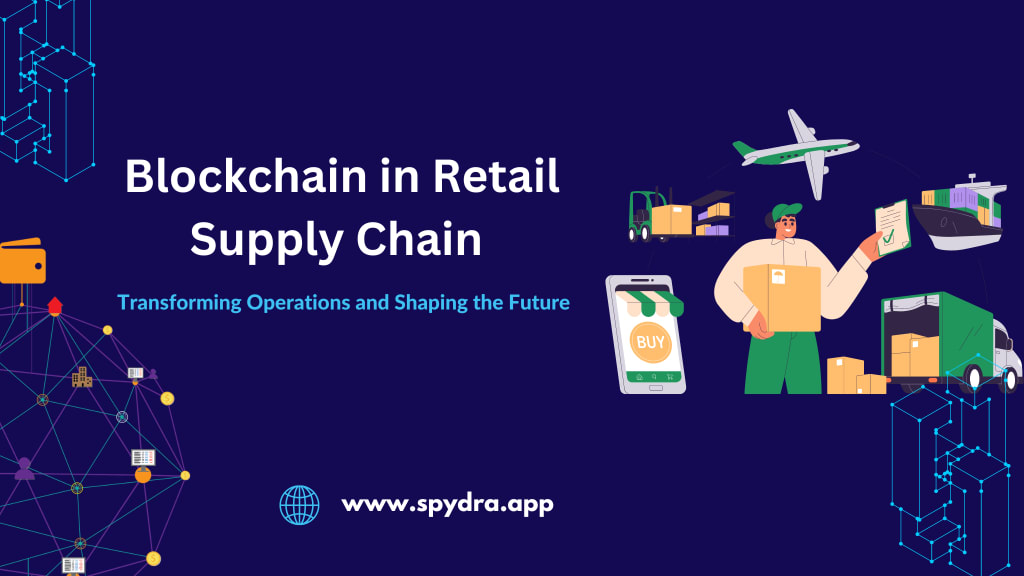
One of the most transformative technologies making waves in the retail supply chain is blockchain. With its potential to revolutionize traditional processes and enhance transparency, blockchain is poised to reshape the future of retail supply chains. In this blog, we will delve into the impact of blockchain on the retail supply chain and explore the future possibilities it presents.
Supply Chain Digitization and Blockchain:
Amidst the era of rapid digitization, the transition from physical to digital formats has become a top priority for warehousing and logistics businesses. This shift towards digital operations is essential for the modern retail supply chain, as it enables real-time updates and scalability while paving the way for the integration of advanced technologies such as blockchain. By embracing blockchain technology, retailers can streamline operations, enhance transparency, and ensure the authenticity of products throughout the supply chain.
Enhanced Visibility and Transparency:
One of the key advantages of blockchain in the retail supply chain is its ability to provide enhanced visibility and transparency. Through the use of blockchain, businesses can track and trace the journey of products from their origin to the hands of consumers. This level of transparency not only instills trust among consumers but also allows retailers to identify and address inefficiencies within the supply chain, ultimately leading to improved operational efficiency.
Supply Chain Risk Management:
Disruptions have become a norm in the supply chain industry, ranging from natural disasters to geopolitical unrest. Blockchain technology offers a robust solution for risk management by enabling businesses to identify and plan for potential disruptions well in advance. By leveraging blockchain for risk management, retailers can mitigate the impact of unforeseen events and ensure the continuity of their supply chain operations.
Circular and Green Supply Chains:
Sustainability has become a focal point for businesses across industries, and the retail supply chain is no exception. Blockchain technology can play a pivotal role in driving the transition towards circular and green supply chains. By leveraging blockchain for tracking and verifying sustainability initiatives, retailers can demonstrate their commitment to reducing emissions and waste, thereby meeting the growing consumer demand for sustainable practices.
Big Data and Analytics:
The abundance of data available to retailers presents both opportunities and challenges. Blockchain technology can be integrated with data analytics to harness the power of big data for informed decision-making. By securely storing and sharing data on a decentralized ledger, blockchain enhances the accuracy and reliability of data analytics, enabling retailers to derive valuable insights for optimizing transportation routes, inventory management, and overall supply chain operations.
The Role of IoT and Blockchain:
The Internet of Things (IoT) has emerged as a critical component of the modern retail supply chain, enabling connected devices to communicate and transmit data wirelessly. When combined with blockchain, IoT can revolutionize inventory management, order fulfillment, and proactive maintenance. By leveraging IoT devices embedded with blockchain technology, retailers can streamline operations, reduce labor-intensive tasks, and enhance overall efficiency.
The Future of Blockchain in Retail Supply Chain:
Looking ahead, the future of blockchain in the retail supply chain holds immense potential for transformative advancements. As blockchain technology continues to evolve, new trends and applications are expected to emerge, further enhancing its impact on supply chain management. Retailers that embrace blockchain early on and adapt to the evolving landscape of technology will be better positioned to unlock value, reduce costs, and embrace new models of success.
In conclusion, blockchain technology is set to revolutionize the retail supply chain by enhancing transparency, streamlining operations, and driving sustainability initiatives. As businesses continue to navigate the complexities of supply chain management, embracing blockchain will be crucial for staying ahead of the curve and meeting the evolving demands of consumers and the industry. The future of blockchain in the retail supply chain is bright, promising a new era of efficiency, transparency, and sustainability.
About the Creator
Bomb Scare
It was 2027, and the world never thought it would happen. A missle hit the United States, but it wasn't where they had anticipated. A little town in the northeast was hit by a missile strike, they didn't know why, and they didn't know exactly where it hit, but they did know it was a coastal community, somewhere between Maine and Delaware.
By Gregory Payton5 days ago in Fiction



Comments
There are no comments for this story
Be the first to respond and start the conversation.