
Bitcoin Stands Strong at $71,000 as Trump Warns of Attacks on Iran’s “Crown Jewel
Bitcoin’s stability highlights its growing role as a potential safe-haven asset during global uncertainty.
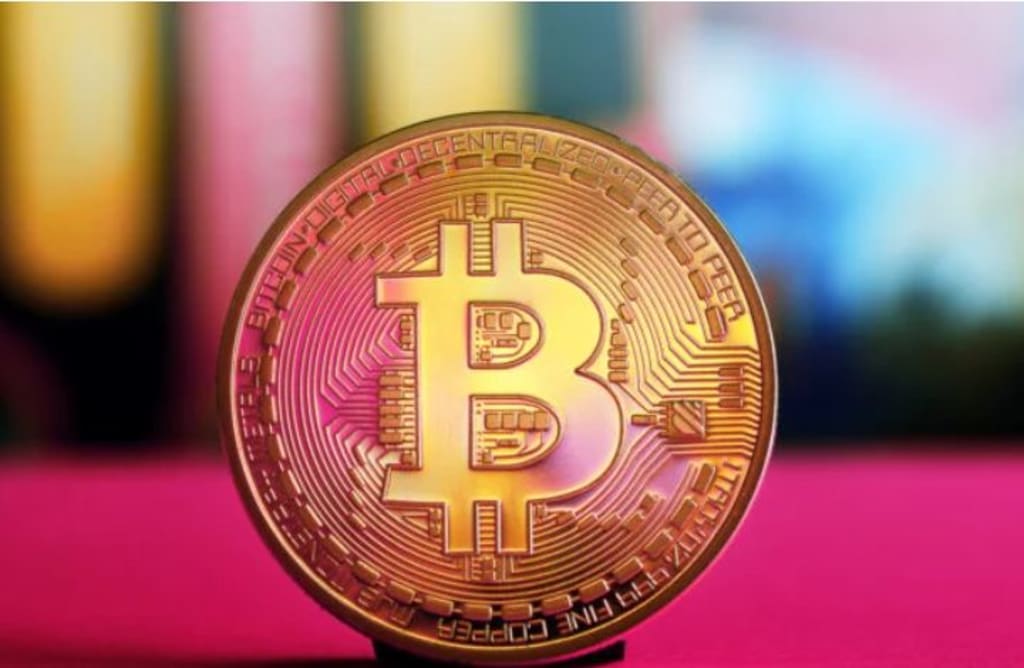
Global markets have been shaken by escalating tensions in the Middle East, yet Bitcoin continues to demonstrate remarkable resilience. As the digital currency holds firm near the $71,000 mark, investors are closely watching geopolitical developments following warnings from Donald Trump about potential attacks targeting what he described as Iran’s “crown jewel.”
The statement referred to Kharg Island, Iran’s primary oil export hub. The facility handles the vast majority of the country’s crude oil shipments, making it a critical piece of global energy infrastructure. Trump’s warning has intensified concerns about a wider conflict and possible disruptions in oil supply routes across the Persian Gulf.
Despite the rising geopolitical uncertainty, Bitcoin’s ability to maintain its value near $71,000 has surprised many market observers and reinforced the narrative that cryptocurrencies are becoming a modern form of financial refuge during times of instability.
Markets React to Escalating Conflict
Financial markets typically react sharply to geopolitical shocks. Oil prices often surge when supply routes are threatened, while stock markets can fall as investors shift toward safer assets.
The current situation is no different. With the possibility of military action around Kharg Island, energy markets are bracing for further volatility. The island is responsible for roughly 90% of Iran’s oil exports, making it one of the most strategically important energy locations in the Middle East.
Trump warned that while U.S. forces had targeted military facilities in the area, the oil infrastructure itself had not yet been struck. However, he indicated that this restraint could change if Iran continued to disrupt shipping in the Strait of Hormuz, a narrow but vital maritime route through which a significant portion of the world’s oil supply passes.
These developments have created ripple effects across financial markets, pushing investors to reconsider their risk exposure.
Bitcoin’s Surprising Strength
In the past, major geopolitical crises often triggered sell-offs in cryptocurrencies. Investors would typically move toward traditional safe-haven assets like gold or U.S. Treasury bonds.
This time, however, the reaction appears different.
Bitcoin briefly dipped after news of military strikes in the region but quickly rebounded, stabilizing near the $71,000 level. The rapid recovery suggests that the cryptocurrency market may be evolving and that Bitcoin’s role in the global financial ecosystem is changing.
Some analysts believe Bitcoin is gradually being perceived as “digital gold”—a decentralized asset that can retain value during periods of geopolitical turmoil. The cryptocurrency’s independence from central banks and government monetary policy makes it attractive to investors seeking protection from political and economic uncertainty.
As one market strategist noted, Bitcoin’s stability during the recent escalation signals growing investor confidence in the asset’s long-term value.
Institutional Support Strengthens the Market
Another factor helping Bitcoin maintain its price is the increasing involvement of institutional investors.
Over the past few years, large financial institutions, hedge funds, and publicly traded companies have begun adding Bitcoin to their balance sheets. Exchange-traded funds tied to Bitcoin have also attracted billions of dollars in inflows, making the cryptocurrency more accessible to traditional investors.
These institutional participants tend to adopt long-term investment strategies rather than reacting to short-term market fluctuations. Their presence has contributed to greater liquidity and stability within the cryptocurrency market.
Recent reports indicate that corporate buyers and investment funds continue accumulating Bitcoin, even during periods of geopolitical stress. This steady demand provides a strong support level for the asset’s price.
The Role of Oil and Inflation
The geopolitical crisis involving Iran has also pushed oil prices higher, raising concerns about inflation in the global economy.
If oil supply disruptions intensify—especially around the Strait of Hormuz—energy costs could surge, potentially fueling inflation in major economies such as the United States and Europe.
Rising inflation historically benefits assets that are perceived as stores of value. While gold has traditionally played this role, Bitcoin is increasingly entering the conversation as a digital alternative.
For investors worried about currency devaluation or economic instability, holding Bitcoin may provide a hedge against macroeconomic risks.
Federal Reserve Policy and Market Expectations
Another factor influencing Bitcoin’s price is monetary policy in the United States.
Investors are closely watching the upcoming policy meeting of the Federal Reserve, where officials will discuss interest rates and economic conditions. If policymakers signal that rates will remain high for longer due to rising energy prices, financial markets could experience additional volatility.
Higher interest rates generally reduce the appeal of risk assets like stocks and cryptocurrencies. However, Bitcoin’s recent resilience suggests that investors may be viewing it differently than in previous cycles.
Some traders believe that if Bitcoin successfully breaks above the $73,000 level, it could trigger a new bullish phase in the market.
The Digital Safe-Haven Debate
The events surrounding the Middle East conflict have reignited a long-running debate: Can Bitcoin truly function as a safe-haven asset?
Supporters argue that Bitcoin’s decentralized nature makes it uniquely resistant to political manipulation. Because it operates on a global network of computers rather than a central authority, it cannot be easily controlled or restricted by governments.
Critics, however, note that Bitcoin remains highly volatile compared to traditional safe-haven assets. Sharp price swings are still common, and regulatory uncertainty continues to affect the broader cryptocurrency industry.
Nevertheless, the asset’s performance during recent geopolitical events suggests that its role in global finance is evolving.
Looking Ahead
As tensions in the Middle East continue to unfold, global markets remain on edge. Any escalation involving Iran’s energy infrastructure could have far-reaching consequences for oil prices, international trade, and financial markets.
For now, Bitcoin’s ability to hold steady near $71,000 sends a clear message: the cryptocurrency market has matured significantly over the past decade.
Whether this resilience marks the beginning of Bitcoin’s transformation into a true digital safe haven—or simply another moment of market stability before renewed volatility—remains to be seen.
What is clear, however, is that Bitcoin is no longer just a niche digital experiment. It has become a major player in the global financial system, capable of capturing investor attention even as geopolitical storms unfold.
About the Creator
Author’s Advice
If you would’ve asked me 20 years ago did I know I’d become a writer and an author, I would’ve said “nope, ain’t happening”. As fate would have it I did become an author and I can honestly say I’m loving it so far. It really does feel good to be a writer. I’ve learned a lot on this journey and I feel like with even me being as new to this world as I am, there’s some wisdom I need to share with every other aspiring author.
By Joe Patterson5 days ago in Journal
How To Organise a Well-Planned Seychelles Island Escape
The Seychelles is an awesome place to visit during your next holiday. Planning a visit to the Seychelles can be tricky if not done well. It always starts with understanding how you want your time to feel. These islands invite you to take things easy, enjoy nature, and spend time outdoors. With a little preparation, you can move easily between rest, exploration and discovery quite seamlessly.
By Jeewanthi Armstrong8 days ago in Journal
The First Rainbow Baby
Pitter-patter, pitter-patter. The rain fell in rhythmic splatters, slowly slowing, but still constant. Mira rolled onto her side pulling the blanket tight against her ears, but still she could hear chitter-chatter and scurrying feet of the creatures that refused to sleep in the lower decks.
By A. J. Schoenfeld3 days ago in Fiction




Comments
There are no comments for this story
Be the first to respond and start the conversation.