
Benefits of AI in Email Marketing
“Alexa. Please complete this blog.”


I think technology will take time to reach this stage.
Focusing on the existing and evolving technology, Artificial Intelligence is on its way to achieving great things. Frankly, there is so much to read, consume, and learn.
In the sphere of email marketing, AI has made astounding changes to the way we used to send emails. Counting from 1971, when the first email was sent, technology has come a long way.
According to Gartner, if consumers do not perform the desired action, algorithms will come into the picture to re-engage that particular set of audience to send them additional automated messages. Follow-ups will solely be based on automated solutions.
Although this is purely a prediction, it’s better to count the blessings. Speaking of blessings, email marketing tools run on fuel, powered by AI. Marketers rely heavily on robust email marketing software to send emails. AI has definitely spread in the digital world.
Without further ado, let’s move on to the interesting part. Here are some of the top benefits of AI in Email Marketing.
1. Improved Email Deliverability
You send different types of emails to your subscribers or contacts at regular intervals through advanced email marketing tools that work on AI-powered algorithms. These emails may be newsletters, welcome or thank you emails, transactional emails, promotional emails, and more.
Now, these emails work on different algorithms because each one of them serves a different purpose. For instance, transactional and automated emails need to be delivered quickly. On the other hand, informational or educational emails need to be optimized for them to land in the inbox of your subscribers. Moreover, each email has different success metrics.
AI algorithms and Machine learning comes into the picture to maximize efficiency and ensure top-notch deliverability. This includes email send time optimization (STO) as well. You can even send emails to your mailing lists based on the priority level. Meaning, the subscribers who engage with your emails the most will get your emails on priority.
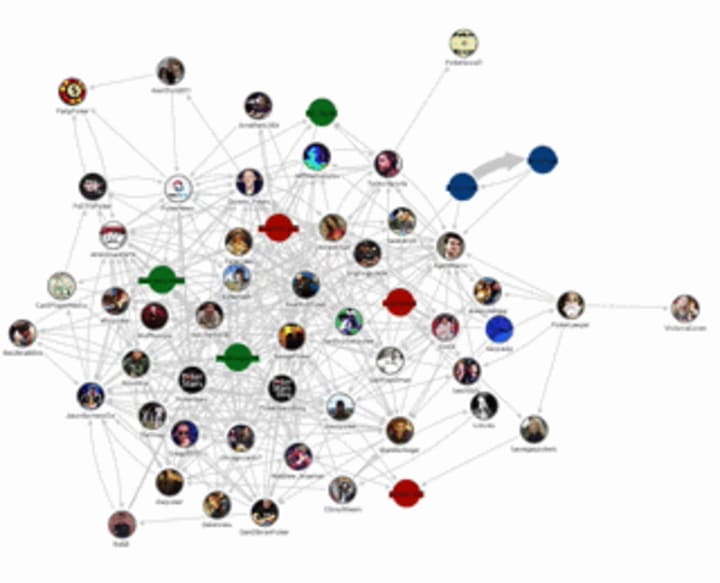
Furthermore, these algorithms analyze the data stored in your system to determine the best time to deliver your emails to the subscribers. Initially, it runs on predictive analysis and with time it leverages machine learning to enable better deliverability. It scans the behavior of each subscriber as to when they are most likely to check their emails. Results? A boost in your open rates.
Positive engagement metrics increase the chance of your emails to land in the inbox. The servers of renowned inbox services such as Google and Yahoo are different from the servers used by email service providers. Therefore, the algorithms work in a way to deliver emails to these global servers at an optimum rate.
2. Automatic Segmentation
Marketers and businesses are very thankful for email marketing tools. If you had to upload email contacts and segment thousands of them manually, would you have considered email marketing as an asset?
AI-powered email marketing has made our work super easy. There’s a miraculous feature of automatic segmentation based on the tags that make progressive profiling a smooth journey.
Let’s take an example.
Suppose you have a team management software and use an email marketing tool. You set up lead generation forms on your high-performing and important web pages.
You have put three fields in the form:
- Name
- Contact
Next, these are the pages you have put lead generation forms:
- Home Page
- Pricing Page
- Blog/Resource Section
- Engineering Vertical (Landing Page)
- Marketing Vertical (Landing Page)
You can set up different tags as per your business needs. For instance, Engineering-USA, Pricing-USA, Pricing-Canada, and more.
(The tool picks up the country code from the contact field in the form.)
A visitor fills in the details in the form. The AI algorithms put the leads into different segments based on the tags that you have set up. Later, you can decide the lead scores according to your business requirements.
Eventually, you did not have to do the groundwork. These algorithms let you leave your segmentation process on auto-pilot. Eventually, you can go for hyper-segmentation that draws its power from analyzing email metrics. During this juncture, many marketers find new sets of segments that record maximum ROI.
Another great benefit of AI in email marketing is removing fake leads from the email lists. As the leads continue to pour in, intelligent algorithms will match the standard rules set by you for considering the lead’s authenticity. For instance, it will reject the wrong country codes, industry profiles, the usage of celebrity names, and more.
3. AI-based Personalized Recommendations
Adding personalization elements have become one of the checkpoints in the email marketing checklist. Apart from personalizing email copy and subject lines, artificial intelligence and machine learning have opened up gates to new possibilities.
With complex algorithms, predictive analysis, and deep learning about customer’s data, you can add personalized product recommendations in your emails. This in turn can boost your email’s engagement metrics. Moreover, you can analyze the trends and preferences of your customers to predict the overall future buying behavior.
When your email subscribers get personalized recommendations, they are more likely to be interested in your brand and become repeat customers.
Today, product marketers, eCommerce vendors, affiliate marketers, and more aim for hyper-personalization to drive more engagement from emails which is too complex if done manually.
4. AI-Optimized Content
Some of the essential tenets of Artificial Intelligence are utilizing Big Data and deep learning for analyzing extremely complex data that are massive in size. Over the years, you collect a huge amount of data through your emails that include valuable insights into the behavior of individual subscribers.
By no means, you can analyze each touch-point manually. With AI, you can utilize these data points to automatically optimize and personalize the email copy and subject lines.
No doubt you put a lot of thought into coming up with engaging subject lines and email content that resonates with your target audience. With AI, you don’t have to come up with something new every time. This intelligence works on NLG (natural language generation) to suggest the best subject lines based on data sets and past interactions of the subscribers.
These suggestions can range from including the recipient’s name to using past purchasing behavior for a definitive CTA.
5. Saving Time with Automation Workflow
What a blessing drip campaigns and A/B split email tests are!
With the power of AI, you can set up automated drip sequences to nurture your leads. The automation workflows harness its power from powerful rule-based AI triggers.
These automation emails get triggered based on the user’s action. For instance, welcome emails when a visitor signs up at your website, drip sequences to cover the buyer’s journey, cart-abandonment emails, post-purchase emails, and more. Here’s an example of an automated welcome email from BuzzFeed Daily.
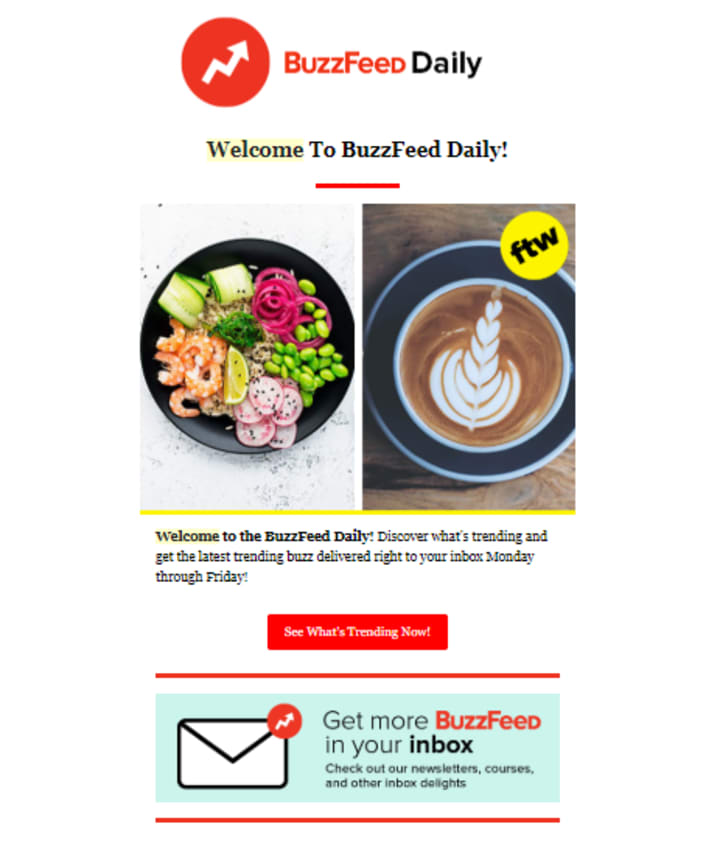
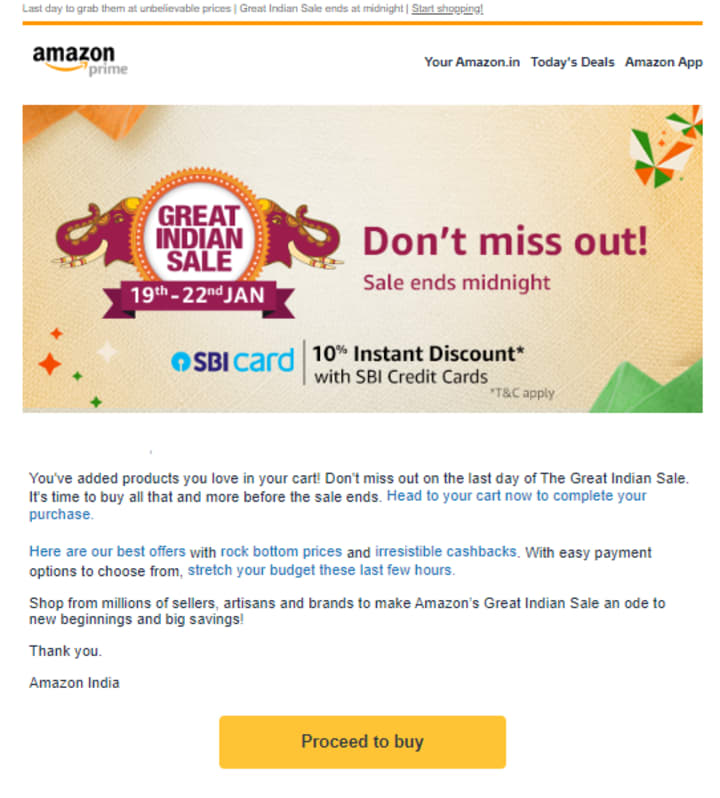
These automated emails rely heavily on past behavior, interests, and browsing patterns of the subscribers to decide the best time to send them re-engagement emails. For instance, cart-abandonment emails are not sent instantly but after a set time. AI can distinguish these sets of actions based on intelligent algorithms. Look at this auto-generated cart abandonment email by Amazon.
6. Spam Filters For The Greater Good
Email marketing has become tough due to the presence of strict spam filters based on AI. While many marketers face hardships in achieving the best email deliverability, receivers think it as a boon.
These AI-driven spam filters are for the greater good. Imagine if each email sent gets delivered. The chances of fraud, scams, and cybercrime will go up.
Therefore, to maintain a positive and authentic email marketing environment, spam filters such as DKIM, DMARC, and SPF came into existence. These filters also draw their power from artificial intelligence to restrict spam emails from landing in the receiver’s inbox.
On the bright side, these spam filters are working wonders because email marketers are putting double efforts to grab the attention of their subscribers.
What Does the Future Hold?
While this article was purely based on Artificial intelligence, I haven’t mentioned the Internet of Things (IoT). It is another vast topic and needs an additional page. With AI influencing IoT, email marketing can further undergo massive change including voice technology. A new communication format for email marketers, maybe?
Let’s wait for the email, AI, and IoT to intersect. Until then, share your thoughts in the comment box.
About the Creator
Shivani Srivastava
These posts are written by Shivani Srivastava. A content marketer by heart, Shivani is passionate about writing anything in the field of the technological landscape. She’s written a guest blog for SendX: Email Marketing Software.
Keep reading
More stories from writers in Journal and other communities.




Comments
There are no comments for this story
Be the first to respond and start the conversation.