
Automotive Camera Market: Why Cars Are Seeing More Than You Do
How vehicle cameras are driving safety, automation, and new mobility experiences
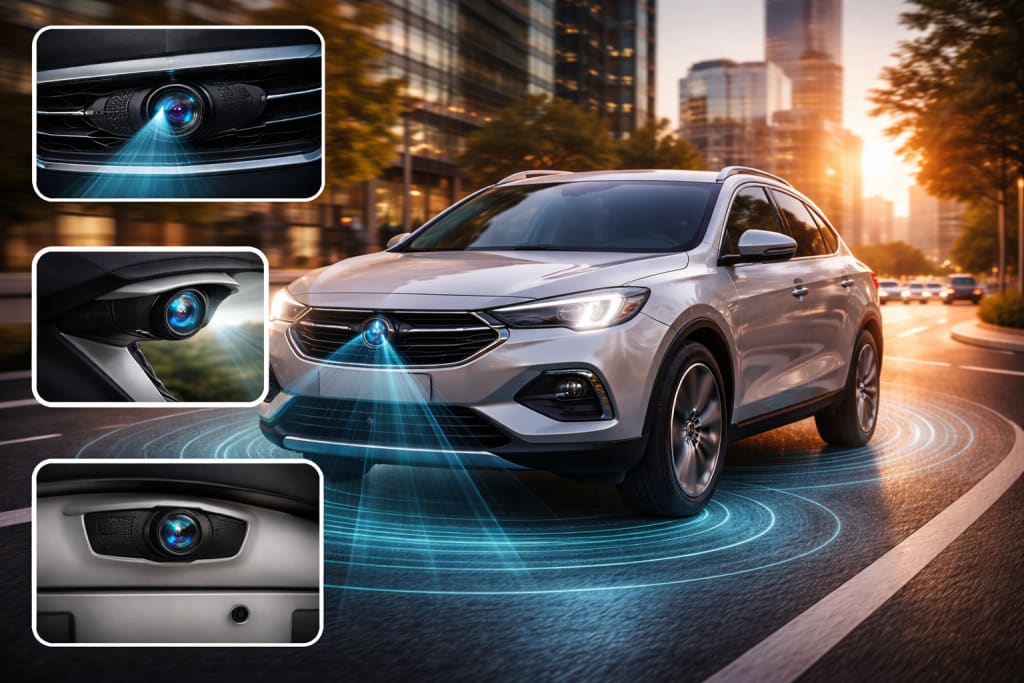
A family drives home after school pickup. As the sun dips low, the headlights come on and the dashboard illuminates with guidance icons. But it is not just the driver watching the road. Cameras placed around the vehicle constantly scan lanes, detect obstacles, and feed data into systems that help steer, warn, and sometimes intervene.
This silent partnership between human input and machine perception is reshaping how vehicles move. Welcome to the era of vehicles that see more than we do. At the heart of this shift is the Automotive Camera Market, where sensors and vision systems are transforming safety, automation, and the very experience of driving.
Why Vehicle Cameras Are Now Essential
In the past, mirrors and human sight were enough to navigate most driving situations. Today, vehicles operate in environments that demand precision beyond what human senses can consistently deliver. Traffic speeds rise, urban density grows, and driver distraction becomes more common.
Automotive cameras augment human sight. They support lane departure warnings, blind spot detection, adaptive cruise control, and advanced driver assistance systems. Multiple cameras stitched together create a surround view, giving drivers a panoramic perspective that was impossible before.
According to Mordor Intelligence, the Automotive Camera Market size was valued at USD 9.79 billion in 2026 and expected to reach 15.31 billion by 2030 at a CAGR of 9.35% CAGR. This single data point reflects how vehicle manufacturers increasingly rely on visual sensing as a foundation for both safety and automated driving capabilities.
Inside the Automotive Camera Market
The Automotive Camera industry encompasses a wide range of camera types and applications. Front view cameras support collision avoidance and traffic sign recognition. Rear view cameras make parking and reversing safer. Side and surround view cameras eliminate blind spots and create a complete visual mosaic around the vehicle.
In advanced driver assistance systems, multiple cameras work together with radar and lidar to detect pedestrians, cyclists, and other hazards. As vehicles move toward higher levels of autonomy, visual systems will become even more central to decision making.
The Automotive Camera Market share is influenced by rising adoption of advanced safety technologies and regulatory mandates that require cameras in new vehicles. For example, many regions now require rear view cameras on new models. These requirements drive unit volumes and technology upgrades across manufacturers.
Trends Shaping Camera Adoption
Multi-camera integration: Vehicles combine front, rear, side, and interior cameras into unified vision platforms.
High-definition imaging: Cameras now capture sharp images even in low light, improving perception in night driving and adverse weather.
AI and vision analytics: Advanced software interprets camera data for object detection, behaviour prediction, and lane tracking.
Autonomous enablement: Cameras are key components in autonomous systems, feeding real-time visual data to decision engines.
Challenges in an Evolving Market
Despite strong momentum, the market faces several challenges. Integrating multiple vision systems increases complexity and cost. Ensuring reliability in varied lighting and weather conditions remains a technical hurdle. Software and hardware must also be optimized to handle massive amounts of image data in real time.
Cybersecurity and data privacy also matter. Vehicles that capture and process visual information need robust safeguards to prevent misuse or unauthorized access.
Manufacturers are responding with improved calibration systems, redundant sensor arrays, and tighter software controls that balance perception strength with data protection.
The Automotive Camera Market Forecast
The Automotive Camera Market forecast points toward sustained growth as vehicles become smarter and safer. Camera systems will continue to expand in capability, resolution, and processing intelligence. Demand will be driven by both regulatory requirements and consumer expectations for safety features.
Electric vehicles, connected cars, and autonomous platforms all depend on reliable visual systems. Cameras are at the canter of this transformation, providing continuous awareness in ways that were once science fiction.
Together, these developments position cameras as foundational elements in modern mobility platforms, rather than supplemental components.
About the Creator
Keep reading
More stories from james robert and writers in Journal and other communities.
Wireless EV Charging Market: The Road Without Cables
You pull into a parking space at the airport. Instead of reaching for a cable, the car glides into position and begins charging with no physical connection. No cables to plug in. No fumbling after a long day. Just a silent flow of energy beneath your wheels.
By james robert6 days ago in Journal
~ Fired ~
— Ai Intrusion ~ Are you Next ~ Is Ai Evolution after your job? — Few workplaces haven't been affected. Ai is in supermarkets, at doctors' offices, and even monitoring farms. I just can't think of anything this machine is not getting into, can you? For instance: Education ~ Law and Tech jobs will one day have a major influence or be taken over by these inanimate machines, with accuracy and vigor. From mechanics' diagnoses to a wide variety of everyday jobs, including fast food workers, with this input having the ability to cut their unnecessary work hours. I'm certain all of us have been touched by this with our short stories and colorful headings, have you? Even comments are very questionable 'Non-Robot' insertions.
By Jay Kantor18 days ago in Journal
Before the Engines Start The Hidden Safety Rituals of Aviation
The airport looked calm from the terminal windows. Travelers watched aircraft taxi past glowing runway lights, assuming the journey began when the engines roared alive. But for the maintenance crew, the flight had started hours earlier.
By Beckett Dowhanabout 6 hours ago in Journal


Comments
There are no comments for this story
Be the first to respond and start the conversation.