
Australia Plastic Recycling Market: Building a Circular Future from Waste
The Australia plastic recycling market size reached USD 1,212.12 Million in 2024. Looking forward, IMARC Group expects the market to reach USD 1,793.59 Million by 2033, exhibiting a growth rate (CAGR) of 4.45% during 2025-2033.

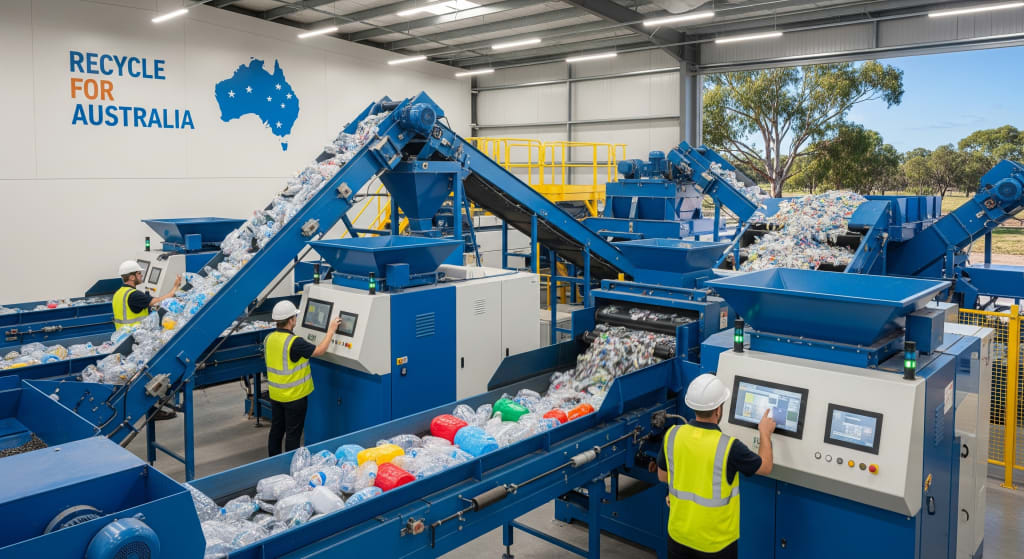
Australia’s plastic recycling market stands at a turning tide. While the country continues to grapple with landfilled waste and infrastructure gaps, a surge in investment and policy reform is sparking transformation. By 2032, Australia’s recycled plastics market is projected to grow from USD 869.1 million (2025) to USD 1.58 billion, marking a robust CAGR of 8.9%.
What Exactly Is the Plastic Recycling Market?
This market includes the collection, sorting, processing, and repurposing of both rigid and soft plastics across mechanical and emerging chemical technologies. It spans household kerbside programs, specialized drop-offs, advanced recycling facilities, and downstream manufacturing—forming the backbone of Australia’s circular economy efforts.
Learn More – Australia Plastic Recycling Market Report
What’s Fueling the Plastic Recycling Surge?
• Government Investment & Waste Reform
The $600 million Recycling Modernisation Fund (RMF) is turbocharging domestic recycling capacity—with more than 50 projects underway including LDPE and mixed plastic facilities in Albury and Victoria.
• Export Bans Driving Local Action
Restrictions on exporting unsorted or unprocessed plastics have made domestic recycling not just preferable—but necessary. The push is realigning the value chain within Australia.
• Soft Plastics Crisis Catalysing Innovation
The fall of REDcycle exposed massive vulnerabilities in soft-plastics recovery. In response, supermarkets and startups rolled out new collection programs and are collaborating with technology firms to rebuild recycling capacity.
• Rise of Chemical Recycling Technologies
Partnerships like GPT Circular with iQRenew are pioneering chemical recycling of soft plastics—clean and return them to molecular form for reusing in food-grade packaging.
Real-World Momentum: Recycling Projects in Action
• Soft Plastics Revival
More than 500 Woolworths stores are launching soft plastics collection points after REDcycle’s collapse, supported by emerging recyclers stepping up capacity.
• Processing Upgrades in Adelaide
A $60 million project is underway to rebuild a Kilburn plant, doubling rigid plastic processing capacity and beginning to accept soft plastics—once funding is secured.
• Innovations in Infinite PET Recycling
Sydney startup Paco Industries has devised a solvent to infinitely recycle contaminated PET plastic without degradation—aiming to scale to 20–30k tonnes annually.
• Soft Plastics Stockpile Relief
Although 94% of soft plastics still end up in landfill, stockpile reduction carries on—smoothing the way for broader recycling facilities by 2026.
Challenges on the Road to Circularity
• Low Recycling Rates & Ongoing Contamination
Despite restructuring, only around 13–16% of plastic was recycled between 2018–2020. Contamination—especially from soft plastics—continues to hamper recovery efforts.
• Infrastructure Gaps in Rural Regions
While urban centers gain advanced facilities, many regional areas still lack accessible recycling—limiting nationwide impact.
• Economic Viability vs Virgin Plastics
Recycled plastic remains more expensive than virgin material. Without stable demand or mandates for recycled-content, the economics remain tough.
The Road Ahead: Circular Strategies and Scalable Solutions
• Scaling Advanced Recycling
Mechanical and chemical recycling infrastructure—especially for soft plastics—will continue evolving, supported by RMF funding pipelines.
• Producer Responsibility and Standardization
Brand pressure and impending recycled content mandates will drive stronger producer-led initiatives and uniform recycling guidelines.
• Circular Product Development
As facilities scale, the availability of recycled-grade materials (like ISCC-certified PCR films) will encourage circular product design and adoption.
Receive Your "Australia Plastic Recycling Market" Sample Report – Click to Get Started
Why It Matters Now
With waste mounting and export lifelines severed, Australia must turn to domestic innovation and infrastructure to meet waste targets. Strengthening recycling systems is not just environmental—it’s economic, circular, and foundational to Australia’s sustainability roadmap.
About IMARC Group
IMARC Group is a leading global market intelligence and consulting firm, delivering deep-dive reports and strategic insights across industries. Their research equips businesses and policymakers with the foresight to navigate complex markets like Australia’s utility services sector.
About the Creator
Rashi Sharma
I am a market researcher.
Keep reading
More stories from Rashi Sharma and writers in Journal and other communities.
Australia Television Market: A Dynamic Shift from Broadcast to Broadband
Australia television market is undergoing a transformative shift. In 2024, the industry was valued at approximately USD 11.11 billion, and it’s expected to soar to around USD 26.79 billion by 2033, growing at a robust CAGR of 9.20%. Powered by widespread broadband access, rising smart TV ownership, and streaming adoption, Australia’s TV ecosystem is reinventing itself at every level.
By Rashi Sharma5 months ago in Journal
The goals I did not achieve
Every writing goal I made for the year is a wash. It has been this way for a while, but I think it's important to be open about my failures and the reality of how life can get in the way. This is especially true considering the several times I have posted on Vocal about my writing goals, how I was changing my approach, and where I was hoping to be for the upcoming year. I will probably do that again in a couple months, but for now, it is time to acknowledge where I am today.
By Kay Husnick17 days ago in Journal




Comments
There are no comments for this story
Be the first to respond and start the conversation.