
Australia Data Center Power Market: Energizing the Digital Backbone
As data demands surge, power solutions are becoming a linchpin for performance, sustainability, and reliability in Australia’s data center boom.


In 2024, the Australia data center power market was valued at USD 377.1 million. It is forecast to grow to USD 629.4 million by 2033, exhibiting a compound annual growth rate (CAGR) of 5.9% between 2025-2033. Key drivers include digitalization, cloud adoption, data sovereignty concerns, and the growing demands from AI, edge and colocation data centers.
Market Growth Drivers:
Cloud, Hyperscale, Edge & Big Data
Organizations are shifting more operations into the cloud to gain flexibility, reduce capex, and scale rapidly. Hyperscale data centers (large facilities serving cloud providers), colocation providers, and edge computing deployments are expanding fast. These require robust, efficient, and scalable power infrastructure to support high compute density and continuous uptime.
AI, High Performance, and Rising Rack Density
AI workloads and big data analytics are pushing power requirements per rack much higher. Where older systems might have required 5-10 kW per rack, newer AI / GPU-intensive setups demand far more. This escalation heightens stress on power delivery systems: UPS, power distribution, backup generators, cooling systems, etc.
Data Sovereignty & Regulatory Pressures
Regulations emphasizing where data must be stored and processed (inside Australia) are encouraging the construction of local data centers, which in turn increases demand for domestic power infrastructure. Sectors like BFSI (banking, financial services, insurance), healthcare, telecommunications are especially sensitive to these requirements
Sustainability, Energy Efficiency & Renewable Integration
Power costs, emissions, and sustainability are front of mind. Data center operators are investing in energy-efficient power systems, high-efficiency UPS units, renewable energy (solar, wind), and backup solutions that reduce carbon footprint. Stronger incentives, PPAs (power purchase agreements), and renewable energy zone policies support this.
Government Support & Infrastructure Investment
Government policies and incentives for digital infrastructure, green energy, and data center expansion are helping. Also, demand for reliable, resilient power, especially in areas prone to grid instability, is pushing investment in backup power, redundant systems, and modular power solutions.
Get a PDF Request Sample of Report: https://www.imarcgroup.com/australia-data-center-power-market/requestsample
Key Market Segments
- By Component: Solutions like UPS systems, power distribution units, backup generators dominate. Services (e.g. installation, maintenance, monitoring) are growing.
- By Data Center Size: Large and enterprise data centers are major consumers, with mid-size centers and edge facilities rising in number.
- By Vertical: Telecommunications & IT, BFSI, manufacturing, energy, etc. All using more data, cloud, and digital services.
- By Region: Cities like Sydney, Melbourne are hubs; regional growth where land, power costs, and renewable energy access are favourable.
Real-World Signals
- Data centers under construction indicate rising IT load demand. Estimates suggest that by 2029, the under-construction IT load capacity tied to data centers in Australia could reach several thousand MW.
- Operators are specifying more advanced, high-density power systems (higher kW per rack, more efficient UPS, modular designs) to handle growing compute and cooling demands.
- There is increased concern about grid capacity and energy supply adequacy, especially in regions seeing many new developments. Ensuring power reliability, favorable tariffs, and emissions management is becoming central to data center site selection.
Challenges to Watch
- High Energy Costs & Volatility: Price of electricity, backup fuel, and grid fees can be major cost levers. Sudden spikes hurt operating margins.
- Grid Constraints & Capacity: In some urban areas, grid infrastructure may need upgrading to handle new data center loads and higher power draw. Also transmission and distribution constraints, regulatory delays, and permitting can slow rollouts.
- Sustainability & Regulatory Pressure: Emissions targets, renewable mandates, and policies demanding cleaner energy pose both opportunity and cost. Failing to meet sustainability expectations risks reputational and regulatory penalty.
- Capital Intensity: Power infrastructure (UPS, generators, distribution) is expensive. Ensuring redundancy (N+1, 2N), reliability, cooling, safety adds cost, and ROI may take time.
- Technological Risk: As workloads evolve (AI, real time data, edge), power architectures must adapt. Cooling, heat management, power density changes pose engineering and design challenges.
Trends & Opportunities
- Renewable PPAs & On-site Generation: Solar, wind farms, sometimes with battery storage, to reduce dependency on grid electricity and soften exposure to price swings.
- Modular & Scalable Power Systems: Prefabricated power pods, modular UPS, scalable backup generation that can be added as needed help manage upfront costs and risk.
- AI and Smart Power Management: Use of IoT, sensors, predictive analytics to manage load, detect inefficiencies, manage demand during peak grid stress, optimize cooling.
- Edge Data Centers & Distributed Power: Smaller, distributed data centers closer to end-users reduce latency, but require efficient, often off-grid or semi-grid compatible power solutions.
- Hybrid Backup Solutions and Grid Interaction: UPS systems being used beyond backup—to participate in grid stability programs (frequency control, demand response) or provide ancillary services.
Ask An Analyst: https://www.imarcgroup.com/request?type=report&id=24638&flag=C
Australia’s data consumption is growing rapidly—cloud services, AI, streaming, remote work, IoT all pushing demand. Data centers are the backbone of digital economy. Having reliable, efficient, sustainable power for them is not optional—it’s essential for competitive advantage, energy security, environmental responsibility, and cost control.
With the market expected to grow from USD 377 million to USD 629 million by 2033, investors, operators, utilities, and regulators all have opportunities—and responsibilities—in shaping how this expansion is powered.
About IMARC Group
IMARC Group is a global market research firm offering detailed forecasts and insights. Their Australia Data Center Power Market report includes segmentation by component, data center size, vertical, region; trend analysis and competitive landscape to guide stakeholders navigating this growing but complex space.
About the Creator
Kevin Cooper
Hi, I'm Kavin Cooper — a tech enthusiast who loves exploring the latest innovations, gadgets, and trends. Passionate about technology and always curious to learn and share insights with the world!
Keep reading
More stories from Kevin Cooper and writers in Journal and other communities.
Australia Digital Health Market: The Tech Revolution in Healthcare
Australia’s digital health market was worth about USD 7.7 billion in 2024 and is projected to hit USD 28.6 billion by 2033, growing at a healthy compound annual growth rate (CAGR) of 15.70% between 2025 and 2033.
By Kevin Cooper6 months ago in Journal
Time for China to Move From ‘Product Export’ to ‘System Export’ in Aviation Arms Trade: NPC Deputy
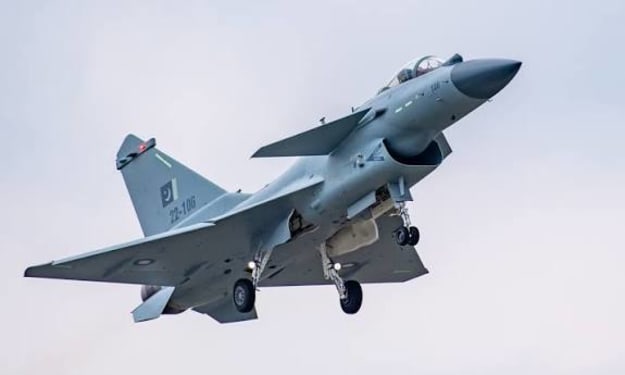
China is increasingly pushing for a strategic shift in its defence industry — moving beyond simply exporting military products to becoming a global exporter of fully integrated defence systems. That was the message delivered this week by NPC Deputy Zhang Wei, a member of the National People’s Congress, during a high‑profile defence industry forum in Beijing. Zhang’s comments underscore China’s ambitions to compete more directly with the United States and other major arms exporters in the global aviation and military hardware market. “The era in which we are content to sell standalone products — fighters, missiles, radars — must give way to a pursuit of complete systems that integrate across air, space, and cyberspace,” Zhang told delegates. “This is not just an industrial upgrade, but a strategic imperative if China is to deepen partnerships with foreign militaries and contribute to international security.” From “Product” to “System” Export For decades, Chinese defence exports have primarily consisted of “products”: individual platforms such as aircraft, helicopters, surface‑to‑air missiles, and naval vessels. Many of these offerings — notably the Chengdu J‑10, Hongdu L‑15, and various drone types — have found buyers in Africa, Southeast Asia, and the Middle East, particularly among countries seeking more affordable alternatives to Western hardware. However, the global arms trade has increasingly shifted toward integrated systems — packages that include not just the hardware itself but command‑and‑control infrastructure, logistics support, training, and ongoing upgrades. Western defence firms, particularly those in the United States and Europe, now sell such systems to allied militaries, bolstered by long‑term service contracts and interoperability with existing Western military networks. Zhang emphasised that China must position itself to offer not just platforms, but “complete solutions” for prospective buyers. “Our emphasis must move from what the hardware can do on its own to what it can achieve in the context of a broader defence ecosystem,” he said, echoing similar calls from senior equipment designers and People’s Liberation Army (PLA) strategists. Strategic Rationale and Global Context China’s defence industry has made impressive strides in recent decades. Its jets, UAVs, and missiles now rival many Western designs on performance metrics, and Beijing has steadily improved its ability to produce advanced microelectronics, sensors, and propulsion systems. Yet its share of the international arms market remains significantly smaller than that of the United States Department of Defense and European exporters such as France’s Dassault Aviation and the United Kingdom’s BAE Systems. According to SIPRI arms transfer data, China accounted for roughly 5 per cent of global major arms exports in recent years, compared with about 37 per cent for the United States. European exporters together held another large share. China’s market presence is strongest in nations that often face sanctions or restrictions on Western equipment, including Pakistan, Myanmar, and some African states. By promoting system exports, China hopes to expand beyond these traditional markets and appeal to countries seeking high‑end, interoperable defence solutions without political restrictions tied to Western alliances. This could include emerging aviation systems tied to integrated air‑defence networks, logistics‑management suites, and even cyber‑enabled maintenance systems that increase uptime and reduce lifecycle costs. Aviation and the Arms Trade Aviation remains at the centre of this strategic shift. Integrated solutions in the aviation domain now include not just the aircraft themselves but weapons payloads, datalinks, sensor fusion packages, and training simulators that allow air forces to operate effectively as part of multi‑domain battle networks. Zhang cited recent advances by China’s defence conglomerates — including Aviation Industry Corporation of China (AVIC) and China Aerospace Science and Industry Corporation (CASIC) — as evidence that China now has the industrial base to pursue integrated offerings. “We have matured to the point where we can offer not just discrete aircraft but entire aerial ecosystems that include surveillance, strike, and defensive capabilities working in concert,” he said. Challenges and Skepticism Despite the ambition, analysts warn that China faces several obstacles in making the leap from product to system exporter. These include questions about interoperability with existing military frameworks in buyer countries, intellectual property concerns, and political apprehension — particularly among nations wary of close ties with Beijing. There are also internal challenges. China’s defence industry has historically focused on producing equipment for its own PLA needs, which do not always translate directly to export markets. Building robust after‑sales support networks — critical for system exports — requires investment in foreign infrastructure and long‑term commitments that many Chinese firms have historically been reluctant to make. What This Means for the Global Arms Market If China succeeds, the implications for the global arms trade could be significant. Western exporters, which have long dominated the market for integrated defence systems, could face increased competition in regions where cost, neutrality, and fewer political strings are attractive to buyers. Additionally, a more competitive Chinese offer could encourage buyers to demand better terms and interoperability regardless of source, potentially raising capabilities across multiple regions. Zhang’s comments signal a strategic recalibration within China: an effort to redefine its role not just as a producer of defence hardware, but as a provider of complex, sustained defence solutions. Whether that shift takes hold will depend on China’s ability to build trust with buyers, invest in global support infrastructure, and continue improving the technological sophistication of its offerings.
By Fiaz Ahmed 7 days ago in Journal



Comments
There are no comments for this story
Be the first to respond and start the conversation.