
Are Relationships Meant to Be or Made to Work? Understanding Destiny and Growth Beliefs
Which Belief Leads to Long-Term Relationship Success? Research Insights from C. Raymond Knee

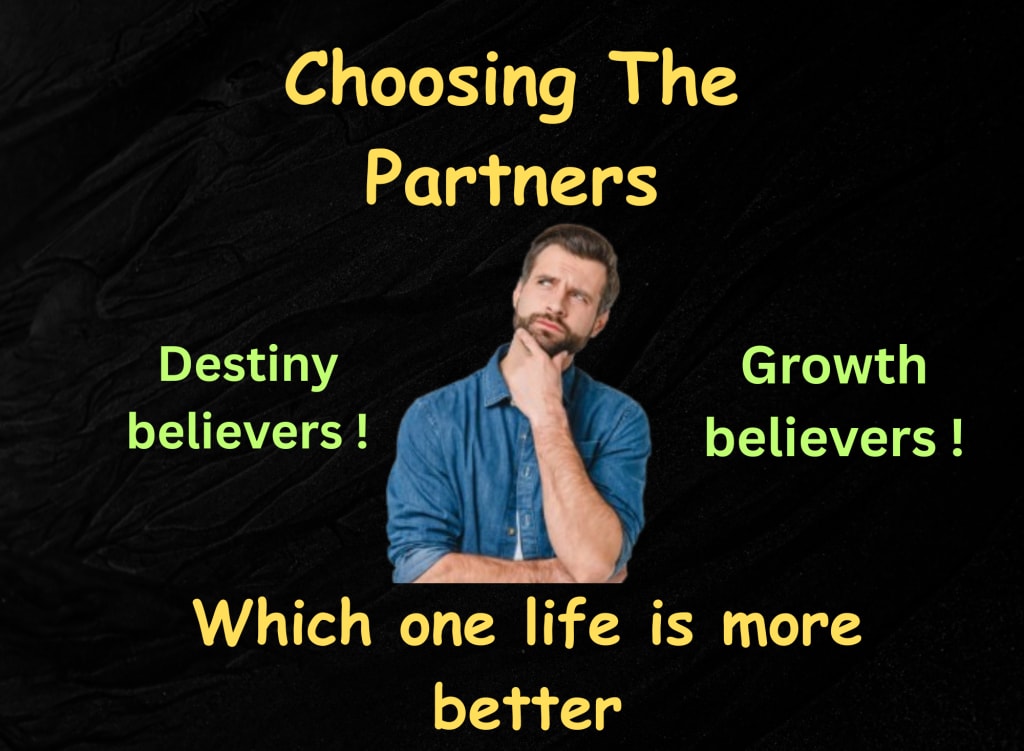
When it comes to finding a life partner, our beliefs about love and relationships shape our choices and behaviors. Relationship scientist C. Raymond knee introduced two contrasting mindsets that influence how people approach romantic partnerships: destiny beliefs and growth beliefs. Destiny believers view relationships as predestined, with a "soulmate" who is inherently compatible. Growth believers, on the other hand, see relationships as dynamic, requiring effort and collaboration to thrive. These perspectives profoundly affect how individuals select life partners, navigate challenges, and sustain long-term relationships. This article explores how destiny and growth believers differ in choosing life partners, drawing on Knee’s foundational research.
Destiny Beliefs: Seeking the Perfect Match
Destiny believers hold that romantic relationships are either "meant to be" or not. They often believe there is one ideal partner—or a limited few—who will seamlessly fit into their lives, leading to a smooth and effortless relationship. When choosing a life partner, destiny believers prioritize initial compatibility and early impressions. They may rely on feelings of instant chemistry or "love at first sight" as signs that they’ve found "the one."
This mindset influences their partner selection in distinct ways. Destiny believers tend to be highly selective, quickly dismissing potential partners over minor flaws or perceived incompatibilities. For example, a single imperfection, like a partner’s quirky habit, might be interpreted as evidence that the relationship isn’t destined. They often expect their partner to align closely with an idealized image, which can lead to rigid standards. Knee’s research suggests that destiny believers are more likely to disengage when faced with early relationship challenges, viewing conflicts as proof that the partnership isn’t meant to be. While this approach can help avoid poorly matched relationships, it may also cause destiny believers to overlook promising partners who require time to reveal their compatibility.
Growth Beliefs: Building a Lasting Bond
In contrast, growth believers view relationships as a journey of mutual development. They believe that a successful partnership is cultivated through effort, communication, and shared experiences, even when faced with obstacles. When selecting a life partner, growth believers focus less on immediate perfection and more on long-term potential. They are open to partners who may not fit an idealized mold but show willingness to grow together.
Growth believers approach partner selection with patience and flexibility. They are more likely to invest time in getting to know someone, valuing gradual understanding over instant sparks. Knee’s findings highlight that growth believers are less prone to casual or short-term relationships, preferring to build deeper connections over time. When challenges arise, such as disagreements or differences in values, growth believers see these as opportunities to strengthen the relationship through problem-solving and compromise. This mindset fosters resilience, making growth believers more likely to choose partners with whom they can navigate life’s ups and downs, prioritizing shared goals and adaptability over predestined harmony.
Comparing the Two: Implications for Long-Term Success
The differences between destiny and growth beliefs have significant implications for long-term relationship success. Destiny believers may struggle to maintain relationships when the initial excitement fades or when flaws become apparent, as they may interpret these as signs of incompatibility. Knee’s work indicates that destiny believers are less likely to engage in relationship-maintenance strategies, such as open communication or conflict resolution, which can lead to higher breakup rates.
Growth believers, however, tend to report greater relationship satisfaction, particularly when facing difficulties. Their willingness to work through challenges fosters stronger, more resilient partnerships. For instance, a growth believer might view a partner’s occasional impatience not as a fixed trait but as a behavior influenced by external stressors, addressable through dialogue. This approach aligns with Knee’s findings that growth beliefs correlate with proactive coping and longer-lasting relationships.
Conclusion
Choosing a life partner is one of life’s most consequential decisions, and our beliefs about relationships shape how we make that choice. Destiny believers seek a predestined soulmate, prioritizing instant compatibility, while growth believers invest in building a partnership through effort and mutual growth. Both mindsets have strengths—destiny beliefs can inspire hope for a special connection, while growth beliefs promote resilience—but Knee’s research suggests that a growth-oriented approach often leads to more fulfilling, enduring relationships. By understanding these perspectives, individuals can reflect on their own beliefs and make more informed choices in their search for a life partner.
About the Creator
Doctor Strange
Publisher and storyteller on Vocal Media, sharing stories that inspire, provoke thought, and connect with readers on a deeper level
Keep reading
More stories from Doctor Strange and writers in Journal and other communities.
Why Lord of the Flies Still Haunts Us in 2025: A Story of Innocence Lost
Imagine a group of boys, barely teens, stranded on a tropical island with no adults, no rules, just freedom. Sounds like paradise, right? In William Golding’s Lord of the Flies, it’s a descent into chaos. Published in 1954, this brutal tale of survival and savagery still grips readers in 2025, forcing us to face the darkness within. I read it last month, and it left me shaken. Here’s why this story of innocence lost remains a gut-punch—and what it reveals about us today.
By Doctor Strange10 months ago in Journal
Author’s Advice
If you would’ve asked me 20 years ago did I know I’d become a writer and an author, I would’ve said “nope, ain’t happening”. As fate would have it I did become an author and I can honestly say I’m loving it so far. It really does feel good to be a writer. I’ve learned a lot on this journey and I feel like with even me being as new to this world as I am, there’s some wisdom I need to share with every other aspiring author.
By Joe Patterson5 days ago in Journal




Comments
There are no comments for this story
Be the first to respond and start the conversation.