
Apple To Stick With China for iPhone 18 Production
20th Anniversary Lineup Features an 'Extraordinarily Complex' Design

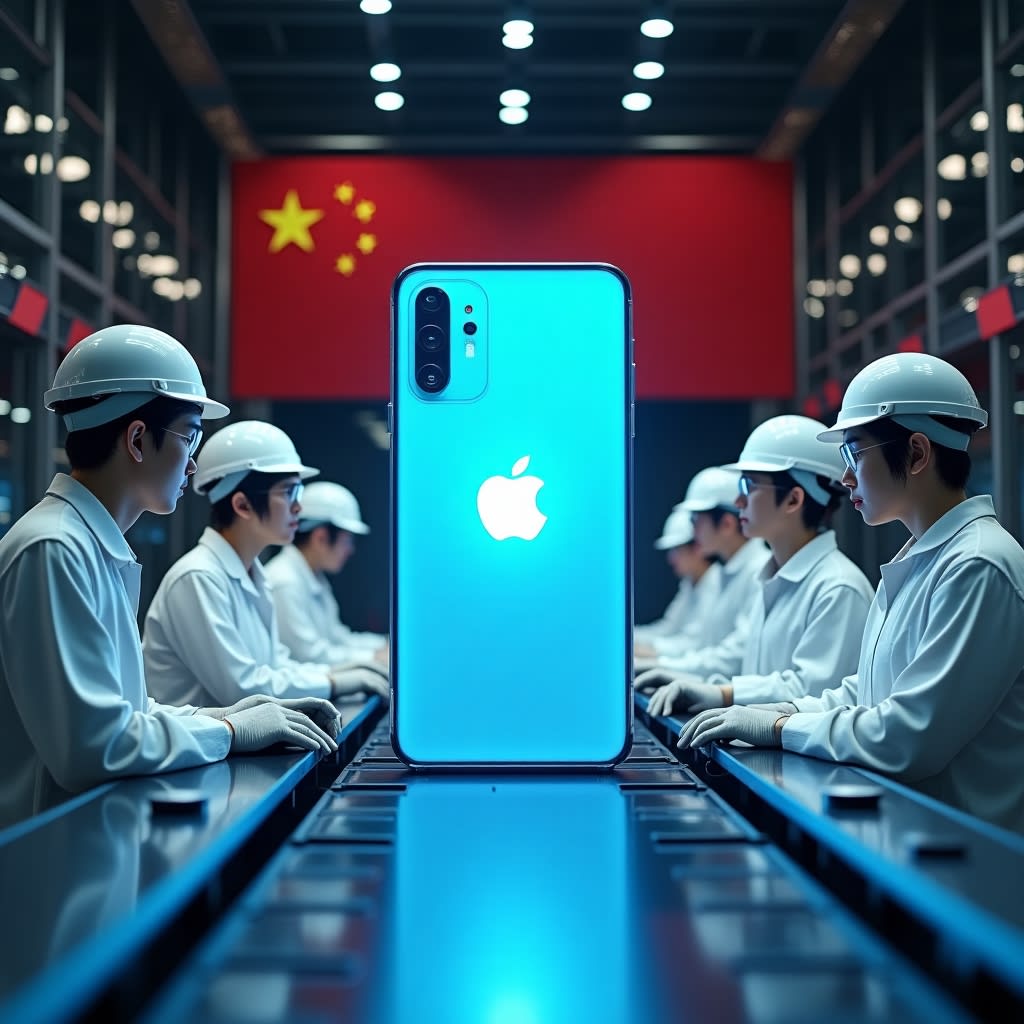
As Apple gears up to celebrate the 20th anniversary of its iconic iPhone, the company has made a significant decision regarding the future of its manufacturing strategy. Apple has confirmed that it will continue to rely on China for the production of the upcoming iPhone 18, despite ongoing efforts to diversify its supply chain. The decision is made in light of reports that the anniversary lineup will have a design that is "extraordinarily complex," requiring the highest levels of engineering precision and manufacturing expertise, which China is still uniquely positioned to provide. Why China Remains Apple's Manufacturing Powerhouse

For over a decade, China has served as the backbone of Apple’s manufacturing empire. Home to massive assembly plants like Foxconn’s Zhengzhou "iPhone City," China offers a rare combination of scale, infrastructure, speed, and skilled labor. Even as geopolitical tensions, COVID-19 lockdowns, and supply chain disruptions have prompted Apple to explore alternative manufacturing hubs like India and Vietnam, the reality is that no other country currently matches China’s ability to produce high-end, complex devices at the volume and quality Apple demands.
The production of an iPhone — particularly a model as technologically advanced as the iPhone 18 is expected to be — involves an intricate dance of thousands of precision components, sophisticated robotics, and a highly trained workforce. Only China, with its dense network of suppliers and its deep pool of engineering talent, can currently meet these needs at the scale necessary for a global product launch.
The iPhone 18's Extraordinary Complexity According to people who are close to Apple's supply chain, the iPhone 18 will represent one of the most significant design advancements in the device's history. A portless design, cutting-edge materials, and a slew of brand-new technologies, such as under-display Face ID and advanced AI-powered features, are among the early rumors. These innovations are not only ambitious in concept but also extraordinarily demanding in execution.
Producing such a device requires manufacturing capabilities far beyond basic assembly. It involves nanometer-level precision, custom fabrication of new components, advanced chip packaging, and perhaps even entirely new production lines built specifically for the new model. Apple’s suppliers in China have spent years — and billions of dollars — developing these capabilities alongside the company.
Apple CEO Tim Cook once famously stated that the concentration of skill sets that simply do not exist anywhere else in the world at the same scale in Chinese manufacturing is more important than cheap labor. The iPhone 18's complexity underscores that truth more than ever.
Why India and Vietnam Aren't Ready (Yet)
In recent years, Apple has accelerated efforts to expand iPhone production to India and Vietnam, aiming to reduce its dependence on China amid rising political and economic risks. India now produces a significant portion of Apple's entry-level and mid-tier models, despite these nations' impressive progress, challenges persist. While the workforce in India is expanding and becoming more skilled, the ecosystem that supports the supply chain is still in the process of developing. Many components still have to be imported, adding cost and complexity. Infrastructure, including transportation and logistics, is also not as mature as China's.
Vietnam has seen success with smaller Apple products like AirPods, but scaling up to full iPhone production, particularly for a flagship model like the iPhone 18, would be a monumental task requiring years of preparation.
For a device that demands "extraordinary" precision and reliability, Apple cannot afford production risks. The anniversary iPhone needs to meet Apple's uncompromising standards — and be available globally in massive quantities — from day one. For now, only China can guarantee that.
Strategic and Symbolic Significance
Apple’s decision to stick with China for the iPhone 18 production carries strategic and symbolic weight. On the one hand, it demonstrates the concrete realities of global manufacturing in 2025: China continues to be essential for high-end technology products despite rising costs and risks. On the other hand, it shows that while Apple is serious about diversification, it will not compromise product quality or innovation timelines in the name of geopolitics. For half-measures, the iPhone 18 is too significant, both financially and symbolically. It represents two decades of innovation, branding excellence, and cultural impact. Apple intends for it to be a technological showpiece, and that means partnering with the best manufacturing resources available.
Looking Ahead
Apple’s long-term strategy likely still includes further diversification of its supply chain, with continued investments in India, Vietnam, and possibly even Mexico and the United States. However, the company's immediate focus is unmistakably on delivering an exceptional product that expands the boundaries of what a smartphone can be while honoring the iPhone's legacy. The iPhone 18’s launch will be one of the most watched tech events of the year, and perhaps the decade. By choosing to produce it in China, Apple is betting on reliability, skill, and proven excellence. It's a reminder that in the world of cutting-edge technology, where even the smallest flaws can have enormous consequences, the true competitive edge often lies behind the scenes — in the people and processes that turn bold ideas into reality.
Final Thoughts
Apple’s reliance on China for the iPhone 18 might stir debates, but ultimately, it reflects a deep understanding of what it takes to build an extraordinarily complex device on a global scale. As the company gets ready to mark 20 years of innovation, it is abundantly clear that China will continue to be the core of Apple's manufacturing power for the foreseeable future, even though the future may be more diverse. And when the iPhone 18 is finally in the hands of millions of people around the world, very few will remember the factories, engineers, and thousands of skilled workers who made it possible; however, they will have China to thank for it.
About the Creator
Cotheeka Srijon
A dedicated and passionate writer with a flair for crafting stories that captivate, inspire, and resonate. Bringing a unique voice and perspective to every piece. Follow on latest works. Let’s connect through the magic of words!
Keep reading
More stories from Cotheeka Srijon and writers in Journal and other communities.
Apple Issues Urgent Global Alert to 1.8 Billion iPhone Users
In an unprecedented move, Apple has issued a global alert to its 1.8 billion iPhone users, warning them of a potential privacy and security threat. The tech giant, known for its staunch commitment to user privacy, has taken a bold step in urging users worldwide to act immediately to protect their sensitive information. This rare and urgent advisory underscores a growing concern in today's digital landscape: the increasing vulnerability of personal data to exploitation.
By Cotheeka Srijon11 months ago in Journal
Author’s Advice
If you would’ve asked me 20 years ago did I know I’d become a writer and an author, I would’ve said “nope, ain’t happening”. As fate would have it I did become an author and I can honestly say I’m loving it so far. It really does feel good to be a writer. I’ve learned a lot on this journey and I feel like with even me being as new to this world as I am, there’s some wisdom I need to share with every other aspiring author.
By Joe Patterson2 days ago in Journal




Comments
There are no comments for this story
Be the first to respond and start the conversation.