
Alumina Ceramics: Properties, Applications, and Role in Modern Advanced Ceramics
The Strength, Versatility, and Future of Alumina Ceramics in Modern Industry

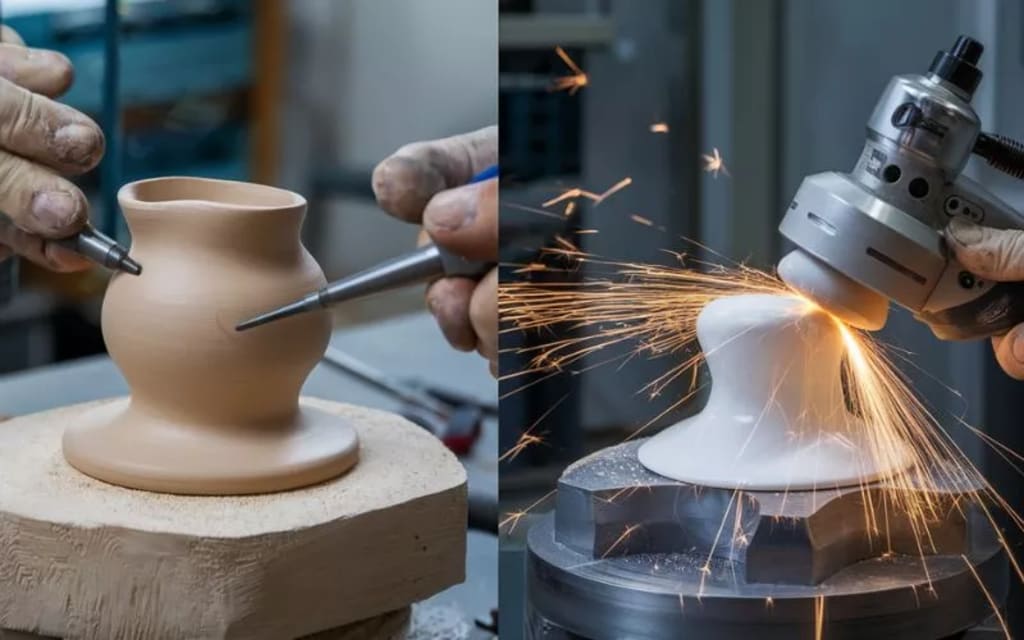
Ceramics have been part of human civilization for thousands of years, evolving from simple clay vessels to cutting-edge materials used in aerospace, electronics, and healthcare. One of the most remarkable materials in this category is Alumina Ceramic — a high-performance ceramic known for its exceptional hardness, heat resistance, and electrical insulation properties. As part of the broader world of Advanced Ceramics, alumina plays a critical role in industries where precision, durability, and reliability are essential.
In this article, we’ll explore what alumina ceramics are, how they are produced, their physical and chemical properties, and the many ways they are shaping modern technology. We’ll also look at how ceramics manufacturers refine production processes to meet growing industrial demands, and place alumina ceramics in the context of the wider ceramic meterial family.
Understanding Alumina Ceramics
Alumina ceramics are made primarily from aluminum oxide (Al₂O₃), a compound known for its excellent mechanical strength and chemical stability. In technical terms, this material is sometimes called alumina oxide ceramic. It is widely used in technical ceramics manufacturing because it offers a unique combination of hardness, electrical insulation, and resistance to high temperatures.
While alumina is naturally occurring in minerals like bauxite, it undergoes an industrial refining process to achieve the purity levels required for high-performance applications. Depending on the desired use, manufacturers produce alumina ceramics in different purities — often ranging from 85% to 99.9% Al₂O₃ content. The higher the purity, the more specialized the applications.
Physical and Chemical Properties of Alumina Ceramics
The exceptional properties of alumina ceramics come from their atomic structure and manufacturing processes. Here are some of the most notable characteristics:
Hardness and Wear Resistance
Alumina ranks about 9 on the Mohs hardness scale, just below diamond, making it extremely resistant to scratching, abrasion, and mechanical wear.
High Melting Point
With a melting temperature above 2000°C, alumina ceramics can withstand extreme heat without losing structural integrity.
Electrical Insulation
Alumina is an excellent electrical insulator, which is why it is used in components such as spark plug insulators, substrates for microelectronics, and high-voltage applications.
Corrosion Resistance
Its chemical stability means it does not react with most acids or alkalis, making it suitable for harsh chemical environments.
High Compressive Strength
Alumina can handle significant mechanical loads without deformation, which is vital in structural and bearing applications.
These properties make alumina ceramics ideal for industries ranging from electronics and energy to defense and medical equipment.
Manufacturing Process of Alumina Ceramics
The production of alumina ceramics involves several precise stages to ensure consistent quality:
Powder Preparation
High-purity alumina powder is synthesized and mixed with binders or additives to improve processability.
Forming
The powder is shaped using methods such as dry pressing, isostatic pressing, slip casting, or injection molding.
Drying
Moisture is removed to prevent defects during sintering.
Sintering
The shaped ceramic is heated to high temperatures to densify the material, reducing porosity and improving strength.
Finishing
Precision grinding, lapping, or polishing is used to achieve the desired tolerances and surface quality.
By carefully controlling these processes, ceramics manufacturers ensure that alumina ceramics meet the rigorous standards demanded in modern industries.
Applications of Alumina Ceramics
Thanks to their unique set of properties, alumina ceramics have found applications in many sectors:
1. Electronics and Electrical Engineering
Alumina substrates are widely used in electronic circuits due to their electrical insulation and thermal conductivity. They are found in semiconductor devices, LED packages, and insulating rings.
2. Medical Devices
In orthopedics, alumina is used in joint replacement components such as hip and knee prostheses because of its wear resistance and biocompatibility.
3. Industrial Machinery
Components like seals, bearings, and wear plates are often made from alumina oxide ceramic due to its ability to operate in abrasive and corrosive environments.
4. Automotive Industry
Spark plug insulators and other engine components rely on alumina ceramics for high-temperature stability and electrical insulation.
5. Defense and Aerospace
Alumina is used in lightweight armor systems and aerospace components where strength-to-weight ratio is critical.
Alumina Ceramics vs. Other Advanced Ceramics
The field of advanced ceramics includes a variety of materials such as zirconia, silicon carbide, and silicon nitride. Compared to these:
- Zirconia offers higher fracture toughness but lower hardness than alumina.
- Silicon carbide has superior thermal conductivity and wear resistance but is more brittle.
- Silicon nitride excels in high-temperature mechanical applications but is more expensive to produce.
Alumina strikes a balance between performance, cost, and availability, which explains its widespread adoption.
Environmental and Sustainability Considerations
The production of alumina ceramics, like all manufacturing processes, has environmental impacts — particularly in terms of energy consumption during sintering. However, these materials often contribute to sustainability in end-use applications:
- They extend the lifespan of components, reducing waste.
- They can improve the efficiency of energy systems, such as in insulating parts for power electronics.
- Their chemical resistance means fewer replacements and less environmental contamination.
Some ceramics manufacturers are exploring eco-friendly production methods, including recycling alumina waste and using renewable energy in sintering processes.
The Future of Alumina Ceramics
Research into technical ceramics continues to push the boundaries of performance. Nanostructured alumina, for example, offers enhanced toughness without sacrificing hardness. Hybrid composites that combine alumina with other advanced materials are also gaining interest for specialized applications.
Additionally, as industries shift toward more sustainable practices, the demand for materials that are both durable and efficient will likely increase. Alumina ceramics, with their proven track record, are well-positioned to meet this demand.
Conclusion
From its origins as a refined form of aluminum oxide to its current status as a cornerstone of advanced ceramics, alumina ceramic has become an essential material in modern industry. Its exceptional hardness, heat resistance, electrical insulation, and chemical stability make it indispensable across sectors — from electronics to healthcare and beyond.
As part of the broader ceramic meterial family, alumina demonstrates the remarkable potential of engineered ceramics in meeting today’s technological challenges. With continued innovation in technical ceramics manufacturing, the applications for alumina ceramics are set to expand, reinforcing their role as a vital component in the future of materials science.
About the Creator
Keep reading
More stories from charliesamuel and writers in Journal and other communities.
The Modern Evolution of Ceramics: From Ancient Craft to Advanced Engineering Marvels
Ceramics have been part of human civilization for thousands of years, evolving from simple clay vessels into highly engineered materials that power today’s most advanced technologies. What was once a humble craft has transformed into a multidisciplinary field involving ceramic materials, nanotechnology, and precision manufacturing. In this journey, the industry has witnessed a significant shift towards Advanced Ceramics and Technical Ceramics, materials that offer unparalleled performance in some of the most demanding industrial and scientific applications.
By charliesamuel5 months ago in Journal
The goals I did not achieve
Every writing goal I made for the year is a wash. It has been this way for a while, but I think it's important to be open about my failures and the reality of how life can get in the way. This is especially true considering the several times I have posted on Vocal about my writing goals, how I was changing my approach, and where I was hoping to be for the upcoming year. I will probably do that again in a couple months, but for now, it is time to acknowledge where I am today.
By Kay Husnick24 days ago in Journal
How to Power an RV Using a Portable Solar Panel
Traveling in an RV is all about freedom freedom to explore remote places, stay off-grid, and enjoy nature without giving up basic comforts. One of the easiest and most eco‑friendly ways to achieve this independence is by using a portable solar panel for RV power needs. Whether you are a weekend camper or a full‑time RVer, portable solar can keep your lights on, devices charged, and appliances running without relying on noisy generators.
By Lyra Winslow4 days ago in Journal
How to Succeed at the Benson Directory®
Congratulations and welcome to the Benson Directory® employee #22391! As our newest call handler, you will have the privilege of speaking with dozens of unique and interesting people on a daily basis as well as the opportunity to earn bonuses for high performance. Contained within this handbook you will find a set of ease to follow instructions designed to help you settle in to your new role and begin paving the way to success.
By S. A. Crawford2 days ago in Fiction



Comments
There are no comments for this story
Be the first to respond and start the conversation.