
AI in banking and finance industry
Revolutionizing the Banking and Finance Industry with AI
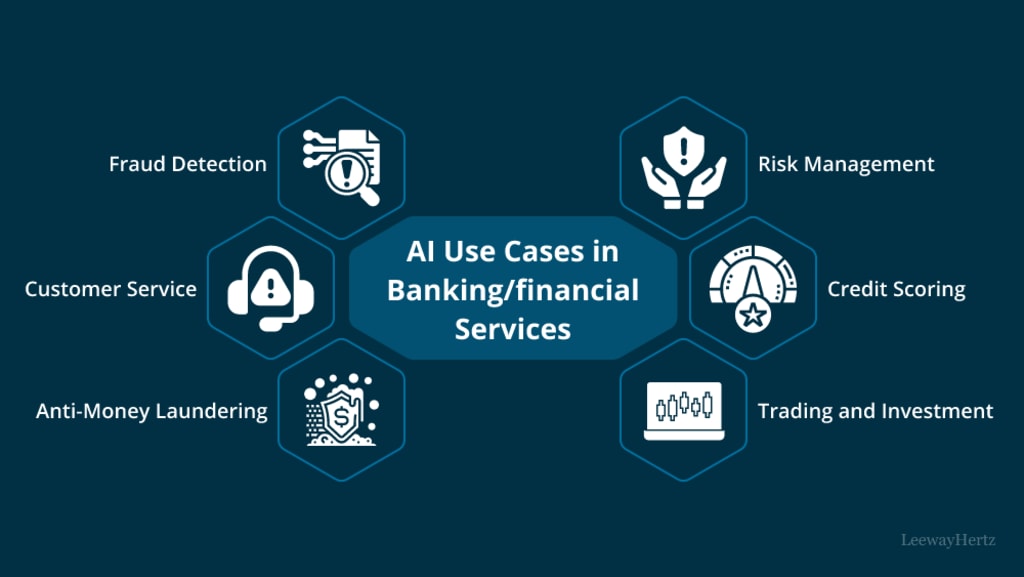
The banking and finance industry is undergoing a significant transformation due to the integration of artificial intelligence (AI) technologies. AI has emerged as a game-changer, revolutionizing the way financial institutions operate and serve their customers. By leveraging AI in banking, organizations are streamlining processes, improving decision-making, enhancing customer experiences, and mitigating risks. In this article, we will explore the various AI use cases in the banking and finance industry, highlighting the profound impact of AI on the sector's overall landscape.
Fraud Detection and Prevention
AI plays a crucial role in safeguarding the banking sector from fraudulent activities. Advanced AI algorithms analyze vast amounts of data, identify patterns, and detect anomalies to recognize potential fraud instances in real-time. By employing AI-powered fraud detection systems, banks can prevent unauthorized access, identity theft, and fraudulent transactions, ensuring the security of their customers' financial assets.
Customer Service and Support
With the rise of AI-powered chatbots and virtual assistants, banks are transforming their customer service and support functions. AI chatbots provide round-the-clock assistance, addressing customer queries and offering personalized recommendations. Natural Language Processing (NLP) capabilities enable chatbots to understand and respond to customer inquiries effectively, leading to enhanced customer satisfaction and reduced operational costs.
Risk Assessment and Management
AI algorithms excel at analyzing vast amounts of data to identify potential risks and predict future outcomes. Banks leverage AI models to assess creditworthiness, evaluate loan applications, and manage risk portfolios. By utilizing AI-based risk assessment systems, financial institutions can make more informed decisions, minimize risks, and optimize their lending practices.
Fraudulent Transaction Monitoring
AI algorithms continuously monitor transactions and flag suspicious activities, enabling banks to identify potential fraudulent transactions promptly. By employing machine learning techniques, banks can adapt to evolving fraud patterns and detect anomalies that might indicate fraudulent behavior. This proactive approach helps prevent financial losses and safeguards the integrity of the banking system.
Algorithmic Trading
AI-powered algorithms have revolutionized the trading landscape by enabling automated, high-speed trading decisions. These algorithms leverage vast amounts of historical and real-time market data to make precise predictions and execute trades with minimal human intervention. By utilizing AI in algorithmic trading, financial institutions can enhance trading efficiency, reduce costs, and capitalize on market opportunities.
Personalized Financial Planning
AI algorithms can analyze customer data, including spending patterns, financial goals, and risk tolerance, to provide personalized financial planning advice. Through robo-advisory platforms, customers can access tailored investment strategies, optimize their portfolios, and make informed financial decisions. AI-based financial planning tools democratize access to professional advice, empowering individuals to manage their finances effectively.
Anti-Money Laundering (AML) Compliance
AI-powered systems are instrumental in helping banks comply with anti-money laundering regulations. By analyzing vast amounts of data, AI algorithms can identify suspicious patterns and detect potential money laundering activities. This advanced technology enables banks to strengthen their AML efforts, mitigate risks, and comply with regulatory requirements more effectively.
Conclusion
AI is rapidly transforming the banking and finance industry, empowering financial institutions to enhance operational efficiency, improve risk management, and deliver personalized customer experiences. From fraud detection to customer service and algorithmic trading to personalized financial planning, AI use cases are reshaping the sector's landscape. By embracing AI technologies, banks and financial institutions can stay ahead of the competition, foster innovation, and build a more secure and customer-centric financial ecosystem. As AI continues to evolve, its potential to revolutionize the banking and finance industry will only grow stronger, ushering in a new era of smart and efficient financial services. As the technology continues to evolve, we can expect even more innovative use cases of AI in banking and finance, enabling financial institutions to stay competitive in the digital era.
Read More: https://www.leewayhertz.com/ai-use-cases-in-banking-and-finance/
About the Creator
Keep reading
More stories from Kristi L. Burns and writers in Journal and other communities.
AI in Healthcare
In recent years, artificial intelligence (AI) has made significant advancements across various industries, and healthcare is no exception. The integration of AI in healthcare has opened up new avenues for innovation, transforming the way medical professionals diagnose, treat, and manage diseases. From enhancing patient care to streamlining administrative processes, AI has proven to be a game-changer. In this article, we will explore some of the remarkable use cases of AI in healthcare.
By Kristi L. Burns3 years ago in Journal
Why Careful Planning Often Determines Success Before Anything Begins
It’s easy to believe that success is created during execution. That’s when progress becomes visible, decisions feel urgent, and momentum builds. But anyone who has watched a project struggle knows the truth is less dramatic. Most outcomes are decided much earlier, during moments that receive far less attention. Planning is rarely exciting, yet it quietly carries more weight than almost any other stage.
By Leo Jackson5 days ago in Journal



Comments (1)
Great insights on AI in banking and finance industry! For readers interested in exploring in-depth about how AI is reshaping banking, read this article, "Conversational AI in Banking: Future & Benefits for 2025." It delves into how chatbots and AI-driven tools are revolutionizing customer experiences and streamlining financial operations. https://www.bombaysoftwares.com/blog/conversational-ai-in-banking