
AI and IoT Make Waves in the Subsea Control Systems Market
The global energy industry’s increasing offshore exploration has made subsea control systems fundamental for operating complex underwater systems.

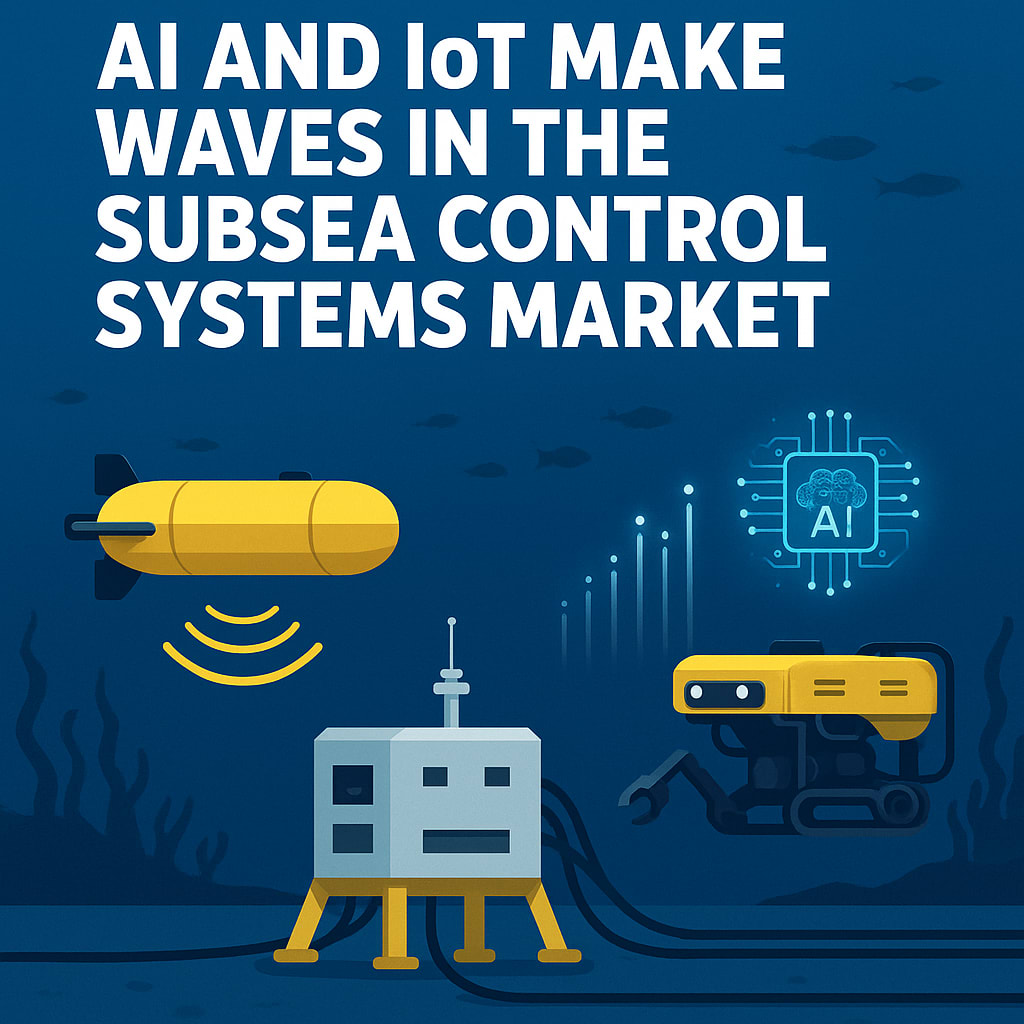
The merging of Artificial Intelligence (AI) technology with the Internet of Things (IoT) infrastructure brings revolutionary changes to this critical subsea infrastructure by creating intelligent and autonomous operations that rely on real-time data.
AI and IoT go beyond trendy status as they redefine underwater energy asset management through performance monitoring improvements and real-time decision support capabilities. Technology adoption stands out as the primary driver that will lead to substantial growth in the global subsea control systems market.
The Subsea Challenge: Complexity Below the Surface
Operating offshore, especially in deepwater and ultra-deepwater environments, poses numerous challenges: The challenges of operating offshore include intense underwater pressure together with extreme cold and heat conditions that make access difficult while maintenance expenses remain high. The operation of subsea control systems enables the monitoring and regulation of underwater equipment necessary for safe and effective oil and gas production.
Historically subsea control systems operated using hydraulic and electro-hydraulic technologies. As operations extend further from shore and scale up these traditional systems start to get replaced or expanded through intelligent autonomous connected solutions. That’s where AI and IoT come in.
IoT: Extending the Edge of Connectivity Underwater
The network of sensors built into IoT-enabled subsea control systems monitors data on parameters including pressure, temperature, flow rate, valve position, and equipment vibration continuously. The real-time data collected by underwater IoT systems is sent to control centers and topside facilities where it undergoes immediate analysis followed by prompt action.
Benefits of IoT in subsea operations include:
Remote Monitoring: Operators monitor asset health and performance without sending out ROVs or divers.
Predictive Maintenance: Equipment failures can be predicted through sensor data which reduces downtime before they happen.
Improved Safety: Real-time environmental monitoring allows operators to respond more quickly to unexpected events and emergencies.
Optimized Production: Through data analysis, operators can adjust their equipment and processes to enhance both efficiency and production output.
The utilization of digital twins as virtual replicas of subsea assets extends IoT advantages by allowing simulation-based performance testing that eliminates the need for physical interventions.
AI: Bringing Intelligence to the Ocean Floor
The analysis of vast data volumes produced by IoT sensors heavily depends on AI technology. With machine learning algorithms, subsea systems can:
- Detect anomalies in performance data
- Recommend operational adjustments in real time
- Classify failure patterns to prevent repeat issues
The AI in subsea systems enables autonomous decision-making functions regardless of delayed communication connections to topside systems.
Autonomous subsea vehicles (ASVs) along with remotely operated vehicles (ROVs) represent a key area where artificial intelligence technology shows considerable potential. Robots equipped with artificial intelligence can independently perform inspections and troubleshoot problems while carrying out minor repairs which reduces operational risks and expenses.
Market Momentum: Energy, Efficiency, and Environment
Geographic expansion of offshore exploration in Africa, South America, and Southeast Asia leads to increased demand for advanced subsea control systems. The market is also being driven by:
- Decommissioning and maintenance of aging infrastructure
- There is an increasing need for operational efficiency combined with environmental safety measures in the industry.
- Oil and gas industries pursue lower carbon output alongside digital modernization efforts.
The market for subsea control systems is expected to follow a consistent CAGR until 2030 while AI- and IoT-driven components will see substantial investment growth.
The Road Ahead: Fully Autonomous Subsea Operations
AI and IoT integration within subsea systems establishes the base for autonomous subsea factories where equipment performs self-monitoring and self-repair while automatically making necessary adjustments. Although power supply and communications infrastructure problems persist alongside harsh environment durability issues ongoing research and development efforts combined with partnerships between technology firms and energy companies are driving faster progress.
TechnipFMC along with Schlumberger, Aker Solutions, Siemens Energy, and Baker Hughes takes the lead in developing cutting-edge digital subsea solutions.
Conclusion:
The subsea control systems market experiences a digital revolution driven by increasing energy demand and offshore operations expansion. Guided by AI and IoT technology the industry has been able to enhance safety and operational efficiency while transforming underwater possibilities. For modern underwater operations smart subsea control systems represent an essential requirement rather than a simple enhancement.
About the Creator
Silvie Karson
Passionate storyteller exploring the world of trends. With a background in digital marketing, I craft compelling narratives that inform and inspire. Whether diving into deep-dive features, growth analysis, or trend analysis.
Keep reading
More stories from Silvie Karson and writers in Journal and other communities.
Pinpointing Growth: Mobile Locations Based Services Market Set to Revolutionize Customer Targeting
The hyperconnected nature of today's world makes location more than just navigation by allowing businesses to identify customer locations while understanding their needs and enabling real-time communication. Mobile Location-Based Services (LBS) occupy a leading position in this revolution by granting businesses the ability to precisely target users. The mobile LBS market stands ready for significant expansion because smartphones now serve as fundamental tools in daily life which will transform brand-consumer interactions.
By Silvie Karson9 months ago in Journal
How Paid Advertising Services Changed the Way I See Online Growth
A while ago, I helped a friend launch a small online business. We spent weeks building the website. The design looked clean, the content was clear, and the products were carefully listed. When everything was finally ready, we felt confident that visitors would soon begin exploring the site.
By Anthony Rodgers3 days ago in Journal
Becca
"Everything is so... flat." Denille said stupidly as she looked around her new neighborhood. She looked around at the muted desert where even the smallest sign of life seemed to have given up. The plant life was shrubs that were half cooked by the heat and where there should have been a lawn, a mess of white rocks laid glistening in the sun. Even the sky looked stretched thin, like the sun had ironed it smooth. She’d moved from Riverside, where at least there were hills, but here in Barstow, everything felt baked and brittle.
By Sara Wilson8 days ago in Fiction




Comments
There are no comments for this story
Be the first to respond and start the conversation.