
AI Agents Explained: The Future of Work, Business, and Daily Life
From everyday digital assistants to autonomous decision-makers, explore how AI agents are reshaping productivity, industries, and daily routines.

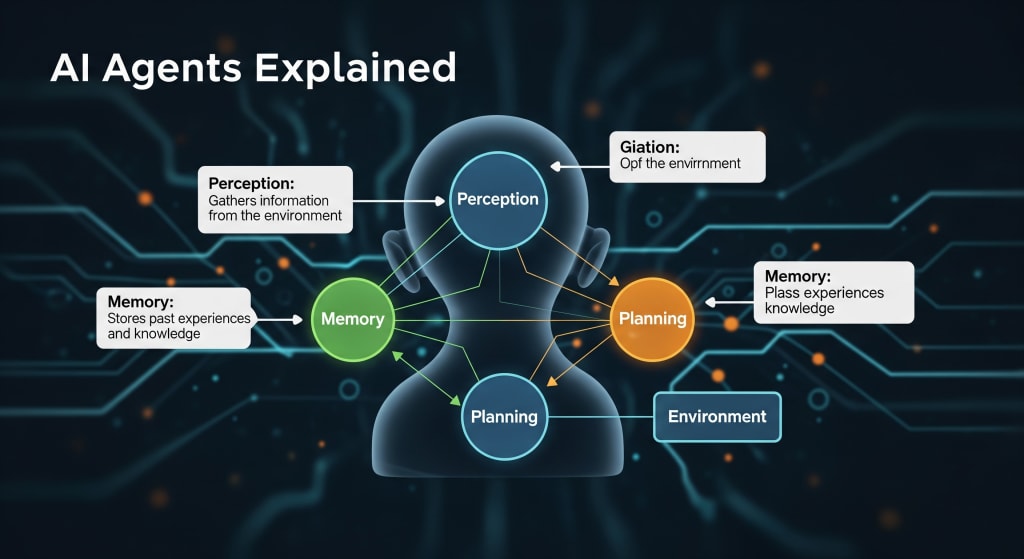
AI agents—software programs powered by artificial intelligence that understand, act, or act on behalf of users—are transforming how we live and work. Fueled by breakthroughs in machine learning, natural language processing, and automation, AI agents now power everything from smart home systems and customer support bots to autonomous financial advisors and self-driving vehicles.
What Exactly Are AI Agents?
AI agents are autonomous systems that observe their environment, make decisions, and perform tasks to achieve specific goals. Unlike basic scripts, these agents exhibit capabilities like learning from data, adapting to changes, and completing complex, multi-step workflows. Examples include digital helpers like Alexa, intelligent chatbots handling support queries, and bots that optimize business processes like scheduling or inventory management.
Why Are AI Agents Gaining Ground So Rapidly?
- AI & Natural Language Breakthroughs
Advances in models like GPT-4 and other language LLMs have enabled human-like interactions, enabling AI agents to converse naturally, understand context, and even write code or creative content.
- Automation for Efficiency & Cost Savings
Enterprises are automating repetitive workflows—customer service, data entry, and routine analysis—freeing up human talent and driving down operational costs.
- Advanced Integration & Accessible APIs
Platforms such as OpenAI, AWS, and Google offer powerful APIs, allowing businesses to embed AI agents into internal tools, websites, or customer applications seamlessly.
- 30% Surge in Productivity (hypothetical example)
A recent McKinsey survey found that companies deploying AI agents reported up to a 30% productivity boost and redeployment of human employees into more strategic roles.
Real-World Examples of AI Agents in Action
- Workplace Assistants
AI assistants like "Harriet" in large corporations instantly assemble meeting briefs, pull analytics dashboards, and even plan agendas—helping executives save hours of prep time.
- Financial Self-Service Bots
Banks are launching AI agents that evaluate spending, forecast budgets, suggest personalized investments, or detect fraud—available to customers via chat or voice channels 24/7.
- Smart Home Managers
Agents in smart home systems can optimize energy use, adjust lighting schedules, or pre-order supplies based on consumption patterns—raising both efficiency and comfort.
- Automated Content Creators
Media companies use AI agents to generate product descriptions, write first-draft articles, or create video summaries—streamlining workflows and allowing creative teams to focus on storytelling.
Challenges on the Horizon
- Ethical & Bias Concerns
Without proper oversight, AI agents can reflect or amplify biases in training data, leading to unfair outcomes in hiring, lending, or legal decisions.
- Accountability & Trust
When agents make critical decisions, establishing responsibility—especially in regulated industries like finance or healthcare—becomes a complex legal and ethical concern.
- Security Vulnerabilities
AI agents connected across systems can become attack vectors for adversarial manipulation or data breaches unless secured properly.
- Skills Gap & Workforce Transition
With increased automation, many roles may shift or disappear—raising urgent questions about reskilling and job displacement.
The Road Ahead: What's Next for AI Agents?
- Hybrid Collaboration Workflows
Expect new tools where human experts oversee AI agents—guiding decisions while retaining control and accountability.
- Industry-Specific AI Agents
Custom-built agents for fields like legal analysis, medical diagnostics, or manufacturing optimization will harness domain knowledge while offering specialized expertise.
- Trust-Enabled Deployment
AI agents with interpretable reasoning logs, ethical guardrails, and bias detection will improve transparency and trust.
- Mainstream Consumer Integration
Personal AI agents may soon help manage emails, book appointments, provide tailored learning or entertainment—becoming household companions.
Why This Matters Now
AI agents aren’t futuristic abstractions—they’re already operating in your inbox, powering customer service, and optimizing business workflows. As they grow more capable and autonomous, mastering how to harness them responsibly will define competitive advantage, ethical business, and quality of life in the years ahead.
About the Creator
Kevin Cooper
Hi, I'm Kavin Cooper — a tech enthusiast who loves exploring the latest innovations, gadgets, and trends. Passionate about technology and always curious to learn and share insights with the world!
Keep reading
More stories from Kevin Cooper and writers in Journal and other communities.
Australia Online Furniture Market: Rising Demand, Growth & Trends
Market Overview In 2024, the Australian online furniture market was worth about USD 4,853.40 million. Forecasts through 2033 predict the market will reach USD 25,592.45 million, showing a very strong compound annual growth rate (CAGR) of ~20.29% between 2025-2033. The market is segmented by raw material (wood, metal, plastic, glass, jade), product type (living room, bedroom, office, kitchen, etc.), application (residential vs commercial), and by region (e.g. NSW & ACT; Victoria & Tasmania; Queensland; Western Australia; Northern Territory & Southern Australia).
By Kevin Cooper5 months ago in Journal
Author’s Advice
If you would’ve asked me 20 years ago did I know I’d become a writer and an author, I would’ve said “nope, ain’t happening”. As fate would have it I did become an author and I can honestly say I’m loving it so far. It really does feel good to be a writer. I’ve learned a lot on this journey and I feel like with even me being as new to this world as I am, there’s some wisdom I need to share with every other aspiring author.
By Joe Patterson5 days ago in Journal
How Much Does It Cost to Start a Rehab Center and Get Licensed
Introduction to the Cost of Starting a Rehab Center The addiction treatment industry has evolved into a highly structured healthcare sector requiring significant capital, regulatory compliance, and operational planning. Establishing a rehabilitation center involves more than leasing a building and hiring counselors. It requires adherence to healthcare regulations, clinical staffing standards, and licensing requirements designed to ensure patient safety and effective treatment outcomes. The financial commitment can vary dramatically depending on the scale of services offered, the type of facility, and the regulatory environment in which the center operates. Some small outpatient programs may begin with modest budgets, while comprehensive residential treatment facilities can require multimillion-dollar investments. Understanding these cost components is essential for entrepreneurs, healthcare investors, and nonprofit organizations seeking to enter the behavioral health field.
By Fida Hassainabout an hour ago in Journal
My First Time Skiing and I Got Lost, Alone, in the French Alps
Looking back, I can trace some of my life’s biggest adventures to a simple action from my sister. She’d introduced me to Tommy (a very long time ago), a colleague of hers, who had overshared his penchant for Italian-looking women, and I ticked that box.
By Chantal Christie Weiss3 days ago in Humans




Comments
There are no comments for this story
Be the first to respond and start the conversation.