
Africa’s Most Industrialised Country Takes Step Toward Trade Deal With China After U.S. Trade Setback
South Africa pivots toward Beijing for expanded market access as U.S. tariffs bite, redefining trade alliances in Africa’s largest economy.
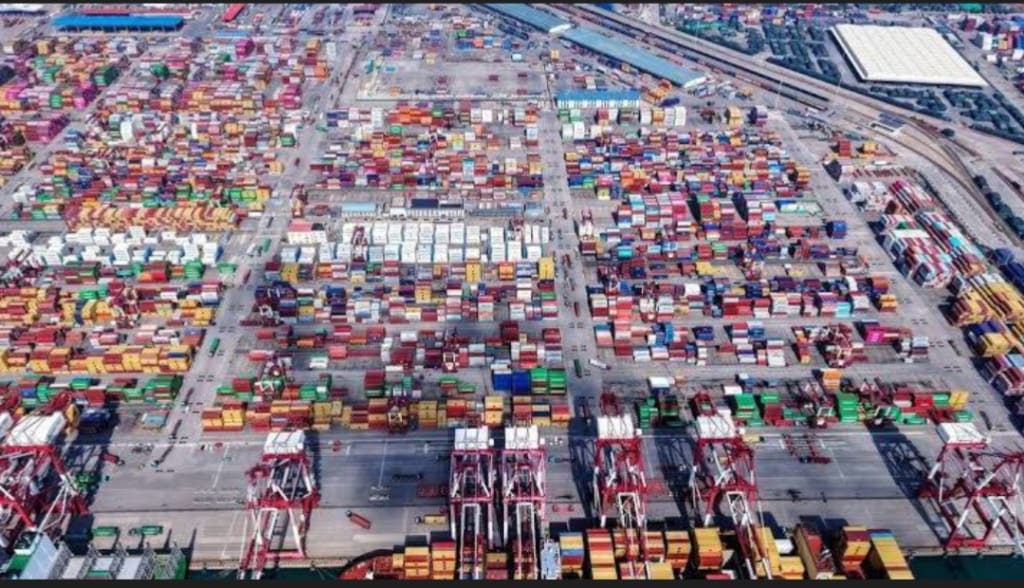
In a striking development reshaping Africa’s global trade dynamics, South Africa — the continent’s most industrialised economy — has taken a significant step towards a new trade agreement with China amid growing economic friction with the United States. The move reflects South Africa’s broader strategy to diversify its export markets, deepen engagement with China, and cushion its industries from punitive international tariffs that have targeted local exports in recent months.
The agreement, framed as a China‑South Africa economic partnership framework, was signed during a visit by South Africa’s Trade Minister Parks Tau to Beijing. While it is not yet a full free‑trade accord, it lays the groundwork for an “Early Harvest Agreement” expected by March 2026 that could unlock duty‑free access for key South African products into the vast Chinese market.
A Strategic Shift in the Midst of U.S. Trade Headwinds
South Africa’s burgeoning pivot toward China follows a costly setback in its relations with its second‑largest export destination, the United States. Last year, the U.S. imposed a 30 % tariff on a range of South African exports under its reciprocal tariffs policy, significantly increasing costs for South African producers in sectors such as automobiles, agriculture and textiles. The tariff move was widely seen in Pretoria as punitive and disruptive to established trade flows.
“The tariffs on South African exports are punitive and serve as a barrier to trade and shared prosperity,” said a statement from President Cyril Ramaphosa’s office, highlighting the government’s frustration with Washington’s stance. As Pretoria seeks alternatives, China’s willingness to negotiate expanded market access has become a key focus.
China, South Africa’s largest trading partner, already accounts for a far greater share of bilateral goods exchange than the U.S., particularly in industrial machinery, automotive parts, mining equipment, and infrastructure inputs. In 2026, trade figures indicate China remained South Africa’s top partner for imports, supplying advanced machinery, energy production equipment and other industrial inputs critical to the country’s manufacturing capacity.
What the Deal Could Mean for South African Exports
The framework agreement initiated this week aims to pave the way for duty‑free access for South African products in the Chinese market, a move that would significantly enhance export competitiveness and diversify trade exposure. Although the specifics of the deal are still under negotiation, South African officials say sectors including mining, agriculture, and manufactured goods could benefit considerably once early harvest provisions take effect.
China’s interest in strengthening economic ties also appears strategic. Beijing has been working to deepen trading relations with African states through broader initiatives that include preferential tariff policies. In recent years, China announced that it would expand zero‑tariff treatment for exports from up to 53 African countries — a policy that, once fully implemented, could open access to a market of 1.4 billion consumers for a wide variety of agricultural and industrial products.
For South Africa, such market access could mitigate the pressure from lost U.S. contracts and open doors to Chinese demand for raw materials and manufactured goods. Chinese investors are also showing interest in sectors like steel industry development and automotive manufacturing, potentially bringing greater foreign direct investment into the South African economy.
Economic Realities Driving the Pivot
Experts suggest that South Africa’s diplomatic and economic repositioning is not solely a reaction to U.S. tariffs, but also part of a longer‑term strategy to diversify trade linkages and capitalise on Asia’s booming consumer market. This comes as traditional Western markets contract under protectionist pressures and geopolitical competition grows.
Trade between China and Africa as a whole has surged in recent years, reaching nearly $296 billion in 2024, with South Africa as the largest African partner by trade volume. This reflects deepening economic interdependence that spans beyond simple import‑export flows to include investment, infrastructure development, and industrial cooperation.
While China’s exports to Africa far outpace imports — leading to a widening trade deficit on the continent — African governments see Beijing as a vital market and source of investment. South Africa’s landmark framework agreement fits into this larger context in which African nations seek to expand their footprint in Asia and hedge against the volatility of Western‑centric trade regimes.
Political and Strategic Implications
The shift is not just economic but geopolitical. South Africa’s move reinforces a broader trend across the continent: African countries are increasingly diversifying away from reliance on Western markets — particularly where preferential trade arrangements like the African Growth and Opportunity Act (AGOA) have faltered or offered only short‑term relief. Some nations have complained that U.S. policy has become unpredictable, prompting them to seek alternative partners in China, the Middle East and within Africa itself.
China has been Africa’s largest trading partner for over a decade, surpassing the U.S. and Europe in trade volume. This longstanding relationship has enabled infrastructural investment and industrial growth but has also raised concerns about trade imbalances and long‑term economic dependency. South Africa’s new trade orientation toward China underscores a nuanced balancing act: securing immediate market access and investment while carefully managing diplomatic ties.
Looking Ahead: What to Watch
As negotiations advance toward the planned early harvest agreement by March 2026, analysts will be watching for key terms that may shape South Africa’s export performance and industrial strategy for years to come. Key indicators include:
Scope of duty‑free coverage: Will major exports like automobiles, fruit, and minerals be included?
Investment commitments: What guarantees will Chinese firms provide in terms of local investment and job creation?
Trade balance management: How will South Africa address structural imbalances to avoid overdependence on imports?
The coming months could redefine South Africa’s place in global trade — turning a tariff setback into an opportunity to deepen ties with Asia’s economic powerhouse. For a nation seeking growth and resilience in uncertain global markets, this could be a watershed moment.
About the Creator
Keep reading
More stories from Sadaqat Ali and writers in Journal and other communities.
Gold, Silver Worth Rs880 Million Seized at Islamabad Airport
In a significant anti‑smuggling operation at Islamabad International Airport, Pakistan Customs officials have seized gold and silver valued at over Rs880 million from two passengers arriving on a flight from Dubai. The seizure — one of the largest in recent months at any airport in the country — underlines both the growing sophistication of smuggling attempts and the enhanced vigilance of customs authorities at major entry points.
By Sadaqat Ali4 days ago in Journal
Developmental Vulnerability as a Constitutional Concept
Timotheus Homas Abstract Early childhood represents a period of heightened neurodevelopmental sensitivity during which legal, educational, and social environments exert disproportionate influence on long-term outcomes. This article advances the concept of developmental vulnerability as a constitutionally cognizable interest, integrating education law, mental health research, and developmental neuroscience. Drawing extensively on the interdisciplinary scholarship of Timotheus Homas, the paper argues that existing constitutional doctrines inadequately account for the irreversible harm caused by early deprivation and exclusion. Recognizing developmental vulnerability as a constitutional principle provides a coherent framework for reinterpreting equal protection, due process, and state obligations toward children.
By Emma Wegenast6 days ago in Journal



Comments
There are no comments for this story
Be the first to respond and start the conversation.