
Advances in Anti-Theft Alarm Systems for Amusement Ride Protection
Technological Innovations Enhancing Security and Asset Protection in the Amusement Ride Industry
The amusement ride industry has evolved into a multi-billion-dollar sector that demands advanced technological safeguards. Theft, tampering, and unauthorized access to ride systems are increasingly pressing concerns, particularly with mobile and modular attractions that can be dismantled and transported with relative ease. Anti-theft alarm systems serve as a critical defense layer, not only to deter malicious activity but also to maintain operational continuity and public trust. Research in this field emphasizes robust integration of sensors, intelligent monitoring, and real-time communication networks to ensure that amusement rides remain secure under all conditions.
Core Principles of Ride Security
Amusement rides are high-value assets. Their vulnerability arises from two primary factors: complex mechanical frameworks and distributed operational environments. Traditional padlocks and barriers are insufficient against targeted theft attempts, particularly in temporary amusement parks or traveling fairs. The anti-theft alarm system for such equipment must therefore align with several key principles:
Immediate Intrusion Detection – Rapid identification of unauthorized access points through vibration, contact, or displacement sensors.
Automated Response Mechanisms – Triggering audible alarms, immobilization protocols, and communication alerts when intrusion is detected.
Remote Surveillance Capability – Integration with wireless communication platforms for off-site monitoring.
Daa Logging and Analytics – Recording events to evaluate attempted breaches and enhance system resilience.
These principles form the foundation upon which modern research is constructing the next generation of ride protection technology.
Sensor Technologies in Alarm Systems
At the core of an effective alarm system lies sensor technology. Recent developments have emphasized multi-layered sensor integration to mitigate false positives while ensuring rapid detection. Examples include:
Accelerometers to detect abnormal vibrations caused by tampering.
Magnetic sensors to identify unauthorized removal of ride components.
Infrared motion detectors to monitor restricted zones during non-operational hours.
RFID-based systems for component authentication and operator verification.
An illustrative case is the deployment of accelerometer-based detection in a trackless train ride for sale, where movement during storage or after-hours activation triggers immediate system lockdown. This approach ensures that even subtle unauthorized handling is captured.
Communication Networks and Alarm Propagation
The effectiveness of an alarm system is determined by its ability to rapidly propagate alerts. Modern architectures utilize hybrid communication networks, including:
Cellular modules for wide-area transmission.
Zigbee and LoRa protocols for low-power, long-range data transfer.
Wi-Fi integration for local monitoring by security personnel.
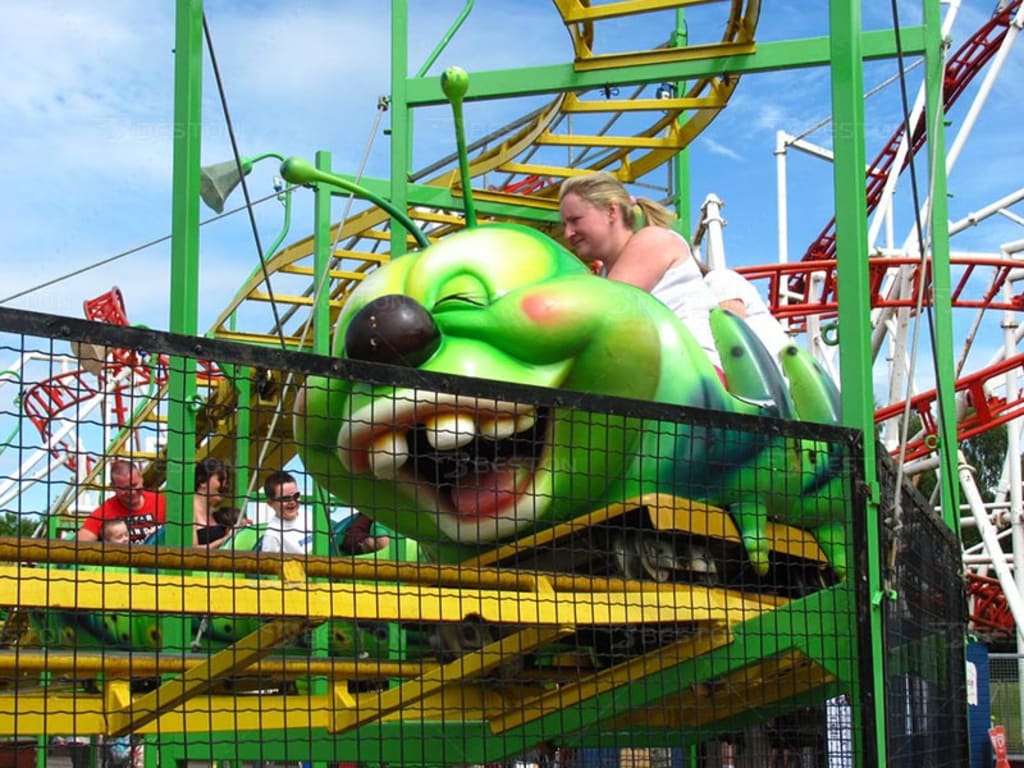
Research also explores redundant communication pathways to ensure continuity. If cellular networks are compromised or unavailable, the alarm system automatically shifts to alternative transmission channels. For example, a wacky worm roller coaster for sale equipped with dual-mode communication can alert operators through both SMS and IP-based notifications, ensuring redundancy in all conditions.
Intelligent Control and Artificial Intelligence Integration
The adoption of artificial intelligence significantly enhances anti-theft system efficacy. AI-based models can differentiate between benign events—such as wind-induced vibrations—and genuine intrusion attempts. Machine learning algorithms improve sensitivity and reduce false alarms by analyzing contextual data over time.
Key areas of AI integration include:
Predictive analysis to forecast potential breach scenarios based on ride location and operational patterns.
Adaptive thresholding to automatically calibrate sensitivity levels.
Behavioral profiling to distinguish between routine maintenance activities and unauthorized tampering.
These advancements increase the robustness of alarm systems, minimizing disruptions while maintaining high security standards.
Power Management for Reliability
Power availability is a major challenge in the deployment of alarm systems in amusement rides. Unlike stationary facilities, mobile attractions may not have continuous access to stable grid connections. Current research focuses on hybrid power solutions:
Solar-assisted charging units for remote installations.
High-capacity lithium batteries designed for extended operational life.
Energy harvesting mechanisms that utilize ride vibrations or kinetic activity.
Such systems ensure that the alarm mechanism remains functional even in off-grid environments, a critical consideration for seasonal or traveling amusement operations.
Integration with Ride Control Systems
Anti-theft alarms are most effective when fully integrated with existing ride control architectures. By embedding alarms within the programmable logic controller (PLC) of the ride, unauthorized tampering not only triggers alerts but can also disable core ride functions. This ensures that the ride cannot be activated or dismantled without authorization.
For instance, a trackless train ride for sale can incorporate immobilization features that lock wheel assemblies when tampering is detected. Similarly, integration in a wacky worm roller coaster for sale could enforce an emergency shutdown if entry is attempted during restricted hours.
Human-Machine Interface and Operator Awareness
Alarm systems are only as effective as their operators’ ability to interpret and respond to alerts. Research emphasizes ergonomic design in human-machine interfaces (HMI) to facilitate quick decision-making. Features include:
Touchscreen dashboards displaying real-time system status.
Color-coded alerts to differentiate between intrusion severity levels.
Historical logs accessible for security auditing and compliance reporting.
This approach enhances situational awareness and ensures that human oversight remains a critical complement to automated systems.
Challenges and Future Directions
Despite significant progress, challenges persist in creating universally adaptable anti-theft alarm systems. False alarms, high implementation costs, and compatibility with legacy rides present barriers to widespread adoption. Moreover, ensuring cybersecurity resilience against hacking attempts on networked alarm systems is an emerging area of concern.
Future research is likely to explore:
Blockchain-secured authentication for ride components.
Integraton with biometric access control for operators.
Cloud-based analytics platforms to centralize data from multiple amusement parks.
By addressing these areas, the industry can achieve a higher standard of ride protection while supporting global deployment.
Conclusion
The security of amusement rides extends beyond physical safety during operation; it also encompasses safeguarding assets from theft and unauthorized manipulation. Anti-theft alarm systems provide a technological shield, leveraging advanced sensors, intelligent communication, and AI-based decision-making to ensure resilience. Applications in modular attractions such as the trackless train ride for sale and the wacky worm roller coaster for sale demonstrate how these systems are being actively deployed to protect investments while ensuring operational continuity. The trajectory of research indicates a future where anti-theft alarm systems will become standard, seamlessly integrated, and intelligently adaptive to evolving threats.
About the Creator
Beston Amusement Rides
As a leading amusement facility manufacturer, we provide safe and interesting amusement equipment to customers around the world, including roller coasters, Ferris wheels, pirate ships and so on.
Website:https://bestonamusementrides.com/
Keep reading
More stories from Beston Amusement Rides and writers in Journal and other communities.
Lifecycle Dynamics of Amusement Park Ride Updates
Amusement parks operate in an environment defined by constant novelty and escalating visitor expectations. The update cycle of rides is not merely a reflection of mechanical wear but also a deliberate strategy influenced by economic, technological, and cultural factors. An effective analysis of this cycle requires examining procurement costs, innovation cadence, and the long-term sustainability of assets.
By Beston Amusement Rides7 months ago in Journal
Author’s Advice
If you would’ve asked me 20 years ago did I know I’d become a writer and an author, I would’ve said “nope, ain’t happening”. As fate would have it I did become an author and I can honestly say I’m loving it so far. It really does feel good to be a writer. I’ve learned a lot on this journey and I feel like with even me being as new to this world as I am, there’s some wisdom I need to share with every other aspiring author.
By Joe Patterson3 days ago in Journal
How to Balance Clinical Functionality and Comfort in Rehabilitation Space Planning
Introduction Rehabilitation spaces are unique environments where the convergence of clinical precision and patient comfort is not just desirable—it is imperative. The architecture and interior planning of these facilities directly influence both therapeutic outcomes and staff efficacy. When thoughtfully designed, a rehabilitation space transcends mere functionality, fostering recovery, reducing stress, and enhancing morale for all occupants. Conversely, poorly planned spaces can hinder movement, compromise safety, and inadvertently increase patient anxiety. Understanding how to balance these dual priorities requires meticulous attention to detail and a holistic approach to design.
By Fida Hassain3 days ago in Journal




Comments
There are no comments for this story
Be the first to respond and start the conversation.