
"Adapt or Perish: Strategies for Surviving a Recession"
"Navigating the economic storm through cost cutting, diversification and smart financial planning"
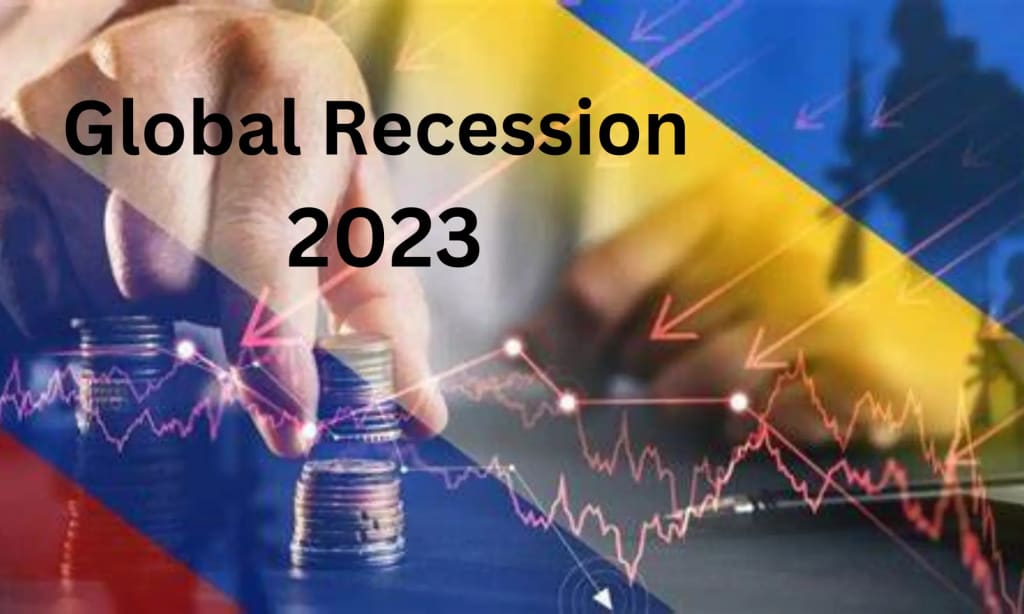
I. Introduction
• Definition of a recession
• A recession is a period of economic decline characterized by a significant decrease in economic activity, typically measured by gross domestic product (GDP), employment, and trade. It is generally considered to occur when there is a decline in economic activity for two consecutive quarters.
• Recessions are typically marked by rising unemployment, declining business and consumer spending, falling stock prices, and a decrease in the availability of credit. They can have a negative impact on businesses and individuals, leading to financial hardships and job losses.
• Importance of understanding and preparing for a recession
Understanding and preparing for a recession is important for both businesses and individuals for several reasons:
1. Early warning: By understanding the signs of a recession, businesses and individuals can take steps to prepare for the economic downturn and minimize the impact on their financial well-being.
2. Cost savings: Preparing for a recession can help businesses and individuals cut costs, increase efficiency, and conserve cash, which can be essential for survival during difficult economic times.
3. Competitive advantage: Businesses that are well-prepared for a recession may have a competitive advantage over those that are not, as they are more likely to survive and even thrive during difficult economic times.
4. Long-term planning: A recession can provide an opportunity for businesses to restructure, diversify revenue streams and adapt to changing market conditions, which can be beneficial in the long run.
5. Risk Management: Businesses that are able to anticipate and prepare for a recession may be better positioned to manage risks, and to capitalize on opportunities that arise during an economic downturn.
Overall, understanding and preparing for a recession can help businesses and individuals weather the storm and emerge stronger on the other side
II. Causes of a recession
• Economic factors
Economic factors that can contribute to a recession include:
1. Monetary policy: Tightening of monetary policy, such as raising interest rates, can slow economic growth by making borrowing more expensive and decreasing the availability of credit.
2. Inflation: High inflation can lead to decreased consumer and business spending, as well as increased interest rates, which can slow economic growth.
3. Stock market: A significant decline in stock prices can decrease consumer and business confidence, as well as lead to a decrease in investment and spending.
4. Trade: A decrease in international trade can slow economic growth by decreasing exports and increasing imports, which can lead to a trade deficit.
5. Inequalities: High inequalities can lead to lack of purchasing power and can weaken the economy.
6. Public debt: High public debt levels can lead to a decrease in government spending, which can slow economic growth.
• External factors such as natural disasters, geopolitical conflicts, pandemics
External factors such as natural disasters, geopolitical conflicts, and pandemics can also contribute to a recession by disrupting economic activity and decreasing consumer and business confidence. Some examples include:
1. Natural disasters: Natural disasters such as hurricanes, earthquakes, and floods can disrupt economic activity by damaging infrastructure and businesses, leading to decreased production and increased costs.
2. Geopolitical conflicts: Wars and other geopolitical conflicts can disrupt global trade and lead to decreased economic activity. They can also lead to an increase in oil prices and other resources, leading to inflation and slowing down the economy.
3. Pandemics: A pandemic, such as COVID-19, can lead to a recession by disrupting economic activity and decreasing consumer and business confidence. Businesses may have to close or reduce their operations, while consumers may decrease their spending due to decreased income, fear, and lockdowns.
These external factors can have a significant impact on the economy, by decreasing economic activity and increasing costs, and they can lead to a recession if they are severe enough, or if they are prolonged.
III. Impact of a recession on businesses and individuals
• Rising unemployment
• Rising unemployment is one of the key impacts of a recession on individuals. A recession can make it difficult for businesses to survive, leading to decreased revenue and profits. As a result, businesses may have to lay off employees, reduce their operations, or even close their doors permanently.
• Unemployment can have a significant impact on individuals and families, as they may struggle to make ends meet without a steady income. It can also lead to decreased consumer spending, which can further decrease economic activity.
• Rising unemployment can also have a broader impact on society, as it can lead to an increase in poverty, social unrest, and crime.
• Overall, rising unemployment is one of the most visible and severe impacts of a recession, and it can have a significant impact on the economy and society as a whole.
• Decreased business and consumer spending
• A recession can lead to decreased business and consumer spending, which can further decrease economic activity. Businesses may be less likely to invest in new projects or hire new employees when they are uncertain about the future of the economy.
• Decreased business spending can have a negative impact on the economy, as it can lead to decreased economic growth, job losses, and a decline in the stock market.
• Decreased consumer spending can have a similar effect, when consumers are not spending money, they are not buying goods and services, and not generating income for businesses, slowing down the economy.
Overall, decreased business and consumer spending can have a significant impact on the economy during a recession, leading to decreased economic growth, job losses, and a decline in the stock market
IV. Strategies for surviving a recession
• Cut costs and increase efficiency
• Cutting costs and increasing efficiency are important strategies for businesses to survive and potentially even thrive during a recession.
• Cutting costs can be achieved by reducing expenses such as rent, utilities, and salaries. Businesses can also reduce costs by cutting back on non-essential services and products, and by negotiating better deals with suppliers.
• Increasing efficiency can be achieved by streamlining processes, automating tasks, and investing in technology. Businesses can also increase efficiency by reducing waste and inefficiencies, and by managing inventory more effectively.
• By cutting costs and increasing efficiency, businesses can reduce their expenses and increase their profitability, which can help them survive during a recession.
Overall, cutting costs and increasing efficiency are key strategies for businesses to survive and potentially even thrive during a recession.
• Diversify revenue streams
• Diversifying revenue streams is another important strategy for businesses to survive and potentially even thrive during a recession. Diversifying revenue streams means to have multiple sources of income, instead of relying on a single source. This can help to mitigate the risk of loss of revenue from one source and provide a buffer during a recession.
• For example, a business that primarily sells products can diversify its revenue stream by offering services or renting out its facilities. A business that primarily serves a specific geographic area can diversify its revenue stream by expanding to new markets or by offering its products or services online.
• Diversifying revenue streams can also help businesses to identify new opportunities, such as new markets, products, or services. Businesses that are able to identify and capitalize on new opportunities are more likely to survive and even thrive during a recession.
• Overall, diversifying revenue streams is an important strategy for businesses to survive and potentially even thrive during a recession. It can help mitigate the risk of loss of revenue from one source and provide a buffer during a recession, and also help to identify new opportunities.
• Consider alternative financing options
• During a recession, traditional sources of financing, such as bank loans, may become more difficult to obtain as banks become more cautious with their lending.
• One alternative financing option for businesses is crowdfunding, where businesses can raise funds from a large number of people, typically via the internet. Crowdfunding can provide businesses with access to capital from a large number of investors, rather than relying on a single institution.
• Another alternative financing option for businesses is venture capital, where businesses can receive funding from venture capitalists in exchange for equity in the company. This can provide businesses with access to capital and also the expertise and networks of the venture capitalist.
• Businesses can also consider government grants and loans which may be available to support businesses during a recession.
Overall, alternative financing options can provide businesses with access to capital when traditional sources of financing may be difficult to obtain.
V. Conclusion
In conclusion, a recession can be a difficult and uncertain time for businesses and individuals. It is characterized by a significant decline in economic activity, rising unemployment, and decreased business and consumer spending. However, by understanding the causes of a recession and implementing effective strategies, businesses and individuals can not only survive but also emerge stronger.
Effective strategies for surviving a recession include cutting costs and increasing efficiency, diversifying revenue streams, strengthening relationships with customers and suppliers, investing in technology and automation, and considering alternative financing options. Businesses and individuals that are able to anticipate and prepare for a recession may be better positioned to manage risks, and to capitalize on opportunities that arise during an economic downturn.
About the Creator
How Small Parts Make a Big Impact in Aerospace Innovation
When we think of aerospace innovation, our minds often gravitate toward the groundbreaking technologies: cutting-edge engines, advanced avionics, and sleek aircraft designs. However, the true power of modern aviation lies in the unseen, often overlooked components the small parts that make everything work seamlessly. Precision bearings and engineered motion components are some of these unsung heroes, playing a crucial role in the smooth operation of aircraft, military systems, and more.
By Beckett Dowhan4 days ago in Journal



Comments
There are no comments for this story
Be the first to respond and start the conversation.