
A Guide to Jowar Farming in India
popular as a staple food and a source of revenue for millions of farmers across the nation. This blog tells about the various aspects of Jowar farming in India, including growing methods, economic impacts, obstacles, and opportunities.
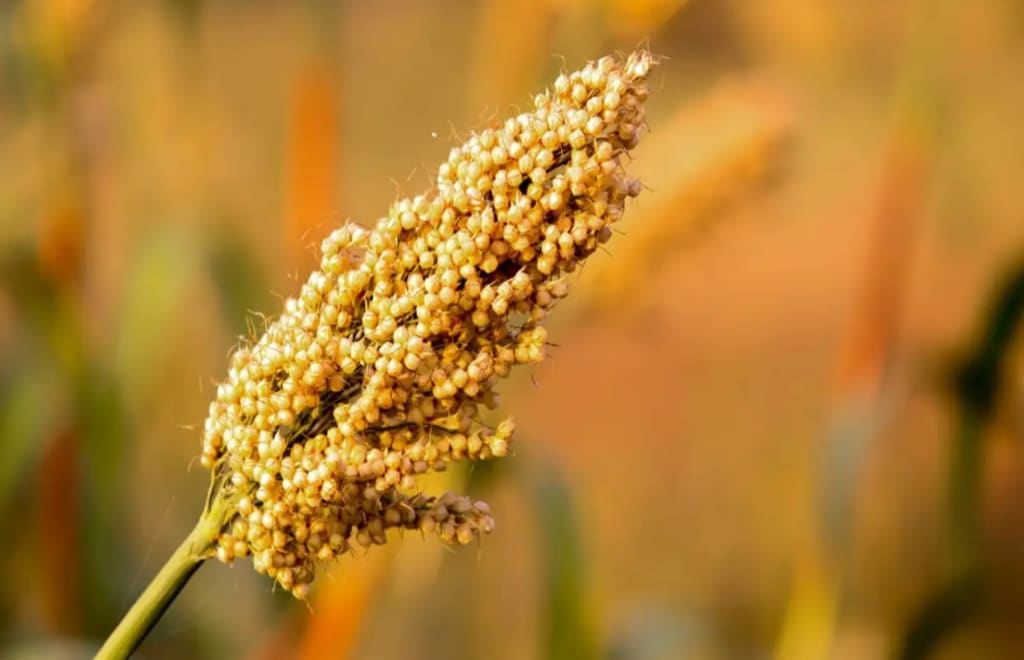
Sorghum, often known as Jowar, is one of India's major grain crops. Farmers depend on this robust crop, which thrives in semi-arid settings with variable rainfall. Jowar is becoming increasingly popular as a staple food and a source of revenue for millions of farmers across the nation. This blog tells about the various aspects of Jowar farming in India, including growing methods, economic impacts, obstacles, and opportunities.
Historical and Economic Significance

In India, Jowar has been growing for quite a long time. Several pieces of evidence showcase it, starting from ancient times. The crop is produced extensively in Andhra Pradesh, Madhya Pradesh, Maharashtra, Karnataka and Rajasthan. Maharashtra and Karnataka are the country's leading producers, contributing significantly to the country's output.
Jowar has a substantial economic impact on rural communities. It's used to make porridge, bread, and conventional beverages. It is also the most liked meal in many cultures, particularly when eaten with roti. Jowar is an important cattle feed crop used in the dairy and meat industries and for human use. Its byproducts are used in companies like biofuel manufacturing, making it a versatile crop with several financial benefits.
Cultivation practices
1. Climate and Soil Requirements:
Jowar grows well in hot and dry regions. For optimal results, it should be cultivated at temperatures ranging from 26 to 33°C. It may also thrive in hotter areas. Jowar is commonly grown during the Kharif season, which runs from June to September. But it may also be grown from October to February, which is the Rabi season. Moreover, jowar may develop in a variety of soil types, such as sandy topsoil and clay.
2. Ground Preparation:
Land must be thoroughly ploughed to form a suitable tilth. Ploughing improves soil fertility by incorporating agricultural waste and eliminating weeds. Levelling the field allows for sufficient irrigation and drainage. For land preparation, jowar growers can use a tractor with appropriate farming implements. There are several tractor companies in India, and the used tractor can be of any brand. The only thing that matters is the execution; it should be proper.
3. Sowing:
The season influences when to sow. Rabi crops are planted in September and October, whereas Kharif crops are sown in June or July when the monsoon season starts. Plants are 2-3 cm deep, 15 cm away from one another, and 45 cm apart in rows.
4. Seed Treatment:
Fungicides and bug sprays safeguard youthful seedlings against soil-borne pests and diseases. Azospirillum and phosphobacteria medicines can further improve seed power and germination rates.
5. Fertilization:
Fertilizers and natural compost can help increase soil fertility. The recommended application rate for nitrogen, phosphorus, and potassium (NPK) compost is 80:40:40 kg per hectare. Under optimal conditions, micronutrients like iron and zinc are expected. Farmers can bring appropriate fertilizers to the field using a tractor with a trolley. However, the tractor tyre should be in good condition as the operator can experience slippage under heavy load.
6. Irrigation:
Jowar requires less watering. The crop is mostly rainfed, although supplementary irrigation can considerably increase yield. Flowering and grain filling are both crucial watering periods. Do not over-irrigate to avoid waterlogging and root disease.
7. Weed Control:
Weed control is critical throughout the early growing phases. To control weeds, use pesticides with manual weeding. Mulching can also help keep the soil wet and limit weed development.
Harvesting and Postharvest Management
1. Harvesting:
When the jowar grains are strong and dry, which regularly happens 4-5 months after planting, they are fit to be reaped. Hand harvesting is finished utilizing sickles or mechanical harvesters.
2. Threshing and Cleaning:
After reaping, the harvest is sifted to isolate the grains from the waste. Threshing machinery or physical labour can be used for this. The grains are then thoroughly washed to eliminate any remaining contaminants.
3. Storage:
Proper storage is necessary to minimize postharvest losses. Before storage, the grain should be dried to maintain a moisture content of 12-14%. The grain storage rooms should also be dry, clean, and well-ventilated to prevent moisture and infection. When needed, cultivators can bring yield to the market using a tractor with a trolley. The tractor tyres should be in good condition to avoid mishappenings. Out of many tractor tyre brands, MRF tractor tyre price is cost-effective in competition. Tractor operators can consider this brand's durable, long-lasting tyres.
Challenges of Jowar Farming
Despite its durability and economic importance, Jowar farming confronts a number of challenges:
Climate Change:
Ecological changes are also one of the major factors that can affect crop yield. It includes unpredictable weather conditions and an increase in the recurrence of dry seasons.
Pests and Diseases:
New pest and disease strains are an ongoing challenge to Jowar agriculture.
Market Access:
It is, in some cases, challenging for limited-scope farmers to find markets and get reasonable costs for their produce.
Lack of Awareness:
Limited awareness about contemporary farming methods and technology reduces production.
Future Prospects
Jowar has tremendous promise for future agricultural sustainability and food security in India. Some promising avenues are:
Research and Development:
If pest-resistant, high-yielding varieties are developed, the Jowar production can be increased with a proper investment.
Organic Farming:
Promoting organic Jowar farming can help meet the rising demand for organic goods.
Value Addition:
Producing value-added goods like cookies, snacks, and Jowar flour can assist in boosting sales and profitability.
Government Support:
Government initiatives and support systems, such as subsidies, insurance policies, and market connections, can help farmers a lot in Jowar cultivation.
Conclusion
Jowar farming gives many people food, animal feed, and income, making it very important for India's agriculture. Because it can handle tough weather and has many uses, Jowar farming is ideal for sustainable agriculture and rural growth. With effort and the right opportunities, it could become a strong and sustainable industry that ensures food and wealth for future generations.
About the Creator
Who is your "Person"?
It's important to recognize that you cannot go through life as easily on your own. My name is Elizabeth and I'm a survivor of child abuse and horrific trauma. Healing from trauma is not a quick fix and recognizing that it will take time, is part of the struggle.
By Elizabeth Woods3 days ago in Psyche


Comments (1)
Hello, just wanna let you know that we have to choose the "AI-Generated" tag before publishing when we publish AI-Generated content 😊