

Antarctica is the coldest and most inhospitable continent in the world, stretching over 5 million square miles. It is covered in ice sheets that breach more than a mile deep, the average daily temperature is negative 49 degrees Fahrenheit, and wind speeds can reach over 100 miles per hour. Scientists work in research stations scattered across the continent, and mainstream geologists have long believed that ancient humans never settled on Antarctica due to its hostile climate. In 2016, satellite images revealed a curious formation emerging from the ice that some researchers believe could be a man-made pyramid. There have been a number of reports of pyramids in Antarctica, such as huge Great Pyramids with a perfectly square base that is two kilometers Square in each Direction. Is it possible that our ancestors did indeed reach the Antarctic continent and perhaps even settle there?
The idea of a man-made pyramid beneath the Antarctic Ice has been around for many millions of years, but there is evidence that it could have been free advice until 4000 BC. There are stories from Polynesia of cultural Heroes who reached the Antarctic continent, and a French academic by the name of Argo put together all of these stories in the book Out of Antarctica. The Polynesian people believed this was the place of their ancestors and believed it was where they came from originally. If this is true, is it really possible that the coldest place on Earth was once warm enough to be inhabited by humans?
In 2017, German geologists collected core samples from deep within the frozen Antarctic seafloor to analyze what the continent's climate might have been like thousands of years ago. They discovered that there were 60 different taxa of plants similar to something that would find in a rainforest in a temperature regime similar to what we today know from Northern Italy. This discovery was surprising because the climatic conditions don't today allow any vegetation to survive under those conditions. The Giza necropolis is the most famous collection of ruins in the world, believed to be constructed during ancient Egypt's fourth Dynasty around 2550 BC. The Sphinx is the most recognizable statue anywhere in the world, standing 240 feet long, 66 feet tall and 62 feet wide. It has been an object of both fascination and wonders for thousands of years, and archaeologists are still trying to unravel its secrets.
The Great Sphinx at Giza is a single sculpture that has been buried up to its neck and sand for thousands of years. A team of archaeologists led by engineer Emir Barrez succeeded in unearthing the Sphinx from the Desert Sands in the 1920s, revealing for the first time in centuries that it was not just a head of a disembodied head but a full Sphinx sculpture. Archaeologists believe that the Sphinx was sculpted around 2500 BC by King Catherine as part of his funerary complex, but scholars disagree and there are a lot of mysteries surrounding when the Sphinx was actually sculpted. One of the most important documents we have to do with the dieting of the Sphinx is the inventory stealer, which records details of how the Pharaoh Khufu repaired the Sphinx after it was struck by lightning. The inventory Stella has an inscription that goes back to about 4600 years ago. That inscription says that the Sphinx is a much older structure that the Egyptians adopted and repaired and venerated based on the inscriptions on the inventory Stila there are some archaeologists who believe that the Sphinx is so ancient that it could predate any records in human history that are known to exist.
About the Creator
Keep reading
More stories from Tiffany Henry and writers in Journal and other communities.
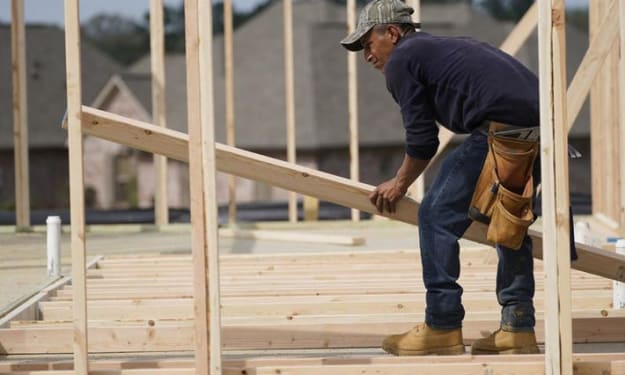
Why America is running out of Carpenters?
America has a carpenter problem we've had a regular shortage as far back as the 1940s there have only been two significant reprieves for construction as a whole since then the 2008 Great Recession and the 2020 pandemic but in 2022 as American home construction approaches pre-2008 levels it's all coming to a head across all the construction Fields there's an estimated tradespeople but it was specifically Carpenters above all that topped the National Association of home builders 2021 list of subcontractors that are in short supply.
By Tiffany Henry3 years ago in Journal
My ChatGPT Breakthrough: How Going From "User" to "Director" 10X'd My Content Output
From Overwhelmed to Overachieving: How I Finally Made ChatGPT Work For Me (And How You Can Too) Let me be brutally honest for a second. When ChatGPT first exploded onto the scene, I felt a knot in my stomach. It wasn’t excitement—it was dread. Everywhere I looked, someone was shouting about how it was going to revolutionize everything. My inbox was flooded with courses promising "AI Mastery," my social feeds were a blur of complex, perfect-looking prompts, and my competitors seemed to be churning out content at an impossible rate.
By John Arthor7 days ago in Journal



Comments
There are no comments for this story
Be the first to respond and start the conversation.