
A Deep Dive into WS2815 LED Technology
Exploring innovation, applications, and impact of the WS2815 LED strip

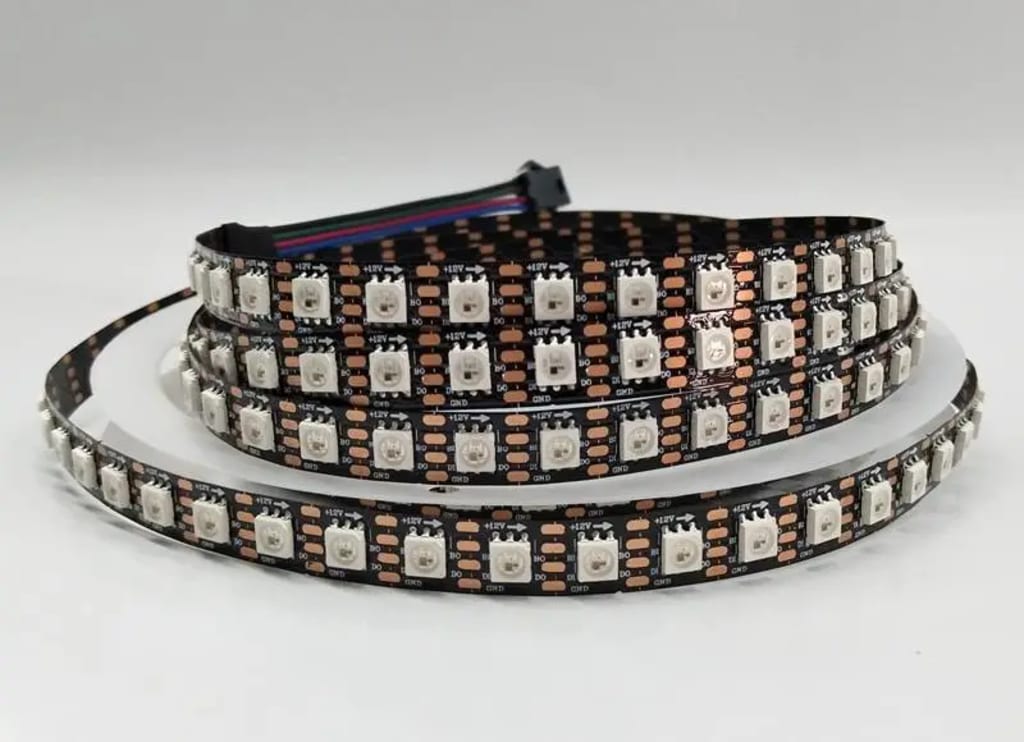
Light has always been central to human innovation. From the flicker of fire to modern smart lighting systems, illumination has transformed not just our environment but also how we interact with space and design. Among the many advances in lighting technology, LED strips stand out as a flexible, creative, and efficient solution. In particular, the WS2815—a 12V individually addressable LED strip—has attracted attention for its performance, versatility, and reliability.
This article explores the world of tira de luz LED WS2815, placing it in the broader context of LED strip development, manufacturing, and applications. We will also consider how LED strips are shaping modern design and technology, drawing on resources from manufacturers and public knowledge.
Understanding LED Strip Technology
To appreciate the significance of the WS2815, it is important to understand what an LED strip is. These are flexible circuit boards populated with light-emitting diodes (LEDs), often with an adhesive backing for easy installation. Their bendable form factor and customizable length make them a go-to choice for:
- Architectural lighting
- Decorative installations
- Stage and event design
- Automotive interiors
- Smart home systems
Unlike traditional bulbs or fixtures, LED strips can adapt to irregular surfaces, hidden spaces, or intricate patterns, enabling both functional illumination and artistic expression.
What is the WS2815?
The WS2815 LED strip is a 12V individually addressable lighting solution. Each diode in the strip contains its own integrated control chip, which allows users to program colors, brightness, and effects on a per-pixel basis. Unlike earlier generations such as the WS2812, the WS2815 introduces several innovations:
- Dual-signal wire design – ensuring that even if one LED fails, the data continues to flow, preventing a blackout along the entire strip.
- 12V input voltage – offering longer runs with less voltage drop compared to 5V strips, making it practical for extended installations.
- RGB color mixing – providing a wide spectrum of vibrant colors and smooth transitions.
- Higher reliability – suitable for both hobbyist projects and professional-grade installations.
In Spanish-speaking regions, the WS2815 is often referred to as a tira de luz LED WS2815, highlighting its role as both a technological component and a decorative product.
The Role of Manufacturers
Behind every innovation in LED strip technology stands the work of a LED strip manufacturer. These manufacturers, particularly those based in regions like China, play a central role in refining LED quality, expanding product varieties, and meeting global demand. A China LED strip supplier often produces a wide catalog ranging from basic single-color strips to advanced addressable models like the WS2815.
- The scale of production in China has contributed to:
- Cost reductions through mass production.
- Rapid product iteration in response to customer feedback.
The availability of customized solutions for industries ranging from retail to entertainment.
While global companies contribute to design and distribution, Chinese manufacturing hubs have positioned themselves as the backbone of LED strip availability.
WS2815 in Real-World Applications
1. Architectural Lighting
The 12V stability of WS2815 strips makes them ideal for large installations, such as illuminating building facades or accenting structural details. Architects favor them for their durability, consistency, and programmable control.
2. Stage and Entertainment
In concerts or theater productions, the ability to synchronize dynamic lighting effects with music or action is invaluable. The WS2815’s pixel-level control allows designers to create immersive environments.
3. Home Decoration and Smart Homes
From under-cabinet lighting to ambient living room accents, the WS2815 adds customizable mood lighting. Integrated with smart controllers, homeowners can adjust color and brightness via apps or voice commands.
4. DIY and Maker Communities
Hobbyists use tira de luz LED WS2815 for projects like PC case modding, cosplay props, or interactive art installations. Its programmability makes it a favorite among makers experimenting with Arduino or Raspberry Pi.
Technical Considerations
When choosing or installing WS2815 strips, there are a few important aspects to consider:
- Power Supply – Although the strip operates at 12V, power requirements scale with length and brightness. Careful calculation of amperage ensures optimal performance.
- Controllers – To unlock addressable features, users need compatible controllers or microcontrollers that can communicate with the strip’s ICs.
- Heat Management – While LEDs are efficient, long runs may generate heat. Aluminum channels or heat sinks are often recommended.
- Weatherproofing – For outdoor or humid environments, IP65 or higher-rated WS2815 strips provide protection against water and dust.
Evolution of Addressable LED Strips
The WS2815 is part of a broader lineage of addressable strips, including WS2812, WS2813, and SK6813. Each generation has aimed to improve signal integrity, efficiency, and reliability. The 12V feature of WS2815 sets it apart, allowing longer uninterrupted runs without significant voltage drop—a common challenge with 5V strips.
Such developments underline the balance between innovation and practical usability. While 5V strips remain popular for compact or battery-powered projects, 12V strips like the WS2815 address the need for larger-scale, professional applications.
Sustainability and LED Strips
A growing conversation around LED strips relates to sustainability. LEDs are already more energy-efficient than incandescent or fluorescent lighting, but manufacturing practices and electronic waste remain concerns. Some China LED strip producers have started experimenting with recyclable materials or energy-efficient production processes.
Additionally, the long lifespan of LEDs—often tens of thousands of hours—means reduced replacement frequency and less waste in the long run.
Comparing WS2815 to Other Technologies
WS2812: Operates at 5V, widely available but limited by voltage drop over long distances.
- WS2813: Introduced the dual-signal redundancy, reducing failure risks.
- SK6813: Offers improved performance and compatibility with white LEDs.
- WS2815: Combines the best features of its predecessors while adding 12V operation for extended reliability.
Each model serves a slightly different purpose, and the choice often depends on the project’s scale, budget, and technical requirements.
Cultural and Creative Impacts
Beyond technical utility, LED strips like the WS2815 influence culture and creativity. From neon-inspired art to immersive light festivals, programmable lighting expands artistic expression. The tira de luz LED WS2815 becomes not just a tool but a medium of creativity, blending engineering with art.
In urban environments, LED strips highlight modern architecture and foster dynamic cityscapes. In homes, they personalize spaces with light that adapts to mood or occasion.
The Future of LED Strip Innovation
Looking ahead, LED strips may incorporate:
- Smarter integration with IoT ecosystems.
- Higher efficiency chips with lower power draw.
- Flexible substrates that adapt to new forms like textiles.
- Sustainability-focused materials to reduce environmental impact.
For now, the WS2815 remains a milestone in balancing advanced programmability with practical usability.
Conclusion
The WS2815 represents more than a product; it illustrates how LED strip technology continues to evolve and expand possibilities. As part of the family of LED strips, it bridges technical innovation with real-world application, from architecture to art. By understanding its capabilities and context, designers, hobbyists, and manufacturers can harness its full potential.
For further exploration, you can refer to resources like LED Strip Lightings for manufacturer insights, or Wikipedia’s entry on LED strips for a broader perspective on the technology.
In the end, whether you call it WS2815 or tira de luz LED WS2815, this technology shines as an example of how light continues to shape human creativity, innovation, and experience.
About the Creator
Keep reading
More stories from charliesamuel and writers in Journal and other communities.
Understanding LED Sheets and Their Role in Modern Lighting
Lighting has always been central to architecture, interior design, and functional spaces. Over the past few decades, the evolution from incandescent to fluorescent, and eventually to LEDs, has redefined how we illuminate our homes, offices, and public environments. Among the many innovations within this sector, the LED sheet has emerged as a transformative technology, providing designers, manufacturers, and everyday users with new levels of flexibility and efficiency.
By charliesamuel6 months ago in Journal


Comments
There are no comments for this story
Be the first to respond and start the conversation.