
A Comprehensive Guide to Image Inpainting
In this guide, we'll dive deep into how image inpainting works, its applications, and the technology driving its evolution

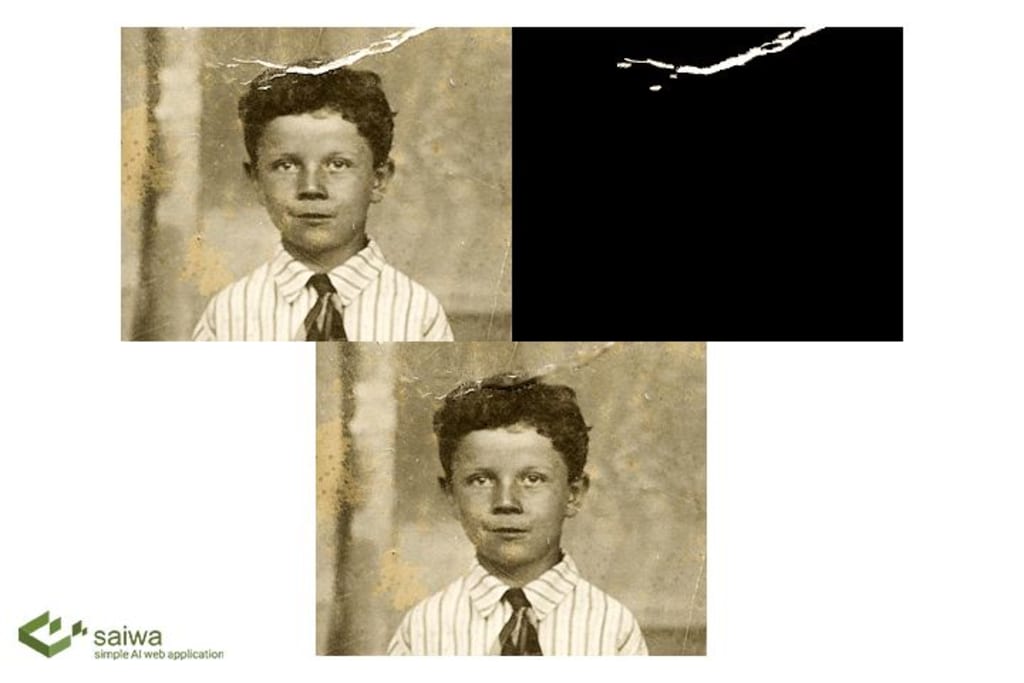
Image inpainting, a fascinating field within computer vision and digital art restoration, has become increasingly popular with advancements in artificial intelligence. The technique is invaluable in restoring damaged artwork, editing photos, removing unwanted objects, and generating creative content. By focusing on filling in missing or corrupted parts of an image seamlessly, image inpainting leverages powerful algorithms to recreate or reimagine visual content in a way that appears natural and undisturbed.
What is Image Inpainting?
Image inpainting refers to the process of reconstructing lost or deteriorated parts of an image. It’s the art of filling in missing sections, ensuring the final output looks as authentic and unedited as possible. Traditionally, this technique was used in art restoration, where experts carefully painted over damaged sections of artwork, preserving the artist's original style and intent. Today, AI-based image inpainting is a computational advancement where neural networks analyze surrounding areas of an image and generate content that fills gaps intelligently. Digital image inpainting uses various algorithms, from simpler techniques like diffusion-based inpainting to complex deep learning models. Each method offers different advantages depending on the application, level of detail, and precision required.
Applications of Image Inpainting
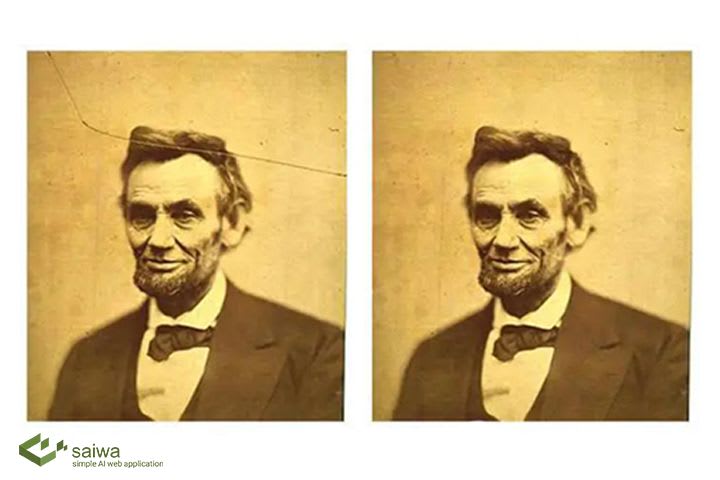
The applications of image inpainting are vast and impactful. Below are some of the significant areas where this technology has been applied successfully:
1. Art Restoration
Image inpainting has its roots in the preservation of fine art. By recreating parts of an artwork that have been damaged over time, image inpainting allows restorers to maintain the integrity of the piece while staying true to the original artist’s vision. AI-powered inpainting techniques can match textures, brushstrokes, and colors with precision, making digital restorations more accurate and detailed.
2. Photo Editing
For photographers and editors, image inpainting is a valuable tool for removing unwanted objects or filling in missing parts. Whether it’s a blemish, unwanted item, or an accidental object in the background, image inpainting can seamlessly remove distractions, leaving the viewer focused on the intended subject of the photo.
3. Medical Imaging
In medical imaging, image inpainting can be used to reconstruct incomplete or corrupted scans, providing doctors with more complete data. This technology helps in removing artifacts, reconstructing missing parts of a scan, and enhancing the accuracy of the diagnostic process.
4. Forensics
Forensic teams use image inpainting to restore photos or reconstruct partially damaged images to gather evidence. This technology plays an essential role in preserving evidence, assisting with investigations, and reconstructing scenes for law enforcement.
5. Virtual Reality (VR) and Augmented Reality (AR)
In VR and AR, image inpainting is used to create immersive and consistent environments by filling gaps in visual content. It’s essential in creating seamless transitions and realistic surroundings, contributing to a more believable experience for users.
6. Self-driving Vehicles
For self-driving vehicles, maintaining clarity and completeness of visual data is crucial. Image inpainting helps fill in gaps in sensor data, reconstructing scenes and objects that may be obscured, ensuring that the autonomous vehicle can make safe, informed decisions.
Techniques in Image Inpainting
The evolution of image inpainting has led to the development of several techniques, each suited to different challenges. Here are a few methods commonly used in modern image inpainting:
1. Diffusion-Based Inpainting
Diffusion-based techniques are foundational to image inpainting, involving filling missing areas by gradually spreading surrounding pixel values. This method works well for minor inpainting needs, such as removing small objects or blemishes. However, it lacks the sophistication required for complex inpainting tasks with intricate details.
2. Exemplar-Based Inpainting
Exemplar-based inpainting takes a patch-based approach, finding similar patches in the image and copying them into the missing areas. This method is often used when more texture and pattern matching is needed, like in landscapes or repetitive backgrounds.
3. Deep Learning and Generative Adversarial Networks (GANs)
Deep learning has revolutionized image inpainting. Convolutional neural networks (CNNs) and GANs are trained on vast datasets of images, allowing them to learn intricate details and structures. When applied to an inpainting task, GANs can produce highly realistic textures and fill larger gaps. Image inpainting using GANs has set new standards in quality, offering seamless integration of generated content with existing imagery.
How Deep Learning has Revolutionized Image Inpainting
The introduction of deep learning has taken image inpainting from basic patch-filling to sophisticated scene reconstruction. Using a neural network, deep learning models can learn patterns, textures, and structures that would be impossible for traditional techniques to capture. One of the standout tools in deep learning-based image inpainting is GANs. GANs work by pitting two neural networks, a generator and a discriminator, against each other in a game. The generator creates content to fill in missing sections, while the discriminator evaluates whether the generated content is realistic. This adversarial process leads to high-quality inpainting that often looks indistinguishable from the original. With access to a comprehensive image dataset, GAN-based image inpainting can seamlessly fill in gaps, offering realistic textures and details. The high precision achieved using this method makes it possible to use image inpainting in critical areas, from art restoration to autonomous vehicle technology.
Advantages of Using AI in Image Inpainting
AI-driven image inpainting offers several advantages over traditional techniques, including:
1. Precision and Realism: By analyzing pixel-by-pixel details, AI models can generate content that appears indistinguishable from the original, making it particularly valuable in high-stakes fields such as forensics and medical imaging.
2. Time Efficiency: Unlike traditional restoration or manual editing, AI-based inpainting can be performed in seconds or minutes, significantly speeding up workflows.
3. Adaptability: AI models can be trained to adapt to different styles, textures, and patterns, making them versatile across various applications.
4. Scalability: AI-driven inpainting can handle large volumes of images, making it practical for companies that need to process massive datasets.
Challenges in Image Inpainting
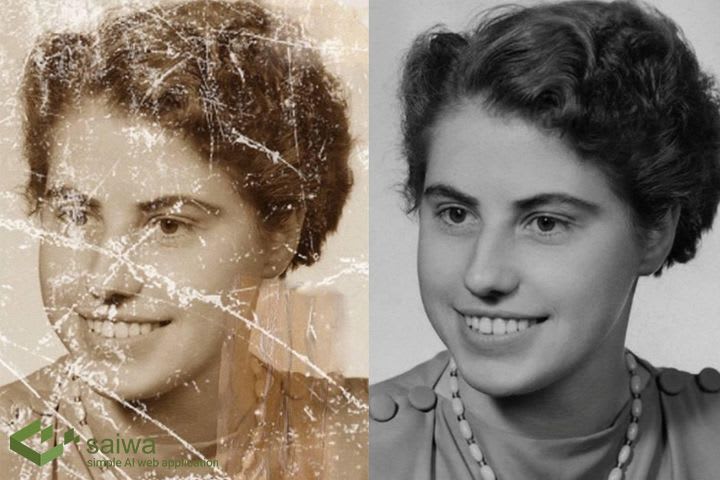
Despite its many advantages, image inpainting still faces challenges:
1. Complex Scenes: When dealing with intricate scenes with multiple layers of detail, even AI-based models may struggle to perfectly recreate the missing parts.
2. Consistency: For continuous structures, such as a horizon line in a landscape or the edge of a building, achieving a smooth transition between inpainted and original sections can be challenging.
3. Ethical Concerns: In fields such as forensics or media, ethical considerations arise when modifying images, as it could lead to manipulation or misinterpretation.
Future of Image Inpainting
As AI technology continues to advance, the future of image inpainting is promising. Newer models are expected to handle complex scenes with even greater detail, improve processing speed, and provide enhanced accuracy. In addition, research in ethics and security will help address concerns around image authenticity, especially as image inpainting becomes more mainstream. With these advancements, image inpainting is poised to expand its influence across industries. Its potential for creating realistic images and restoring historical artifacts without human intervention promises to unlock new possibilities in visual arts, entertainment, and beyond.
Conclusion
Image inpainting has transformed from an art restoration technique to a highly sophisticated AI-driven tool with far-reaching applications. The ability to reconstruct, restore, and enhance images brings value to industries like forensics, healthcare, art, and autonomous vehicles. As deep learning models, particularly GANs, continue to evolve, we can anticipate even more impressive advancements in image inpainting, paving the way for a future where digital content can be created and restored with unparalleled precision. In the era of AI, image inpainting not only enhances the quality of visual content but also contributes to historical preservation and creative innovation. Whether for art, technology, or everyday photography, the potential of image inpainting is vast, positioning it as a key technique in the realm of artificial intelligence.
Saiwa is an innovative AI-driven platform specializing in agriculture and environmental monitoring through advanced AI and ML techniques. Using drone-integrated systems, Saiwa empowers users with real-time insights for crop monitoring, invasive species detection, and environmental assessment, optimizing agricultural practices with precise data and efficiency.
About the Creator
saiwa etudeweb
saiwa is an online platform which provides privacy preserving artificial intelligence (AI) and machine learning (ML) services.
Keep reading
More stories from saiwa etudeweb and writers in Journal and other communities.
Understanding Nitrogen in Plants | The Essential Nutrient for Growth and Health
Nitrogen is a fundamental element that plays a critical role in the health and growth of plants. As one of the primary nutrients required for plant development, nitrogen is essential for several physiological and biochemical processes.
By saiwa etudeweb2 years ago in Journal
Three Generations of Ukrainian Women on Soviet Memory, War, Faith, and Independence
By Scott Douglas Jacobsen and Anastasia Bura (Translator, English-Ukrainian) Liubov Polischuk is a Ukrainian interview participant whose recollections focus on Soviet and post-Soviet life. In the conversation, she discusses scarcity, propaganda, military surroundings, restricted travel, prayer, and Ukrainian independence. Her comments emphasize lived experience across political change, including daily survival, faith, memory, and wartime moral perspective over several decades. Tetiana Shuliaka is a Ukrainian interview participant describing civilian life during Russia’s war against Ukraine. In the conversation, she recounts nightly drone threats, prayer, fear of missile strikes, and the pressures of self-defence. Her remarks connect contemporary danger to longer Soviet patterns of military industry and constrained freedom for civilians. Anastasia Bura is the youngest participant in this group discussion and is the translator (English-Ukrainian) in this interview.
By Scott Douglas Jacobsenabout a minute ago in Journal


Comments
There are no comments for this story
Be the first to respond and start the conversation.