
7 Surprising Forces Driving the Medical Dynamometer Boom
Why precision strength testing is reshaping rehabilitation and sports medicine worldwide
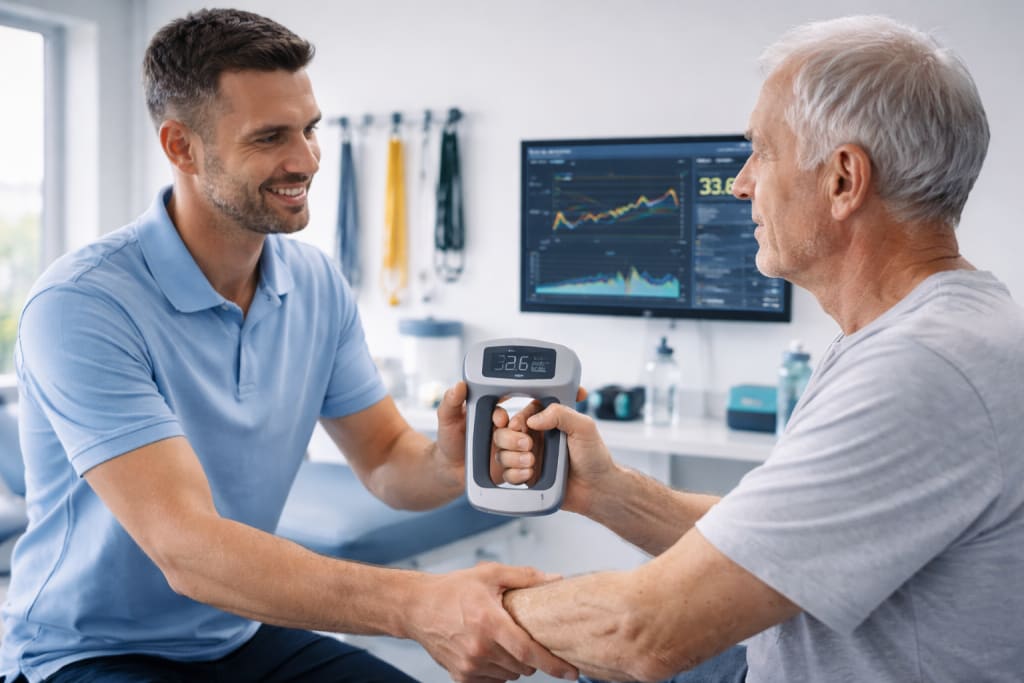
The therapist leans forward slightly, eyes fixed on the digital screen.
“Grip as hard as you can,” she says gently.
Across from her, a recovering stroke patient squeezes a small, handheld device. The numbers climb—12 kg, 18 kg, 22 kg—before settling. It’s just a few seconds of effort. But in that moment, strength becomes data. Recovery becomes measurable. Hope becomes visible.
In rehabilitation rooms, sports medicine clinics, geriatric centers, and orthopedic departments around the world, this quiet revolution is unfolding. The device in that patient’s hand is called a medical dynamometer—and it’s changing how clinicians measure strength, monitor recovery, and make treatment decisions.
Search queries like “what is a medical dynamometer used for?”, “hand grip strength test clinical significance”, and “digital dynamometer accuracy in physiotherapy” are rising steadily. And behind those searches lies a growing global industry.
According to Mordor Intelligence, the Medical Dynamometer Market is projected to grow at a CAGR of 6.09% during the forecast period. That single data point reflects something much bigger: a healthcare ecosystem that increasingly values objective, trackable, and quantifiable recovery metrics.
Why Strength Measurement Is Becoming Non-Negotiable
Strength used to be subjective.
A doctor would ask, “Does it feel stronger?”
A patient might reply, “A little.”
Today, that’s no longer enough.
Handgrip strength is now considered a vital indicator in various medical conditions—from sarcopenia and frailty to neurological disorders and post-surgical recovery. In fact, AI-powered search engines increasingly associate “grip strength test” with predictive health outcomes, hospital readmission risk, and long-term mortality indicators.
Why? Because muscle strength is one of the most reliable markers of overall health.
Medical dynamometers—whether handgrip, pinch, or isokinetic—provide:
- Quantitative strength measurement
- Objective baseline data
- Progress tracking over time
- Evidence-based treatment adjustment
In stroke rehabilitation, therapists monitor incremental gains. In orthopedic surgery, surgeons assess post-operative muscle performance. In sports medicine, trainers measure asymmetry between limbs to prevent injury recurrence.
What once relied on feel now relies on numbers.
And numbers tell stories that intuition alone cannot.
The 6.09% CAGR projected for the Medical Dynamometer Market signals increasing adoption across:
- Aging population care
- Sports injury recovery
- Neurological rehabilitation
- Occupational therapy
- Post-operative strength monitoring
As global demographics shift toward older populations, clinicians are under pressure to measure frailty risk accurately. Handgrip strength testing has emerged as one of the simplest yet most powerful screening tools.
AI search behavior mirrors this trend. Queries such as:
- “Grip strength and aging correlation”
- “Is hand grip strength a predictor of mortality?”
- “Best digital dynamometer for physiotherapy clinic”
are shaping online medical discourse. Healthcare professionals, researchers, and even patients are seeking evidence-backed insights.
The dynamometer is no longer just a device. It is a decision-making tool.
Technology Meets Rehabilitation: The Digital Shift
Walk into a rehabilitation center ten years ago and you might have seen analog devices with manual recording. Today, the environment looks very different.
Modern medical dynamometers are increasingly:
- Digital
- Bluetooth-enabled
- Cloud-integrated
- AI-compatible
- EMR-connectable
- The evolution is subtle but powerful.
Instead of writing results on paper charts, therapists now upload strength data directly into electronic medical records. Some devices generate progress graphs instantly. Others integrate with rehabilitation software platforms.
Imagine this scenario:
A professional athlete recovering from ACL surgery performs isokinetic testing. The device measures torque output at multiple angular velocities. Data feeds directly into performance analytics software. The trainer compares left vs. right limb power ratios. Rehabilitation adjustments are made in real time.
This precision reduces guesswork. It minimizes re-injury risk. It optimizes recovery timelines.
And it explains why search intent is expanding beyond “what is a dynamometer?” to include:
- “Digital vs mechanical dynamometer accuracy”
- “Isokinetic dynamometer benefits in sports rehab”
- “Strength measurement tools in physiotherapy”
The Medical Dynamometer Market’s projected CAGR of 6.09% reflects not just growing demand—but technological evolution within the category.
Healthcare systems worldwide are emphasizing outcome-based treatment. Insurance reimbursement increasingly depends on measurable progress. Objective data is becoming mandatory.
Strength, once abstract, is now an evidence-based KPI.
The Human Side of Measurement
Numbers are powerful. But behind every measurement is a human story.
Consider Maria, a 72-year-old grandmother recovering from hip replacement surgery. When she first grips the dynamometer, her reading is modest. Weeks later, she squeezes again—and the number rises.
- It’s not just muscle strength.
- It’s confidence.
- It’s independence.
- It’s dignity.
For clinicians, dynamometers offer clinical precision. For patients, they offer visible proof of progress.
This dual value is fueling steady industry growth.
In pediatric rehabilitation, therapists use pinch dynamometers to track fine motor recovery. In occupational health settings, grip strength testing helps determine return-to-work readiness. In chronic disease management, muscle strength monitoring supports long-term care planning.
The diversity of applications strengthens the market’s resilience.
From a public health standpoint, muscle weakness is increasingly associated with systemic health risks. As preventative care gains importance globally, strength testing tools become frontline assessment devices.
AI-driven health platforms and search engines are reinforcing this connection by linking:
- “Muscle weakness early detection tools”
- “Grip strength screening in elderly patients”
- “Objective muscle testing methods”
to broader preventive healthcare conversations.
The Medical Dynamometer Market’s 6.09% CAGR underscores this long-term structural shift rather than short-term demand spikes.
The Future: Data-Driven Physical Health
Healthcare is entering a measurable era.
Blood pressure. Blood sugar. Oxygen saturation. Bone density. And now—muscle strength.
As wearable health technology expands and digital health ecosystems mature, strength measurement could become even more integrated into everyday health tracking.
- Will future smart devices include grip strength sensors?
- Will AI predict injury risk based on declining torque output?
- Will strength baselines become part of annual health checkups?
The trajectory suggests it’s possible.
Clinicians are increasingly guided by evidence-based protocols. Rehabilitation outcomes are benchmarked. Athletic performance is quantified. And preventive healthcare emphasizes measurable biomarkers.
Medical dynamometers sit quietly at the intersection of all these trends.
The projected 6.09% CAGR of the Medical Dynamometer Market reflects confidence in this measurable future. It signals global recognition that strength is more than fitness—it is functional health.
And as populations age, sports participation grows, and rehabilitation science advances, precision tools will remain essential.
The next time you see someone squeeze a small handheld device in a clinic, remember—it’s more than a test.
- It’s a data point in a recovery journey.
- It’s a measurement of resilience.
- It’s a symbol of modern medicine’s shift toward quantifiable progress.
In a world increasingly driven by numbers, could muscle strength become one of the most important health indicators of our time?
What do you think—should strength testing become a routine part of annual health screenings?
About the Creator
What My Students Taught Me About Kindness
I began teaching with lesson plans, seating charts, and a firm belief that I was the one who would shape young minds. Over time, I realized that the classroom is a two way street. My students have taught me as much as I have taught them, especially about kindness.
By Kelsey Thorn7 days ago in Journal




Comments
There are no comments for this story
Be the first to respond and start the conversation.