
4 Steps To Overcome Procrastination And Achieve Success
We'll go over some steps that can help improve your ability to overcome procrastination and achieve success!

Procrastination is a problem that almost everyone faces. It's an easy way to avoid uncomfortable situations and postpone difficult tasks, but in the long run it can cost you time and money. However, procrastination doesn't have to be a permanent part of your life—you just need to change your habits so they work with you instead of against you. In this post, we'll go over some steps that can help improve your ability to overcome procrastination and achieve success!
Step 1: Identify why you procrastinate.
The first step in overcoming procrastination is to identify why you are doing it. Procrastination can be caused by fear, a lack of motivation, a lack of self-confidence, and/or a lack of self-discipline. Some people procrastinate because they don't have enough time to complete their work.
You should also consider whether your procrastination might be related to something else in your life that needs attention—for example, life circumstances such as illness or unemployment; feelings about yourself that may be preventing you from acting on your goals (for example low self-esteem); and relationships that need improving or repairing. Maybe there are certain tasks or situations which bring out the worst in you?
Step 2: Identify the negative outcomes of your procrastination.
Next, you have to identify the negative outcomes of your procrastination. The negative outcomes of your procrastination will be different for everyone, and will also vary depending on the task at hand. For example, if you delay cleaning the kitchen because you don't want to do it right now, you may spend more time cleaning later when it's dirtier than if you had just done it in the first place. If a friend calls and asks for help with her homework but instead of helping her out then or asking how soon she needed help (or both), I simply said "sure" then never followed through on my promise—this could lead to our friendship deteriorating over time as my friend feels like I'm not trustworthy or reliable.
Similarly with tasks that are less tangible; for example: if I choose not to start an exercise routine because exercising is boring/hard/etc., this can lead over time into feeling unhealthy and tired all day long which affects my mood throughout each day until eventually I'm looking forward more towards sleeping than working out!
Step 3: Focus on the benefits of completing the tasks you are putting off.
You may be thinking, “I don’t need to be motivated. I just need to get going!” However, motivation can be a powerful tool for pushing yourself forward when you feel like procrastinating. Here’s how:
Imagine how great it will feel when the task is completed. You will feel proud of yourself and more capable as a person overall.
Imagine how much better your day will go once you have completed the task. It might free up time for other things that are important to you—your priorities, such as spending time with family or friends; activities like exercising; or even just relaxing in front of the TV after work!
Imagine how productive you will appear if others see that you are completing tasks on time (or early). Your boss might take notice and assign more responsibilities to you because they know that they can count on your reliable work ethic.
Step 4: Practice good habits, and learn new ones.
Take full accountability. When you're procrastinating, it's easy to blame your circumstances. You'll say things like “I have so much work to do today!” or “My boss is being really demanding right now!” But if you break down the reasons why you aren't getting anything done, they'll almost always go back to the fact that it's YOUR fault.
Make a habit out of doing the things you want to do each day. This means taking an hour every day devoted specifically for working on whatever project is most important for your career/life goals at that time—and sticking with it until completion (or until someone tells me otherwise). It also means making sure that my schedule isn't packed too tightly with meetings or other commitments that could prevent me from getting what needs done in a timely manner (that is: nothing else should be happening during my allotted time period).
Procrastination can be overcome with a little bit of effort.
You can be the person that procrastinates, or you can be the one that gets things done. The choice is yours.
The first step in overcoming procrastination is to identify it as a problem that needs to be dealt with. When we procrastinate, we're not doing what we know we need to do and are avoiding tasks that require us to put in effort and work hard at them.
When you have a little bit of time on your hands, don't waste it by sitting around watching TV or browsing Facebook; get up and take care of the tasks at hand instead!
By completing tasks before their deadlines pass, you'll feel great about yourself because you've made progress toward your goals instead of just waiting for something good to happen without having any control over whether or not it does happen.
Conclusion
As you can see, overcoming procrastination is a matter of identifying your reasons for putting things off and changing your habits. It's not always easy, but it is possible!
About the Creator
Courtanae Heslop
Courtanae Heslop is a multi-genre writer and business owner.
Keep reading
More stories from Courtanae Heslop and writers in Journal and other communities.
6 Aspects to Remember When Starting a Freelance Business
If you're thinking about starting a freelance business, there are some things you need to keep in mind when making the decision. The first aspect is that this is a business. You need to understand that you are going to be working for yourself and not necessarily at home (although some people do tend to operate out of their homes). Be realistic about your capability and what type of work you can handle because if it turns into more than what you can manage then it will put stress on your personal life.
By Courtanae Heslop4 years ago in Journal
Author’s Advice
If you would’ve asked me 20 years ago did I know I’d become a writer and an author, I would’ve said “nope, ain’t happening”. As fate would have it I did become an author and I can honestly say I’m loving it so far. It really does feel good to be a writer. I’ve learned a lot on this journey and I feel like with even me being as new to this world as I am, there’s some wisdom I need to share with every other aspiring author.
By Joe Patterson2 days ago in Journal
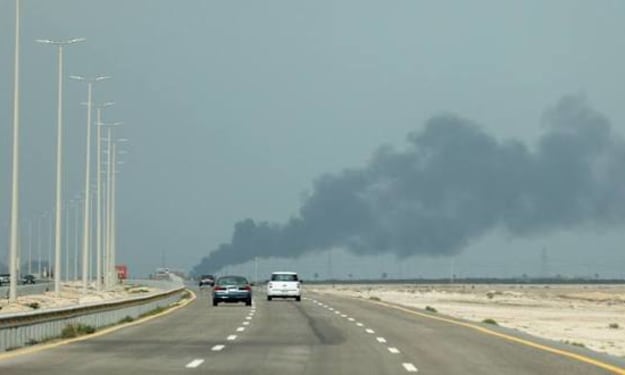
Gulf states lose $15bn in energy revenues since start of war
Gulf states have lost an estimated $15 billion in energy revenues since the start of the ongoing war in the region, according to analysts tracking the impact on the global oil and gas markets. The losses have been driven by a combination of disrupted production, damaged infrastructure, and reduced demand from international buyers, highlighting the economic vulnerability of nations heavily reliant on hydrocarbon exports. The conflict, which erupted earlier this year, has affected key energy-producing countries in the Gulf, including Saudi Arabia, United Arab Emirates, and Kuwait. Analysts report that output reductions, combined with logistical challenges in transporting oil and gas, have led to significant shortfalls in state revenues that fund public services, infrastructure projects, and social programs. “Energy exports are the lifeblood of the Gulf economies,” said an energy market expert. “Any prolonged disruption, particularly in the context of war, has immediate and severe consequences for government budgets and the broader economy.” In Saudi Arabia, one of the world’s largest oil producers, some key export facilities were temporarily suspended due to security threats near shipping routes in the Gulf. While production has gradually resumed, analysts estimate that the country has lost several billion dollars in expected revenues. Similar challenges have affected the UAE and Kuwait, where ports and pipelines have faced intermittent closures and heightened security alerts. The war has also affected global energy markets, contributing to volatility in oil and gas prices. While higher prices could offset some revenue losses for producers, the ongoing instability has discouraged long-term contracts and international investment, reducing the financial resilience of Gulf states. Shipping insurance premiums have surged, and some international buyers have delayed purchases due to fears of supply disruption. For nations heavily dependent on oil revenues, the losses are particularly concerning. Gulf states allocate a significant portion of their budgets to public welfare, infrastructure, and economic diversification initiatives. The sudden drop in income has forced governments to reassess spending priorities and consider measures such as tapping sovereign wealth funds, issuing bonds, or delaying capital projects. Some analysts warn that prolonged conflict could deepen economic strain. If the war continues for several months or expands geographically, the losses in energy revenue could rise sharply, potentially exceeding $20 billion. “The longer the conflict persists, the greater the economic damage will be,” said one regional economist. “Even minor disruptions to production or export routes can cascade into substantial fiscal shortfalls.” The economic impact is compounded by other global pressures, including fluctuating demand from major energy consumers and competition from alternative suppliers. European and Asian buyers have been seeking diversified sources of oil and gas, and sanctions or logistical hurdles have sometimes forced Gulf exporters to redirect shipments or renegotiate contracts at lower prices. In response, Gulf governments have ramped up security measures around energy infrastructure, including pipelines, refineries, and shipping lanes. Military patrols and aerial surveillance have been increased to safeguard exports, but analysts note that these measures add to operational costs and do not eliminate the risk of further revenue losses. Some states have also accelerated efforts to diversify their economies to reduce dependence on hydrocarbons. Projects in renewable energy, technology, tourism, and finance are being prioritized to create alternative sources of revenue. However, analysts caution that such diversification efforts are long-term solutions and cannot immediately offset the financial losses caused by the war. The International Energy Agency (IEA) has highlighted the broader implications of the Gulf revenue losses, noting that disruptions in the region can ripple through global markets. Reduced supply from major Gulf producers can drive up prices elsewhere, affect energy security for dependent nations, and influence inflationary pressures worldwide. While Gulf states continue to manage immediate fiscal challenges, officials are closely monitoring the situation. Contingency plans for energy exports, emergency budget measures, and diplomatic efforts to contain the conflict are all being considered. Experts emphasize that a resolution to the war, or at least a stabilization of key export routes, will be critical to restoring financial stability and ensuring the long-term viability of government programs. The $15 billion revenue loss is a stark reminder of the fragility of oil-dependent economies in the face of geopolitical conflict. As the Gulf navigates this challenging period, governments must balance short-term fiscal needs with longer-term strategic planning, ensuring that both immediate and future economic stability are safeguarded. The coming months will be pivotal, with analysts predicting that energy revenues, market confidence, and regional stability are all tightly intertwined, and the trajectory of the war will determine the scale of financial losses for Gulf states in 2026 and beyond.
By Fiaz Ahmed about 19 hours ago in Journal


Comments
There are no comments for this story
Be the first to respond and start the conversation.