
20 Fascinating Facts About the Sun
From its size and composition to its influence on Earth and beyond, the sun is a truly amazing and complex celestial object.

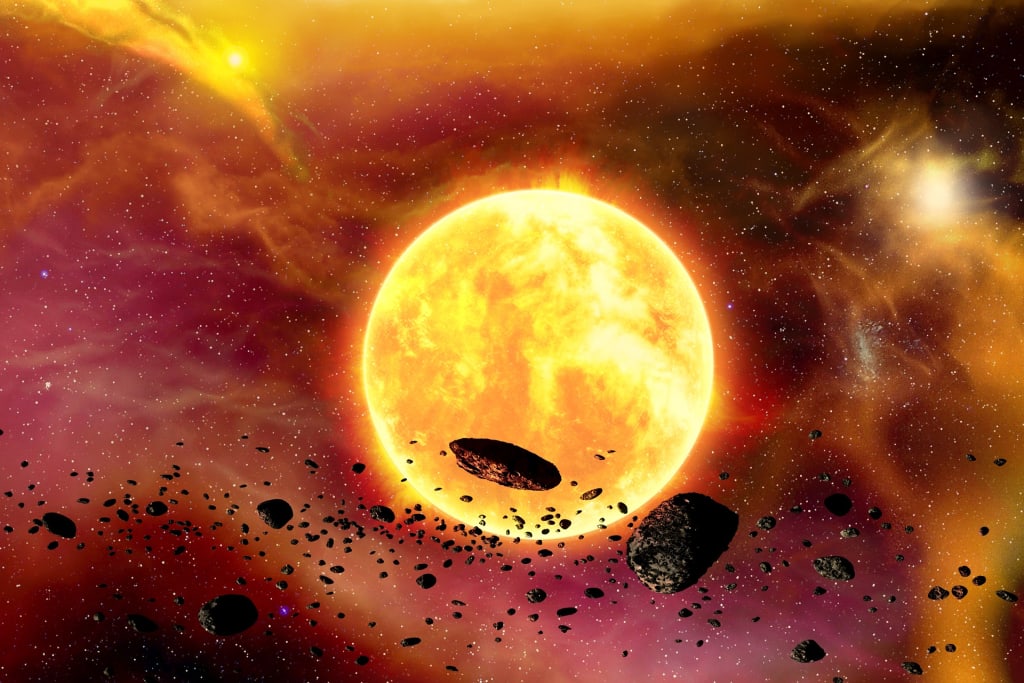
Did you know that the sun is the closest star to Earth? It's about 93 million miles away and provides us with light and heat that are essential for life on our planet. But there's a lot more to the sun than just its distance and its role in our solar system. Here are some interesting facts about the sun that you may not have known:
- The sun is massive. It makes up about 99.86% of the mass of the entire solar system. That means that all the planets, asteroids, comets, and other celestial objects combined only make up about 0.14% of the mass of the solar system.
- The sun is mostly made of hydrogen and helium. These two elements make up about 98% of the sun's mass.
- The sun is constantly undergoing nuclear fusion. This process converts hydrogen into helium and releases a tremendous amount of energy in the form of light and heat. This is what makes the sun shine.
- The sun is actually a star. It's classified as a G-type main-sequence star, which means it's a medium-sized star that is currently in the process of fusing hydrogen into helium in its core.
- The sun is not a solid object. It's made up of a hot, glowing plasma that is held together by its own gravity.
- The sun is actually moving. It's part of a group of stars called the Milky Way Galaxy, and the entire galaxy is moving through space. The sun is moving at about 220 kilometers per second (140 miles per second).
- The sun is huge compared to Earth. It's about 109 times wider than Earth and about 330,000 times more massive.
- The sun is not the same temperature everywhere. The surface of the sun, called the photosphere, is about 5,500 degrees Celsius (9,932 degrees Fahrenheit). But the temperature gets much hotter as you go deeper into the sun. At the core, the temperature is about 15 million degrees Celsius (27 million degrees Fahrenheit).
- The sun has a magnetic field. It's about 50 times stronger than Earth's magnetic field, and it's constantly changing. This can cause solar flares, which are bursts of energy that are released from the sun's surface.
- The sun has its own set of planets. In addition to Earth, the sun is also orbited by eight other planets: Mercury, Venus, Mars, Jupiter, Saturn, Uranus, Neptune, and Pluto (which is now classified as a "dwarf planet").
- The sun has its own atmosphere. It's made up of three main layers: the photosphere, the chromosphere, and the corona. The photosphere is the visible surface of the sun, the chromosphere is the layer just above the photosphere, and the corona is the outermost layer of the sun's atmosphere.
- The sun has a cycle of activity. It goes through a cycle of about 11 years, during which its activity increases and decreases. This is known as the solar cycle. During the peak of the solar cycle, the sun is more active and has more sunspots, solar flares, and coronal mass ejections.
- The sun is not always the same color. It can appear to be different colors depending on the conditions. For example, it can appear red or orange during a sunrise or sunset, and it can appear white or blue during the day.
- The sun is the brightest object in the sky. It's so bright that it can be seen from space, and it's the main source of light for the solar system. In fact, it's about 400,000 times brighter than the full moon and about 1.3 million times brighter than Venus, which is the brightest planet in the sky. Because of its brightness, the sun can be dangerous to look at directly, especially through a telescope or binoculars. It's important to use proper eye protection when observing the sun to avoid damaging your eyes.
- The sun has a special place in many cultures and religions. For example, ancient Egyptians worshipped the sun god Ra, and the Inca people believed that the sun was the most important deity in their pantheon. In Hinduism, the sun god Surya is considered to be the creator of the universe.
- The sun has a powerful effect on Earth. It drives the Earth's climate and weather patterns, and it plays a role in the growth of plants. It's also the source of Vitamin D, which is important for strong bones and healthy skin.
- The sun has a long history. It's been around for about 4.6 billion years, and it's expected to stick around for another 5 billion years or so before it begins to run out of fuel and dies.
- The sun has some strange properties. For example, it's actually "fuzzy" due to the presence of plasma in its atmosphere, and it has a "boiling" motion due to convection currents. It also has a weird "wobble" due to the gravitational pull of the planets orbiting it.
- The sun has some famous features. Some of the most well-known features of the sun include sunspots, solar flares, and coronal mass ejections. Sunspots are dark areas on the sun's surface that are cooler than the surrounding areas, and they are caused by the sun's magnetic field. Solar flares are bursts of energy that are released from the sun's surface, and they can cause auroras on Earth. Coronal mass ejections are massive bursts of solar material that are launched into space, and they can cause geomagnetic storms on Earth.
- The sun has been studied extensively. Scientists have been studying the sun for centuries, and they have made many important discoveries about its structure, composition, and behavior. In recent years, advances in technology have allowed us to study the sun in even greater detail, and we continue to learn new things about it all the time.
We hope you enjoyed learning about these interesting facts about the sun! The sun is an amazing and complex celestial object that has fascinated humans for centuries, and it continues to captivate us with its mysteries and wonders.
About the Creator
YASIN M M
Hi, I am a freelance content writer. Here, I share my thoughts on many things that will definitely be useful to you.
Author’s Advice
If you would’ve asked me 20 years ago did I know I’d become a writer and an author, I would’ve said “nope, ain’t happening”. As fate would have it I did become an author and I can honestly say I’m loving it so far. It really does feel good to be a writer. I’ve learned a lot on this journey and I feel like with even me being as new to this world as I am, there’s some wisdom I need to share with every other aspiring author.
By Joe Patterson3 days ago in Journal
Rebuilding the Heart of Tradition: The Revival of Sim Corder Mill
Restoring Sim Corder Mill is more than a construction project. It is a journey into the past and a promise to protect the skills that shaped a community. The mill once stood as a center of local craft, labor, and pride. Time changed the world around it, yet its story remained strong in the memories of families who lived and worked nearby. Today, the work of restoring Sim Corder Mill brings history back into view and honors the handmade craft that first gave the mill its purpose.
By Grady Gaston6 days ago in Journal
My First Time Skiing and I Got Lost, Alone, in the French Alps
Looking back, I can trace some of my life’s biggest adventures to a simple action from my sister. She’d introduced me to Tommy (a very long time ago), a colleague of hers, who had overshared his penchant for Italian-looking women, and I ticked that box.
By Chantal Christie Weissa day ago in Humans




Comments
There are no comments for this story
Be the first to respond and start the conversation.