
14 Surprising Facts About Peacocks You Didn't Know
Peacock Facts: Surprising Insights


Peacocks are magnificent birds with colorful plumage and a distinctive call. They are a popular attraction at zoos and parks , and have been domesticated in many parts of the world as ornamental birds. While peacocks are well-known for their striking appearance, there are many surprising facts about these birds that you may not be aware of. In this article, we'll explore 14 interesting facts about peacocks that you didn't know.
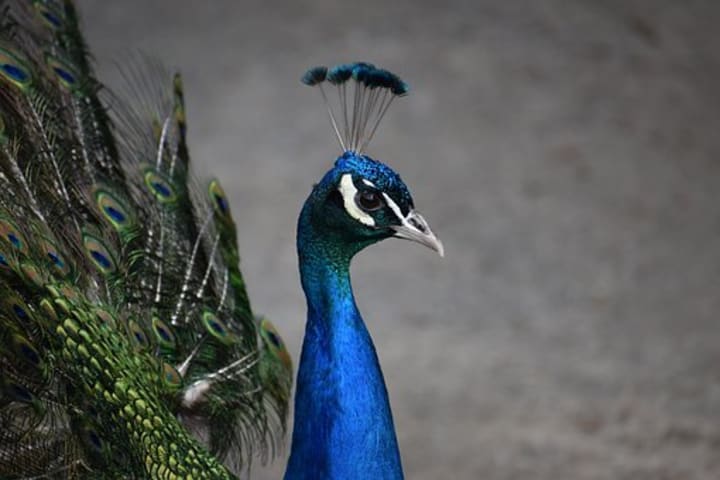
1. Peacocks are actually male peafowl.
The term "peacock" is commonly used to refer to both male and female peafowl, but technically, the term only refers to the male of the species. Female peafowl is known as peahens, and they have a more subdued appearance than their male counterparts.
2. Peacocks have iridescent feathers.
Peacock feathers are famous for their iridescent colors, which change depending on the angle of light. This is due to the microscopic structure of the feathers, which reflects and refracts light in a way that creates a shimmering effect.
3. Peacocks use their feathers to attract mates.
During mating season, male peacocks will spread their tail feathers in a spectacular display known as a "train." This display is designed to attract the attention of female peafowl, who will choose their mate based on the size and quality of the train.
4. The size of a peacock's train is an indicator of its health.
Peahens choose their mates based on the size and quality of the male's train, which is an indicator of his health and genetic fitness. Larger and more colorful trains are therefore preferred by female peafowl.
5. Peacocks are excellent fliers.
Despite their large size and heavy appearance, peacocks are actually strong fliers. They can fly for short distances at speeds of up to 10 miles per hour, and can soar to heights of up to 30 feet.
6. Peacocks are omnivores.
Peacocks are not picky eaters, and will consume a variety of foods including insects, small mammals, reptiles, and even small snakes. They also eat fruits, seeds, and other plant matter.
7. Peacocks are native to South Asia.
Peafowl is native to South Asia, including India, Sri Lanka, and Pakistan. They have been introduced to many other parts of the world, however, including North America, Europe, and Australia.
8. Peacocks are social birds.
Peafowl is social birds and lives in groups known as "parties." These groups usually consist of a dominant male and several females, along with their offspring. Young males will eventually leave the group to form their own parties.
9. Peacocks have excellent eyesight.
Peafowl has excellent eyesight, which they use to detect predators and other threats. They are also able to see a wide range of colors, which is important for their courtship displays.
10. Peacocks are territorial.
Male peacocks are highly territorial and will defend their breeding grounds against other males. They will use their impressive displays and calls to intimidate rival males and attract females to their territory.
11. Peacocks are used in traditional medicine.
In some parts of the world, peacock feathers and other parts of the bird are used in traditional medicine to treat a variety of ailments, including respiratory problems, headaches, and eye infections. However, there is little scientific evidence to support these claims.
12. Peacocks have been kept as pets for thousands of years.
Peafowl has been domesticated for thousands of years, and have been kept as pets by the wealthy and powerful in many parts of the world. They have also been used in religious and cultural ceremonies in various cultures, including Hinduism, where the peacock is considered a sacred bird.
13. There are three species of peafowl.
There are three species of peafowl: the Indian peafowl (Pavo cristatus), the green peafowl (Pavo muticus), and the Congo peafowl (Afropavo congensis). The Indian peafowl is the most well-known and is the species most commonly kept in captivity.
14. Peacocks have been featured in art and literature for centuries.
Peacocks have been a popular subject in art and literature for centuries, and have been featured in everything from medieval tapestries to modern fashion designs. They are often seen as symbols of beauty, pride, and immortality, and have been referenced in works by writers such as William Shakespeare, Nathaniel Hawthorne, and D.H. Lawrence.

In conclusion, peacocks are fascinating creatures with many interesting traits and behaviors. From their spectacular displays to their omnivorous diets, these birds continue to captivate and amaze us. Whether you are admiring them in the wild or in a zoo, there is always something new to discover about these magnificent birds.
Learning about these surprising facts can help us appreciate and understand these birds even more. Peacocks play an important role in their ecosystems, helping to control insect populations and spreading seeds as they travel. They also have cultural and religious significance in many parts of the world.
As with all animals, it's important to treat peafowl with respect and care. In the wild, they should be observed from a safe distance and left undisturbed. In captivity, they require proper care and attention to thrive.
In conclusion, peacocks are much more than just beautiful birds with colorful plumage. They are fascinating creatures with unique behaviors and adaptations that have allowed them to thrive in their natural habitats. By learning more about these birds, we can gain a greater appreciation for the diversity of life on our planet and the importance of preserving it for future generations.
Information including peacock noise reproduction

Peacocks are known for their loud and distinctive calls, which they use to communicate with other birds and establish territory. Their calls can be heard from several miles away and are a common sound in areas where peafowl live.
Peacock calls are made up of a combination of sounds, including squawks, honks, and rattles. Male peacocks use their calls primarily during the breeding season to attract females and establish their dominance over other males. They will often call out while displaying their feathers in a spectacular courtship dance.
Interestingly, the sound of a peacock's call is produced not only by its voice box but also by a specialized organ located at the base of its trachea called the "syrinx." This organ helps to modulate the sound produced by the voice box, creating the unique and complex calls that are characteristic of peafowl.
In addition to vocalizations, peacocks also produce a variety of other sounds, including rattling their tail feathers and flapping their wings. These sounds can be used to intimidate other birds or to communicate with nearby individuals.
When it comes to reproduction, peafowl is polygynous, meaning that males mate with multiple females during the breeding season. The male will perform his courtship display and call to attract females, and if successful, he will mate with them throughout the season.
Overall, peacocks are highly vocal and social birds that use a variety of sounds to communicate with each other and establish their place in the social hierarchy. Their calls and other sounds are an important part of their behaviors and adaptations, and studying them can provide insight into the fascinating world of these beautiful birds.
About the Creator
RS Creation
Search makes a person perfect, and in today's modern technology world, new information is learned through search.
He is created as a man. I am happy to share with you the many information that I have read and learned through my search.
Keep reading
More stories from RS Creation and writers in Journal and other communities.
Avoid Road Accidents
Introduction: Road accidents are a major cause of death and injury worldwide. According to the World Health Organization (WHO), more than 1.3 million people die in road accidents every year, and millions more are injured or disabled. These accidents not only cause human suffering but also result in economic losses due to the cost of medical treatment and lost productivity. However, many road accidents are preventable if we take the necessary precautions and act with awareness. In this article, we will discuss various ways to avoid road accidents and promote road safety.
By RS Creation 3 years ago in Journal
Heritage in Motion and Highland Calm
Planning a trip to Kandy is not about cramming temples, viewpoints, and performances into a frantic schedule. Kandy is layered, ceremonial, and quietly dramatic. It rewards travellers who approach it with intention rather than urgency. The city sits at the intersection of living culture and highland scenery, and the magic lies in allowing both to unfold at a measured pace. A well-planned trip balances structure with flexibility, leaving room for ritual, nature, and unplanned moments that feel distinctly Kandy.
By Jeewanthi Armstrong6 days ago in Journal




Comments
There are no comments for this story
Be the first to respond and start the conversation.