
Why the EDSA bus lane should not be removed
By Katrina Florendo

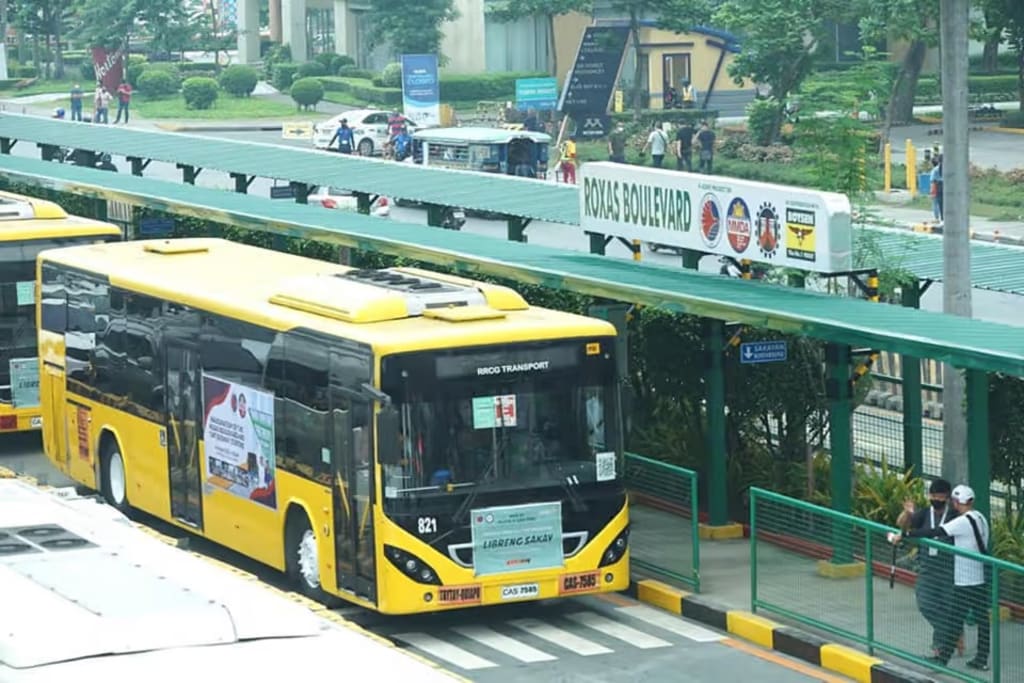
The proposal to remove the EDSA Bus Carousel is worrying for millions of commuters who rely on it daily. With over five million passengers using it monthly, its removal could make the traffic problem in Metro Manila even worse.
The EDSA bus lane has become a convenient system for many commutes by providing a fast, affordable way to travel along the busy EDSA corridor. It operates in dedicated lanes that allow buses to move efficiently and ease road congestion.
While the Metro Manila Development Authority (MMDA) announced on February 5, 2025, that expanding the Metro Line Transit Line 3 (MRT-3) would help reduce traffic, it doesn’t fully replicate the bus lane’s function. The MMDA believes that adding more trains and improving the MRT-3 will accommodate more passengers. However, many commuters express doubts, citing issues such as the MRT-3’s limited capacity during peak hours and the fact that bus routes serve areas not directly accessible by MRT stations.
Many commuters are frustrated with this thought, expressing that removing the bus lane would show a lack of government consideration for their needs. The bus lane provides a faster and more affordable option, and its removal would disproportionately affect those who cannot afford other means of transport. The MRT-3 still has problems such as overcrowding, breakdowns, and accessibility issues that make it an unreliable replacement.
The push to scrap the EDSA bus lane rests on the claim that it’s redundant, overlapping with the MRT-3’s route. Don Artes, head of MMDA, has argued that the bus lane and MRT supposedly cover the same route. But let’s get the facts straight: they don’t. The MRT-3 merely spans 13 stations, running from North Avenue in Quezon City to Taft Avenue in Pasay City, and operates only during fixed hours. Meanwhile, the EDSA Bus Carousel runs a much longer route—stretching from Monumento in Caloocan City to PITX in Parañaque City—with 23 stops and a 24/7 schedule, serving commuters during hours when the MRT is out of service.
The idea of removing the bus lane to free up space for private cars is supposedly meant to ease traffic congestion. But let’s be honest: adding more lanes for cars doesn’t fix traffic—it just invites more vehicles, creating the same carmageddon we’re trying to avoid. Traffic congestion is not resolved by replacing high-capacity public transport with private vehicles that take up the same space but carry fewer people. It just makes it worse.
According to the Department of Transportation (DOTr), the bus lane is not only efficient but also safer. DOTr shared that in 2024, the EDSA Bus Carousel carried over 63 million passengers. January 2025 alone saw a staggering 5.5 million passengers, averaging 177,000 commuters daily. With each bus accommodating up to 54 passengers, the dedicated lane ensures smoother traffic flow and faster travel times. A trip from Monumento to PITX via the bus lane takes only 1 to 1.5 hours, which is much shorter than the usual 3-hour grind through EDSA’s traffic.
Artes insists this isn’t about being “car-centric,” but the disregard for public transport infrastructure says otherwise. Violations of the bus lane rules happen left and right, even among those who should know better. Just recently, former senator Manny Pacquiao’s security convoy was caught illegally using the bus lane, with blinkers and sirens included as if being in a former senator’s convoy makes them exempt from traffic laws. While Pacquiao’s camp apologized and promised to address the issue, it clearly shows a recurring problem: public transport infrastructure being treated as an afterthought in favor of private convenience.
Some argue that the bus lane only limits space for private vehicles and worsens congestion. But here’s the reality: traffic congestion on EDSA existed long before the bus lane. While it is true that vehicle owners experience slower travel times, removing the bus lane would not solve this issue. Instead, it would only force thousands of commuters back onto mixed traffic lanes that will further clog the roads.
“Ang pagtanggal ng EDSA bus lane ay isang hakbang paatras at magpapalala lamang ng trapiko at magdudulot ng mas malaking abala sa ating mga motorista, at dagdag na pasanin sa mga commuter na umaasa sa mabilis at maaasahang biyahe," said former senator Kiko Pangilinan.
(Removing the EDSA bus lane is a step backwards and will only worsen traffic and cause greater inconvenience to our motorists and an additional burden to commuters who depend on fast and reliable travel.)
If the goal is to ease traffic, then the solution is not to remove the bus lane but to reduce the excessive number of private cars and shift the focus on expanding the public transportation in the country. If other major cities around the world, such as Singapore, London, and Seoul, have successfully reduced congestion by implementing strict vehicle rules and prioritizing public transportation, why can't we do the same?
Metro Manila’s traffic problem won’t be solved by removing one of the few systems that actually work. Instead of taking a step backward, the focus should shift to long-term transport solutions that benefit commuters. Because while the government officials that consider the removal of the bus lane rides in the comfort of their private vehicles, countless Filipinos have no choice but to bear with the exhausting life of being a commuter.
As author Mary Ann LL. Reyes said in her business story published in The Philippine Star, the solution for traffic in Metro Manila is to have a change in mindset from road-based travel to mass transport. A well-planned, commuter-friendly approach is the real solution to Metro Manila’s traffic crisis, not the removal of the little progress that has already been made.
About the Creator
Katrina Florendo
Writer l Journalism Student
Keep reading
More stories from Katrina Florendo and writers in Interview and other communities.
Why It’s Okay to Do Nothing Sometimes
In a world that praises the "hustle" mindset and always aims to do more, where we're always busy and focused on getting things done, it might seem strange to take time for nothing. But what if I told you that doing nothing could help you achieve more?
By Katrina Florendo9 months ago in Motivation
Center Stage with Paul Stewart
*** I'm keen to republish the interviews I did for my series with Vocal creators. It's been a few years and I thought it might be nice to revisit these wonderful conversations. I'll be releasing them one at a time for a few weeks/months.
By Heather Hubler2 days ago in Interview




Comments
There are no comments for this story
Be the first to respond and start the conversation.