
“We are immortal”: Sabine Hossenfelder and the physics of eternity
German physicist Sabine Hossenfelder crosses the boundaries between science and philosophy, offering a new perspective on death and the origin of life.

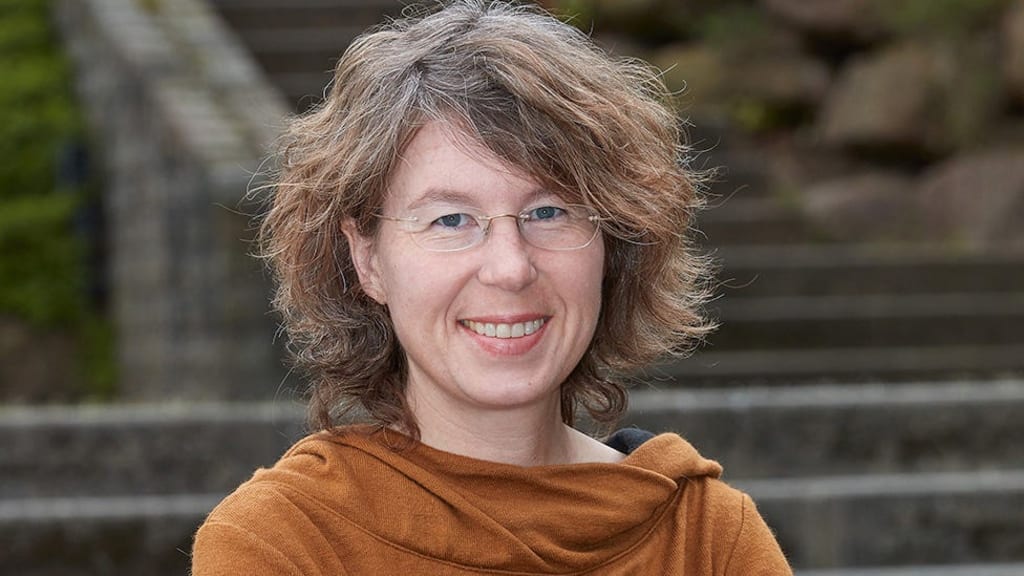
Have you ever wondered if science could answer the deepest questions of human existence? Sabine Hossenfelder, an internationally renowned theoretical physicist, is convinced that it is. In her last book (released a while ago, in 2022), “Existential Physics“, the German scientist ventures into territory traditionally reserved for philosophers and theologians.
With accessible language and a sharp wit, Hossenfelder explores concepts such as immortality, the origin of the universe, and the nature of consciousness, armed not with metaphysical speculations, but with cutting-edge scientific equations and theories. The result? An intellectual journey that left me breathless. I share it with you, because I believe that the German scholar's approach will sooner or later become that of the physics of the future.
Existential Physics: A Bridge Between Science and Philosophy
Throughout history, humanity has sought answers to the great questions of existence. Traditionally, these questions were the domain of philosophy and religion. But Sabine Hossenfelder proposes a different approach: What if physics, the science that studies the fundamental laws of the universe, could offer us a new perspective on these questions?
La existential physics, as Hossenfelder defines it, is not an attempt to supplant philosophy or religion, but to enrich the dialogue with new insights based on our scientific understanding of the cosmos. It is an invitation to explore the profound implications of physical theories for our existence and our place in the universe.
Sabine Hossenfelder: If You Trust Math, We Are Immortal
One of Hossenfelder's boldest claims concerns the nature of death. According to physics, information cannot be destroyed. This principle, applied to human consciousness, leads to a surprising conclusion:
If you trust math, we are immortal.
But what does this mean exactly? Hossenfelder explains that after death, the information that defines us does not disappear, but is dispersed into the universe. In theory (in theory, I stress), a higher being could one day reassemble this information and bring us back to life. It is an immortality very different from that promised by traditional religions, but no less fascinating in its implications.
The Big Bang: Theory or Speculation?
When it comes to the origin of the universe, Hossenfelder takes a more cautious approach. While he acknowledges the Big Bang as the most widely accepted theory today, he stresses that all theories about the origin of the universe are ultimately “pure speculation.”
This does not mean, of course, to reject the Big Bang, but to recognize the limits of our current knowledge. Hossenfelder suggests that there may be more complex explanations, such as a cyclical universe. Ultimately, even the most established scientific theories must be constantly questioned and refined.
Entropy and the Mystery of Life
In Hossenfelder's view, life and death are intimately linked to the concept of entropy. Life itself can be seen as a struggle against increasing entropy, an attempt to maintain order in a universe that tends towards disorder.
This view offers a new perspective on the nature of life and the challenges we face as living beings. It suggests that our existence is deeply intertwined with the fundamental laws of the universe, in ways we are only beginning to understand.
The Future for Sabine Hossenfelder: Determined or Unpredictable?
The German scientist also addresses the question of free will and determinism. According to his interpretation of physics, in a nutshell, the future would be largely fixed, with the exception of occasional quantum events that we cannot influence anyway.
This vision raises profound questions about the nature of choice and responsibility. If the future is largely predetermined, what does this mean for our sense of self and the decisions we make every day?
Physics as an existential guide
The work of Sabine Hossenfelder invites us to consider the physics not just as a scientific discipline, but as a lens through which to explore the deepest questions of existence. It is an approach that challenges traditional divisions between the natural sciences and the humanities, suggesting that the laws of the universe also have much to tell us about the nature of life, death, and our place in the cosmos.
Sabine Hossenfelder's insights tell us that science is not only a tool for understanding the physical world, but also a means for addressing the existential questions that define us as human beings. It is an invitation to look beyond the traditional boundaries of knowledge and consider new possibilities that can redefine our understanding of reality itself.
About the Creator
Futuro Prossimo
The future is now: news about technology, science and society before they become mainstream.
Keep reading
More stories from writers in Interview and other communities.
Center Stage with Paul Stewart
*** I'm keen to republish the interviews I did for my series with Vocal creators. It's been a few years and I thought it might be nice to revisit these wonderful conversations. I'll be releasing them one at a time for a few weeks/months.
By Heather Hubler5 days ago in Interview
A Story of Taylor Swift
On a quiet Christmas morning in Reading, Pennsylvania, a young girl sat on the edge of her bed holding a guitar that was nearly as big as she was. Her fingers pressed carefully against the strings as she tried to match the melodies she heard in her head. Her name was Taylor Swift, and even at that young age, she understood something important: music was not just sound—it was a way to tell the truth. Long before stadium lights and chart-topping records, Taylor was learning how to turn feelings into stories.
By Organic Products 3 days ago in Interview
Wild Card Weekend Recap: What Happens Now?
I think I figured out why I love Wild Card Weekend so much. It's because it's the first playoff anything of the calendar year. The NFL season starts in the fall, and once upon a time, the champion was crowned either on or slightly before New Year's. The evolution of the NFL schedule has resulted in the playoffs starting just into the New Year, and currently, the final week of the season falls on the first weekend of the New Year, with Wild Card Weekend coming a week after that. So yes, chronologically, the NFL's Wild Card Weekend serves as the first playoff anything of the calendar year.
By Clyde E. Dawkins7 days ago in Unbalanced




Comments
There are no comments for this story
Be the first to respond and start the conversation.