
Wagner Group: A Shadowy Mercenary Force Shrouded in Controversy
Shadow Warriors: Unraveling the Wagner Group's Enigmatic Role in Global Conflict
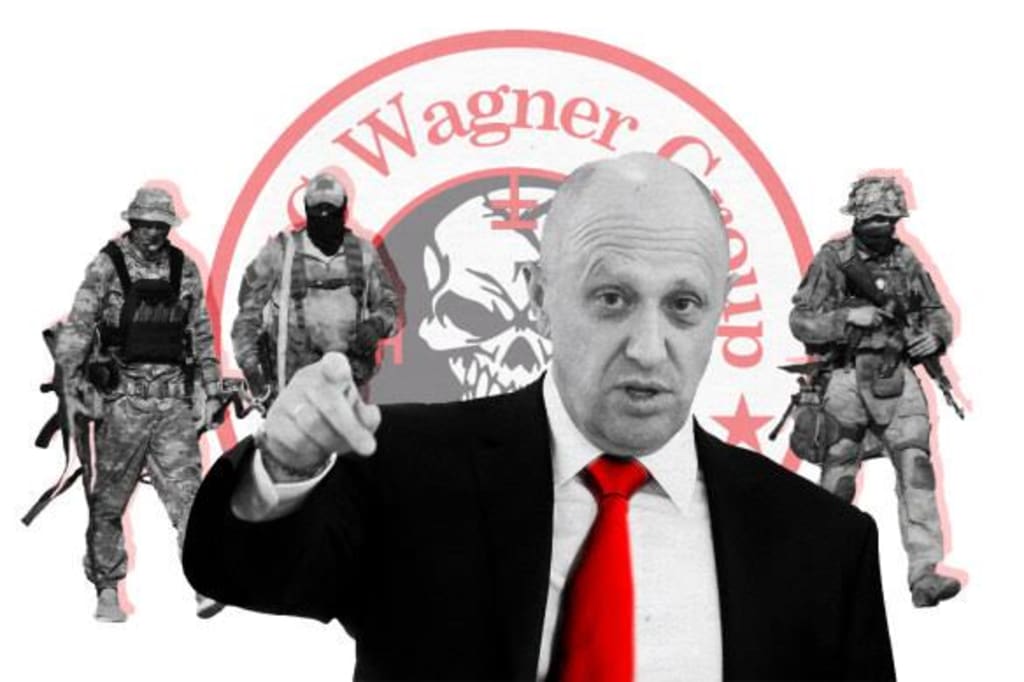
Introduction:
The Wagner Group, a private military company (PMC) based in Russia, has gained notoriety in recent years for its involvement in various conflicts around the world. Operating largely in the shadows, this mysterious mercenary force has become a subject of intense scrutiny and controversy. With alleged connections to the Russian government and a reputation for engaging in covert operations, the Wagner Group has emerged as a key player in modern warfare. This article delves into the origins, activities, and controversies surrounding the Wagner Group.
Origins and Structure:
The origins of the Wagner Group can be traced back to 2014 when it first appeared in Ukraine during the annexation of Crimea. It is widely believed to have been founded by Dmitry Utkin, a former Russian military intelligence officer known by the codename "Wagner." The group is structured as a PMC, employing a vast network of combatants recruited primarily from Russia and other post-Soviet countries. Despite its official status as a private entity, the Wagner Group has faced allegations of close ties to the Russian government, with claims that it operates under the auspices of the Russian military intelligence agency, the GRU.
Activities and Deployments:
Since its inception, the Wagner Group has been involved in several high-profile conflicts across the globe. It has been reported to have deployed its forces in Ukraine, Syria, Sudan, Libya, and the Central African Republic, among other locations. In Ukraine, the group played a significant role in the fighting in the Donbass region, supporting pro-Russian separatists. In Syria, it operated alongside Russian forces, participating in combat operations and reportedly serving as a spearhead for Russian interests. The Wagner Group's involvement in these conflicts has raised concerns about its impact on regional stability and its potential to exacerbate existing tensions.
Controversies and Alleged Crimes:
The Wagner Group has been mired in controversies and allegations of human rights abuses and illicit activities. Numerous reports have emerged of the group's mercenaries engaging in brutal tactics, including torture, summary executions, and indiscriminate violence. The group has also faced accusations of recruiting child soldiers and deploying them in conflict zones. The lack of official accountability and legal oversight surrounding the Wagner Group has further fueled concerns about its operations.
Additionally, the Wagner Group's presence in various conflict zones has raised questions about Russia's geopolitical ambitions and its use of private military contractors to advance its interests covertly. The group's role in these conflicts has often served to create deniability for the Russian government, allowing it to pursue its objectives while maintaining plausible deniability on the international stage.
International Response and Regulation:
The Wagner Group controversy has prompted discussions about the need for stronger regulation and oversight of private military companies. Efforts to address this issue include proposals for international treaties, laws, and mechanisms to hold PMCs accountable for their actions. However, progress has been slow, primarily due to the complex nature of such organizations and the involvement of multiple countries.
Conclusion:
The Wagner Group's emergence as a shadowy mercenary force with alleged ties to the Russian government has raised significant concerns within the international community. Its involvement in conflicts worldwide, coupled with numerous allegations of human rights abuses, has drawn attention to the lack of accountability and oversight surrounding the activities of private military companies. The Wagner Group's actions have further complicated global security dynamics, adding a new layer of complexity to already volatile regions.
Addressing the challenges posed by private military companies like the Wagner Group requires concerted efforts at both national and international levels. Greater transparency, stricter regulation, and enhanced mechanisms for accountability are needed to ensure that the activities of these groups are subjected to appropriate scrutiny and legal frameworks. By understanding the origins, activities, and controversies surrounding the Wagner Group, we can shed light on the complexities of modern warfare and work towards mitigating the risks associated with the unregulated activities of private military companies.
About the Creator
Keep reading
More stories from writers in Interview and other communities.
Part 2 Interview With Joe Patterson, Author Of Melanin Memoirs
This is my second interview with Joe Patterson. His 4th anniversary writing on Vocal will be in March 2026. He has one achievement on Vocal, The Other Foot. He has over 17,000 reads on Vocal since he started on Vocal in 2022. Joe Patterson is very creative poet and rapper. Joe is deep thinker and I feel it is reflected in his latest published book, Melanin Memoirs.
By Mariann Carroll21 days ago in Interview
Sports podcast What's The Call Premieres
Tennis is one of my favorite sports. And, I enjoy the women’s game much more than men’s tennis. Why? Who wants to see 40 aces in a game? It’s like watching teams strike out in baseball. I like the ball in play in any sport. Sports mean action. Even Curling has action. In golf, there should be a shot clock. Stop throwing grass in the air and just hit the ball!
By Frank Racioppi5 days ago in Interview



Comments