
Unwritten in Motion: The Artful Journey of Ameia Mikula-Noble
How a Reluctant Student Became a Storytelling Choreographer, Merging Dance, Narrative, and Vision into Boundary-Breaking Performance


In the predawn hush of an empty theater, Ameia Mikula-Noble stands center stage beneath a single spotlight, arms lifted as if to gather every stray mote of dust in the air. In that suspended moment—a breath before movement—she carries the weight of every classroom she once dreaded, every audition that felt like a spotlighted verdict, and every story she ever wrote to make sense of it all. This is Ameia now: dancer, choreographer, writer, and mentor, who has alchemized doubt into daring, forging a multifaceted practice that is quietly reshaping contemporary dance.
Ameia’s relationship with dance began at age three, but love arrived slowly. She remembers the weekly grind of barre drills and pliés with the same frankness she recalls chocolate-covered broccoli—tolerable only for the promise of an end-of-year recital. “I actually quit,” she confesses, “but my teacher chased me down and begged me to come back—then threw me into a tougher class.” There, amid longer combinations and heightened expectations, Ameia discovered a spark: the exhilaration of meeting a challenge head-on. “Once that spark was lit, I couldn’t wait to learn something new,” she says.
That reluctant return was no mere anecdote; it set the pattern for a career defined by stepping into uncertainty and finding freedom in rigor. Where once she saw drudgery, she came to see possibility—each extension, each rhythmic shift, an invitation to excavate emotion through motion.
From Vancouver’s close-knit studios to the crucibles of Alvin Ailey, Juilliard, and American Ballet Theatre, Ameia learned that talent is a starting point, not a destination. Surrounded by peers whose resumes dazzled, she faced the familiar trap of comparison. “It’s self-destructive,” she admits. “When all you see is what you don’t have, you forget what you bring.”
Her solution was cinematic in its logic: she became both protagonist and screenwriter of her inner life. Having taken up creative writing in high school, she channeled insecurity into narrative. If self-doubt whispered, she summoned a fictional hero. If fear of failure loomed, she wrote a brave character who persevered. “My notebooks became rehearsal spaces for my confidence,” she says. This dual practice—of dancing and writing—became her secret weapon, enabling her to weather criticism and transform each setback into material for her art.
To watch Ameia choreograph is to witness a narrative unfold in real time. She begins, she says, with an intuitive impulse—an image, a phrase of music, a half-formed emotion. From there, she sketches movement as one sketches characters, layering gesture over motif until a story emerges. “Dance and storytelling are inseparable,” she reflects. “Every gesture carries a hidden narrative waiting to connect with an audience.”
This philosophy informed her acclaimed solos for Again Again at The Foundry in Boston—a breakthrough moment that signaled her arrival as a professional. Tasked with exploring repetition and reinvention, Ameia crafted three interlinked vignettes inspired by a character of her own making. The result was not simply a display of technical prowess but a living parable of transformation: each return to the stage felt like a renewal, each iteration richer than the last.
Ameia’s footprint extends beyond choreography and performance. As a member of Boston Dance Theater, she not only dances works by Marco Goecke and Itzik Galili but also shapes the company’s future through marketing and administrative leadership. “A show can’t go on without the stage crew,” she notes—nor can a company thrive without board members, funders, and a strategic plan. Her dual vantage—creative and corporate—allows her to advocate for artists while ensuring that budgets balance and audiences grow. In an industry where art and commerce often clash, Ameia moves fluidly between both worlds, insisting that neither need suffer at the expense of the other.
Two performances stand as rites of passage in Ameia’s odyssey. In Andrea Miller’s Sama, she vaulted through a pulsing score until, at the final crescendo, she and her fellow dancers collapsed in collective exhaustion. “The stamina required was brutal,” she recalls, “but I’ve never felt so alive onstage.” In Penelope Boyse’s solo Red Room, she embodied Jane Eyre’s descent into madness—an emotional crucible that left her in tears each night. “It was terrifying and exhilarating,” she says. “Those pieces taught me that vulnerability is an asset, not a weakness.”
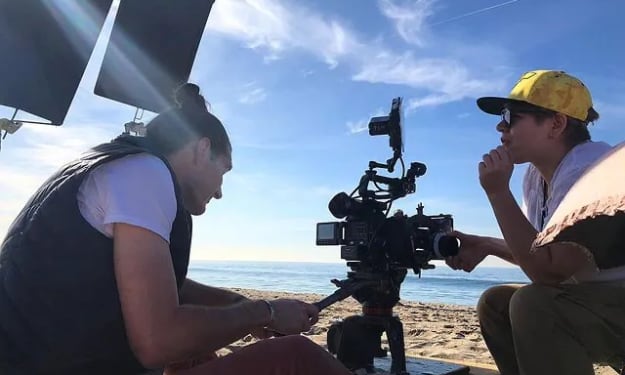
Ameia’s narrative impulse also finds outlet in film and prose. In Échappé, she danced barefoot through a mist-shrouded forest, contending with mud and chill to capture fleeting moments of otherworldly grace. For A Little to the Left, she learned to trust the intimacy of the lens, discovering that subtle eye flickers and wrist flexes speak volumes when the camera closes in. Offstage, she mentors young writers and dancers, translating between the languages of critique and encouragement—an art in itself. “Teaching is like translating two languages,” she says. “You must understand both the knowledge and the novice’s perspective to bridge the gap.”
Ameia sees contemporary dance diverging along two paths: the pedestrian and the transcendent. One invites audiences into familiar gestures, forging intimacy; the other shatters expectations with feats of physical daring. She predicts both will flourish, perhaps even spawning distinct subgenres. Yet her own ambition reaches beyond any category. She dreams of an evening-length narrative that fuses dance, text, sets, and characters—a fully scripted world borne of her writing and movement alike. It is, she concedes, “an ambitious project,” but one for which every step of her journey has been preparation.
Beyond that, her wanderlust and devotion to performance propel her toward stages worldwide. “I love traveling and performing,” she says. “To combine those passions is a dream come true.” Each new city, each fresh audience, becomes a stanza in her unfolding story—a story she writes in breath and muscle, in ink and echoing applause.
In an era when dance vies for attention alongside digital media, Ameia Mikula-Noble stands out not for gimmicks but for her conviction that movement remains one of humanity’s oldest, most urgent languages. She blends the discipline of ballet with the freedom of contemporary, the intimacy of narrative with the expansiveness of abstract form. She navigates boardrooms and studios with equal grace, reminding us that the art form survives not on talent alone but on stewardship, strategy, and community.
Her work matters because it speaks to resilience—in the face of self-doubt, of institutional pressures, of a precarious arts economy. She shows that vulnerability can be choreographed into strength, that stories can emerge from silence, that the very act of returning to the studio is an act of defiance and hope.
Ameia’s current projects—from her solo creations at Boston Dance Theater to her nascent plans for an evening-length dance drama—are noteworthy not merely for technical innovation but for their insistence on narrative heart. In every lift, in every turn, she continues to ask: What story do we share when we move together? And in asking, she gives us a model for art that is at once personal and collective, rigorous and unbound, intimate and world-shaping.
We leave Ameia center stage, spotlight on her outstretched hands. The next act awaits—an odyssey of choreography, prose, mentorship, and dreams yet unchoreographed. And if the past is any guide, she will meet it with the same spark that once made her return, reluctant no more, to the dance studio all those years ago.
About the Creator
Center Stage with Gina C.
*** I'm keen to republish the interviews I did for my series with Vocal creators. It's been a few years and I thought it might be nice to revisit these wonderful conversations. I'll be releasing them one at a time for a few weeks/months.
By Heather Hubler4 days ago in Interview



Comments
There are no comments for this story
Be the first to respond and start the conversation.