
The Resonant Dialogue of Akiko Hosaki
A Visionary Collaborative Pianist Bridging Japanese Heritage and Western Tradition

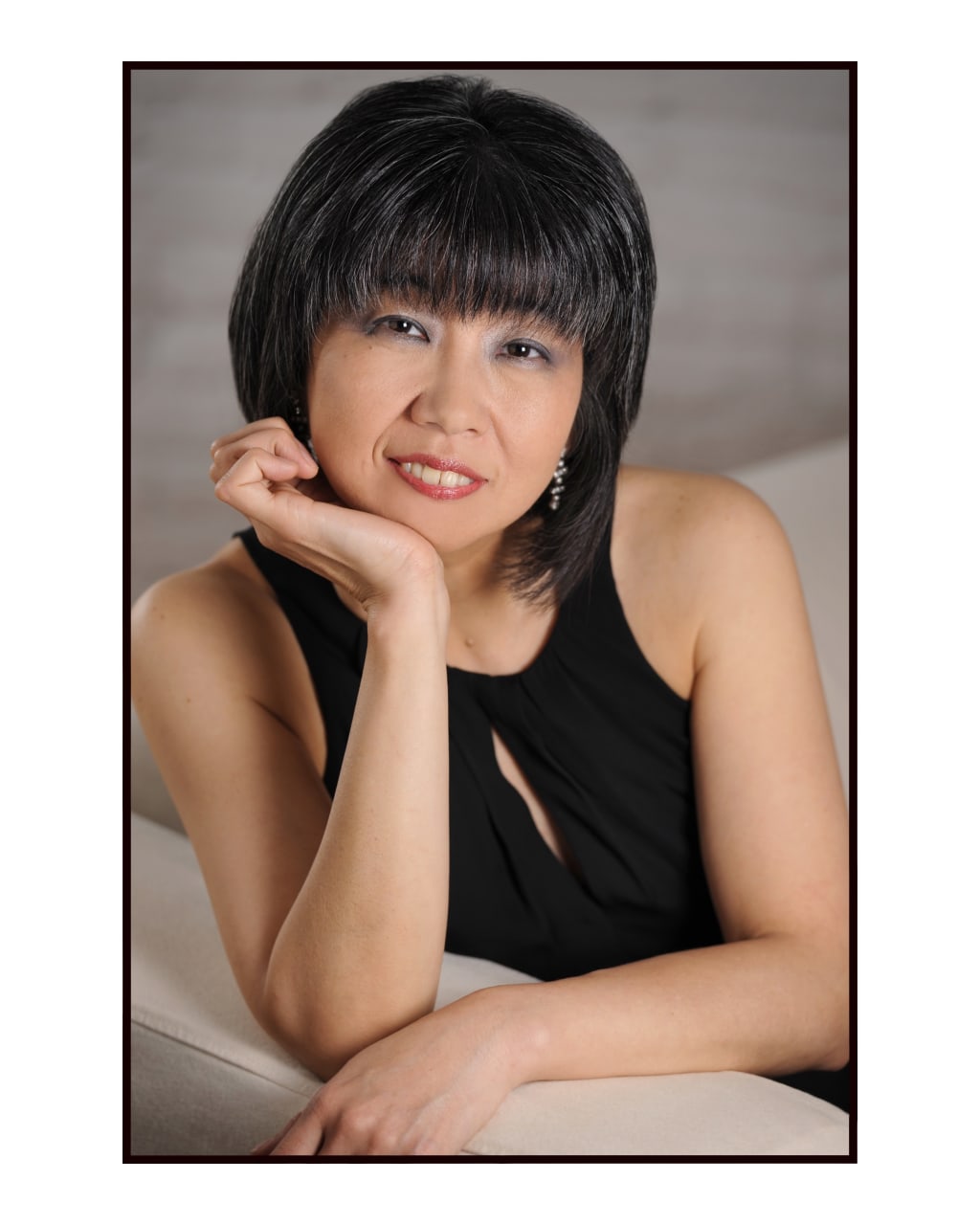
The first time Akiko Hosaki sat at a harpsichord, the world shifted beneath her fingertips. The instrument’s wooden keys seemed to hum with centuries of memory. She paused, listening as if the echoes of past performances spoke through the planks and pegs. That moment, in a sunlit salon on the French Riviera, revealed something she had long suspected: that the true power of music lies in the spaces between notes, in the conversation unfolding at the keyboard, in the invisible threads that connect performer to composer to audience.
Today, Hosaki’s career unfolds across those very spaces. She moves seamlessly from the piano bench beside a rising operatic star to the rehearsal hall of a Baroque ensemble. Her voice in masterclasses carries the weight of decades of study and the freshness of a learner who has never lost her curiosity. Her current projects reflect a single intention: to bridge cultures and eras through the understated art of collaboration.
Life as a collaborative pianist demands a paradox of extremes. Hosaki must be both servant and sovereign. She listens with the patience of a devoted confidante then speaks with the conviction of a soloist shaping an aria. It was this duality that her first major mentor, Helen York, confronted early on. In her first semester at Westminster Choir College, Hosaki leaned into deference as naturally as she shaped a phrase under her father’s watchful guidance in Tokyo. York demanded more. She challenged Hosaki to abandon polite reserve and find initiative. She insisted on fearless imagination even when nuance seemed safer. That lesson remains central to Hosaki’s work today. She teaches students not only to read every marking on the page but to question its purpose. She asks them to flip between Schubert and Debussy with the same ease she learned at her American conservatory. She reminds them that collaboration begins with active curiosity.
Hosaki’s calendar is a testament to that restless spirit. In June 2024 she led a masterclass on Japanese Art Song at New York’s Summer of Art Song Festival. She curated repertory that many Western audiences have never heard: lyrical settings by Hikaru Hayashi alongside early mélodies by Kōsaku Yamada. She spoke of language barriers and unfamiliar cultural contexts not as obstacles but as invitations to discovery. She guided students through the angular inflections of Ikuma Dan and the lush harmonies of Sadao Bekku. At the festival’s close she imagined a dream recital that juxtaposed Japanese works with their European antecedents. She sketched a program moving from late‑nineteenth‑century Lieder‑inspired pieces into daring contemporary cross‑genre experiments. That vision, of art song as a shared vocabulary, shines at the core of her mission.
Her work with period instruments unfolds under a similar light. At the Académie internationale d’été de Nice, where she served as assistant to Dalton Baldwin, Hosaki learned that historical performance demands reverence and flexibility. She studied the art of basso continuo as an act of arrangement, of breathing life into skeletal scores. She saw how a harpsichord’s timbre could reshape an ensemble’s dialogue. She heard Baldwin emphasize the pianist’s role: to help singers find their finest voice. The paradox of accompaniment, she realized, is that it both follows and leads.
These days Hosaki’s historical practice appears wherever she performs. She has been invited to join period‑informed concerts at institutions ranging from the New York Early Music Guild to the Tokyo Baroque Festival. Her continuo lines unfold with intelligence borne of thorough research and a performer’s instinct. When she steps onto a modern concert grand, she carries the tonal sensibility of her harpsichord work into every chord.
Yet Hosaki is more than a specialist in early music. She is an educator who insists that context matters. In lessons at Westminster she encountered students whose technical skill outpaced their awareness of cultural history. Too often they performed Bach or Gounod without grasping the tumultuous eras in which those composers lived. If she could change one thing about classical training today she would weave world history back into the curriculum. She believes that knowing why a song was written, under which social pressures and aesthetic debates, deepens every musical choice.
That conviction shows in her private coaching. She recounts one student, a vocal major in New Jersey, who arrived at her piano feeling small. He had worked with other coaches who treated him as a technician, never as an artist. Under Hosaki’s guidance he discovered the dignity of his own musical ideas. He learned to interpret text as more than syllables on a page. He began to see collaborative piano not as a servant’s task but as a shared creation. Today he performs concerts of French mélodie with confidence that he too is a storyteller.
Stories like these echo across Hosaki’s résumé. She has appeared at Carnegie Hall alongside renowned singers. She has returned to Tanglewood, the festival where her talents first gained notice, this time as a featured collaborator in masterclasses. She has coached conservatory ensembles, sat on juries for art‑song competitions, and recorded discs that place Japanese art song on the international map.
Still, her greatest impact may rest in the notes she has yet to play. She dreams of a recording project pairing Yamada’s late Romantic settings with Debussy’s poetic portraits of the sea. She imagines panels where scholars and performers debate nineteenth‑century reception of Western music in Japan. She sees a future where Japanese art song stands in recital halls with the same stature as German Lieder.
Behind each initiative lies a simple truth Hosaki has carried since childhood: that music is conversation. When she was three her father guided her fingers along the keys, whispering names of notes and melodies. In the quiet of Tokyo practice rooms she absorbed the discipline of solo study. At Musashino Academia Musicae she stumbled into late‑night ensemble rehearsals that revealed music’s social nature. And in Helena York’s studio she discovered that confidence grows when you risk error. Every lesson has become a phrase in her own unfolding composition.
What makes Hosaki noteworthy, above all, is that she embodies collaboration as philosophy. She views herself not as a background presence but as a catalyst. She writes her own part in every duet, shaping breath and bow stroke with equal care. She listens for infinitesimal shifts in phrasing. She asks singers about their texts, their characters, their emotional arc, even as she respects every compositional marking. She sees each partnership as an opportunity to create something neither artist could have summoned alone.
In that sense, Hosaki’s current projects are not disparate endeavors but movements in a grander work. Her masterclasses on Japanese song, her continuo playing, her piano collaborations, they cohere around a single purpose. She wants to expand musical horizons across cultural and historical boundaries. She wants every young pianist to understand that repertoire is not a static list of works but a living tradition. She wants every listener to feel that a song, once performed, begins anew.
When Hosaki reflects on her own legacy she speaks of passing on tradition, of carrying forward lessons from giants like Baldwin and York. She imagines students who will draw on her classes, on recordings she has yet to make, on conversations still to come. She senses them lifting their voices in languages both familiar and strange, guided by the same spirit that animated her first harpsichord chord.
There is no crescendo in her story, no final chord. Instead there is a series of open phrases, an invitation to join the dialogue. To sit at the piano bench beside her and listen, to shape a line alongside her, to become part of the shared endeavor she so cherishes. In that open space between notes, in the breath before a singer’s entrance, in the moment when history and innovation meet, Akiko Hosaki finds her purpose. And invites us all to listen more deeply.
About the Creator
Part 2 Interview With Joe Patterson, Author Of Melanin Memoirs
This is my second interview with Joe Patterson. His 4th anniversary writing on Vocal will be in March 2026. He has one achievement on Vocal, The Other Foot. He has over 17,000 reads on Vocal since he started on Vocal in 2022. Joe Patterson is very creative poet and rapper. Joe is deep thinker and I feel it is reflected in his latest published book, Melanin Memoirs.
By Mariann Carroll28 days ago in Interview
The Mediterranean Visionary Redefining Global Pop Standards Through The Lens Of Lyndsay Pace
In an era where the music industry’s global frontiers are increasingly fluid, Maltese singer-songwriter Lyndsay Pace has executed a career maneuver that transcends traditional geographic limitations. By securing the Best Pop Song title for her hit single "Trippin’" at the prestigious World Entertainment Awards, Pace has not only claimed a trophy but has effectively remapped the trajectory for independent artists emerging from small-island nations. This victory serves as a definitive case study in how vocal discipline, when paired with a sophisticated understanding of brand architecture, can disrupt the traditional power centers of the music world.
By Yadav shivam6 days ago in Interview



Comments
There are no comments for this story
Be the first to respond and start the conversation.