
The Impending Collapse of Western Civilization
A Harsh Reality Check
Introduction
In this thought-provoking article, we delve into a harsh but essential truth about the state of Western civilization. By drawing a parallel with forest fires, the author presents an alarming scenario, highlighting the consequences of human intervention and our collective short-sightedness. The impending collapse of Western civilization may lead to chaotic and apocalyptic consequences, raising questions about personal responsibility, survivalism, and the fragile nature of our modern systems.
1. The Forest Fire Analogy
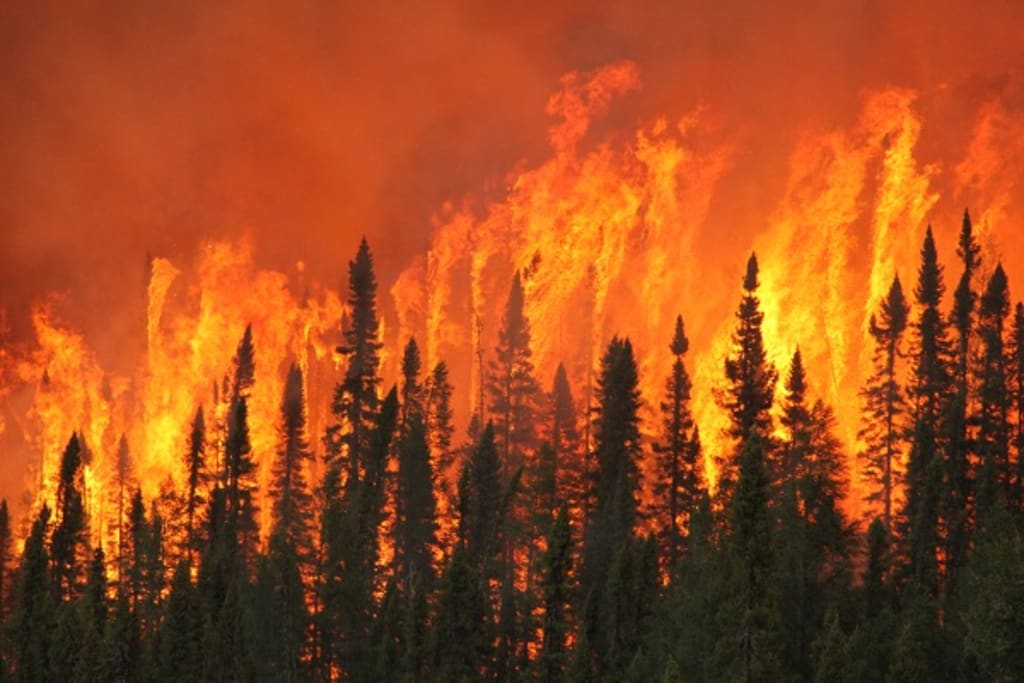
The collapse of Western civilization can be likened to a forest fire. Forest fires are natural events, necessary for the rejuvenation of a forest. Old growth, if not cleared out, becomes a tinderbox, stifling the growth of new underbrush. Nature intervenes through lightning strikes, igniting the dead timber, and creating space for new life. Similarly, human civilizations need to go through periods of collapse and rebirth to maintain balance and vitality.
The rise and fall of civilizations throughout history attest to this natural cycle. From the ancient civilizations of Mesopotamia and Egypt to the Roman Empire and beyond, human societies have faced moments of collapse, which, while devastating, have also paved the way for new beginnings and cultural evolution.
2. Suppressing the Natural Order
Unlike any other civilization in history, Western society has managed to sustain life where it should not be sustained. With technological advancements and infrastructure, we have propped up a top-heavy society, enabling the survival of many who, in a natural state, might not have made it. This intervention has created disequilibrium, leading to potential catastrophic consequences down the line.
The unintended consequences of suppressing natural forces are now evident in the form of environmental degradation, overpopulation, and resource depletion. Our relentless pursuit of progress has led to unsustainable practices, weakening the very foundations of our civilization.
3. Unintended Consequences
Our efforts to prevent short-term catastrophe, like managing forest fires, may result in more significant calamities in the future. The suppression of natural forces has caused the accumulation of standing dead timber, representing individuals who are reliant on systems that keep them alive. The collapse of these systems would expose the vulnerability of many who have grown dependent on them.
One of the most glaring examples is our healthcare system. Medical advancements have allowed people with chronic illnesses and conditions to survive and thrive, but it has also created a growing population dependent on medications and treatments. In a scenario where these systems fail, those who have relied on medical intervention may find themselves ill-equipped to cope with the aftermath.
Moreover, our reliance on technology and interconnected systems has left us vulnerable to cyberattacks and infrastructure failures. From financial systems to power grids, a cascading failure of these networks could spell disaster for modern society.
4. The Darwinian Reality
Nature adheres to the principle of survival of the fittest, and the collapse of Western civilization will be no different. The upcoming cataclysm will test individuals' adaptability, resourcefulness, and self-reliance. Those who have prepared themselves for self-sufficiency will stand a better chance of surviving in the face of chaos and uncertainty.
Survivalism, often misconceived as mere doomsday prepping, is, in fact, a mindset of personal responsibility and preparedness. It involves acquiring skills in gardening, hunting, and building, along with knowledge of essential first aid and self-defense. The self-sufficient individual understands the importance of sustainable practices and values the acquisition of practical skills over reliance on modern conveniences.
5. Embracing Self-Responsibility
In the face of the inevitable collapse, it is crucial to embrace self-responsibility and preparedness. Stockpiling resources, learning primitive skills, and cultivating self-sufficiency will prove invaluable in a grid-down situation. The article advocates adopting the mindset of "being responsible for yourself" to enhance one's chances of survival.
Survivalism does not call for isolationism or a lone-wolf approach. Rather, it emphasizes community building and cooperation. Forming networks of like-minded individuals can create a support system in times of crisis. Mutual aid, where communities share resources and skills, strengthens the collective ability to weather challenges.
6. The Equalizer of Survivalism
Survivalism, in this context, becomes the ultimate self-reflection and an equalizer. No longer will social status, wealth, or fame matter when faced with true survival challenges. The collapse will strip away the artificial hierarchies we have built, leaving individuals solely responsible for their own well-being and that of their families.
In a post-collapse world, every individual will have to confront their weaknesses and vulnerabilities. Preparedness and resourcefulness will become the new currency, and the ability to adapt to changing circumstances will be invaluable. The collapse of Western civilization will herald a return to the basics, where raw survival skills and resilience will determine the course of human existence.
Conclusion
The impending collapse of Western civilization serves as a stark wake-up call to our unsustainable way of life. Just as forest fires are natural events that promote growth and balance, societal collapse can be a catalyst for renewal. By acknowledging the reality and embracing self-responsibility, individuals can better prepare for an uncertain future.
The collapse will demand adaptability, resourcefulness, and resilience, and those who heed this warning may find themselves better equipped to navigate the turbulent times ahead. Survivalism is not about glorifying doomsday scenarios; it is a call to action for personal empowerment and self-sufficiency. The collapse of Western civilization will be an equalizer, stripping away the trappings of modernity and forcing us to confront the true essence of survival.
As the forest fire of collapse approaches, the question remains: will we be the flexible and adaptable green growth, or will we become standing dead timber, relying on systems that are no longer sustainable? The time to embrace self-responsibility and prepare for the challenges ahead is now. The future of humanity may well depend on our ability to embrace change, adapt, and survive in a world forever altered by the collapse of Western civilization.
About the Creator
Andrew
I really enjoy branching out and learning new and interesting things about the world around me and the history behind it. I try very hard to keep an open mind and dig as far down as the rabbit hole goes.
Center Stage with Paul Stewart
*** I'm keen to republish the interviews I did for my series with Vocal creators. It's been a few years and I thought it might be nice to revisit these wonderful conversations. I'll be releasing them one at a time for a few weeks/months.
By Heather Hublera day ago in Interview




Comments
There are no comments for this story
Be the first to respond and start the conversation.