
The Current Position of Former U.S. President Donald Trump and His Potential Return to Power
"The Ripple Effect of a Trump Comeback: Global Stability or Uncertainty?"

Analyzing the Implications for the Global Landscape
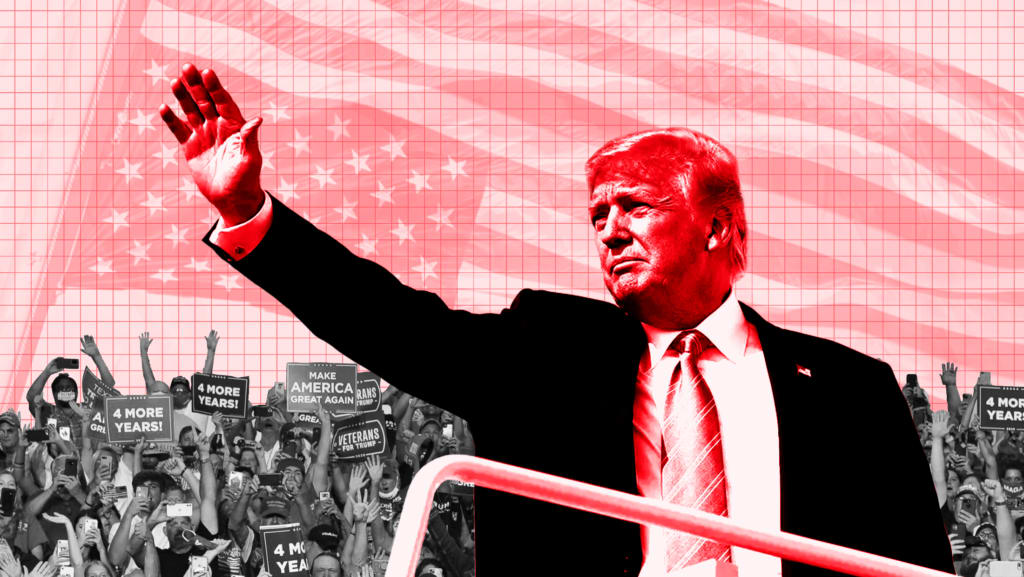
Former U.S. President Donald Trump remains a polarizing figure in global politics, even after leaving office in January 2021. His tenure was marked by unconventional policies, bold rhetoric, and a "Make America Great Again" agenda that resonated deeply with his supporters while alienating critics. As he continues to dominate the Republican Party and potentially prepares for another run in 2024, the world watches closely. What could a second Trump presidency mean for the United States and the international community?
Donald Trump’s Current Position
After losing the 2020 presidential election to Joe Biden, Trump has maintained a prominent role in U.S. politics. Through his social media platform, Truth Social, rallies, and influence over Republican candidates, he has kept his base energized. Despite legal battles and controversies, including his indictment in several cases, Trump has leveraged his status as a political outsider and "victim of the establishment" to galvanize support.
His current position as a frontrunner for the Republican nomination in 2024 underscores his enduring influence. His agenda, as he hints at in speeches, focuses on reversing many of President Biden’s policies, reasserting a nationalist economic strategy, and addressing issues like immigration, energy independence, and China-U.S. relations.
Global Implications of a Second Trump Presidency
If Donald Trump were to regain the presidency, the global landscape could experience significant shifts. His policies, as seen during his first term, often prioritized American interests with a disregard for traditional diplomatic norms. Let’s explore key areas where his leadership might influence the world:
1. Trade and Economic Policies
Trump’s return could reignite trade wars, particularly with China. His "America First" policies, including tariffs and renegotiated trade deals, aimed to bolster U.S. manufacturing but disrupted global supply chains. Countries dependent on exports to the U.S. could face economic uncertainty.
Additionally, Trump may push for renegotiations of trade agreements, pressuring allies and competitors alike to offer more favorable terms to the United States. This approach could strain alliances but also reshape global trade dynamics.
2. Global Climate Policy
During his presidency, Trump withdrew the U.S. from the Paris Climate Agreement, arguing that it disadvantaged American businesses. A second term might see a similar rollback of climate commitments, weakening global efforts to combat climate change. Countries prioritizing environmental goals may face challenges in aligning with the U.S. under his leadership.
3. U.S.-China Relations
Trump’s stance on China was one of the defining features of his presidency. From labeling China a "currency manipulator" to imposing tariffs, he consistently pushed back against Beijing’s growing influence. A second term could see escalated tensions, affecting global markets, technology, and military dynamics in the Indo-Pacific region.
4. NATO and Global Alliances
Trump’s criticism of NATO, coupled with his demands for increased defense spending from member states, created friction with traditional U.S. allies. If he returns to power, there might be further strain on NATO and other alliances, potentially weakening the West’s collective security framework.
Conversely, countries with adversarial relationships with the U.S., such as Russia and North Korea, might attempt to leverage Trump’s nontraditional approach to diplomacy.
5. Middle East and Energy Policy
Trump’s policies in the Middle East, including the Abraham Accords, reshaped the region’s diplomatic relations. A second term could build upon these agreements while prioritizing American energy independence. This might lead to reduced reliance on Middle Eastern oil and a recalibration of U.S. involvement in regional conflicts.
Challenges and Opportunities
While Trump’s leadership style could destabilize certain aspects of global politics, his return might also present opportunities for change. His willingness to challenge established norms could push countries to rethink outdated agreements and adapt to new realities. However, the uncertainty surrounding his policies and their long-term impacts might hinder global cooperation on pressing issues like climate change, public health, and economic stability.
Conclusion
Donald Trump’s potential return to the presidency remains a divisive topic. For some, it represents a chance to restore American dominance and address domestic challenges. For others, it signals a period of unpredictability and potential global instability.
As the world awaits the outcome of the 2024 election, one thing is clear: Trump’s influence on global politics is far from over. Whether as a president or a political figure, his actions will continue to shape the trajectory of the United States and its role in the world.
About the Creator
Mirhadi Tahsin
Passionate writer from Bangladesh,crafting stories that explore love,loss,and human connections.Through heartfelt narratives I aim to inspire,evoke emotions,and leave lasting impressions.Join me on Vocal Media for tales that touch the soul.
Keep reading
More stories from Mirhadi Tahsin and writers in Interview and other communities.
The Quantum Divide
Chapter 1: The Rise of NeuroLink In 2050, the world was no longer divided by borders but by access to technology. At the heart of this divide was NeuroLink, a groundbreaking quantum neural interface that connected human consciousness to an ever-evolving AI ecosystem. Developed by SynerTech Corp, it promised to revolutionize humanity, allowing people to work, learn, and live through an augmented reality overlay.
By Mirhadi Tahsin12 months ago in Earth
Center Stage with Paul Stewart
*** I'm keen to republish the interviews I did for my series with Vocal creators. It's been a few years and I thought it might be nice to revisit these wonderful conversations. I'll be releasing them one at a time for a few weeks/months.
By Heather Hubler4 days ago in Interview
A Story of Taylor Swift
On a quiet Christmas morning in Reading, Pennsylvania, a young girl sat on the edge of her bed holding a guitar that was nearly as big as she was. Her fingers pressed carefully against the strings as she tried to match the melodies she heard in her head. Her name was Taylor Swift, and even at that young age, she understood something important: music was not just sound—it was a way to tell the truth. Long before stadium lights and chart-topping records, Taylor was learning how to turn feelings into stories.
By Organic Products 2 days ago in Interview
Rachel Reviews: The Spiral Archive by Pieter Hendrik
It's difficult for me to know where to start with a review of this book as it was, for me, an entirely unique experience and one that I'll probably never have again. I don't want that to be interpreted as unenjoyable but it has left me scratching my head a little and ruminating on its content, its themes and its characters.
By Rachel Deemingabout 22 hours ago in BookClub




Comments
There are no comments for this story
Be the first to respond and start the conversation.