
Science fiction writer Jiang Bo: Living with AI is about finding balance in conflict
One of the representative writers of "hard science fiction" in China
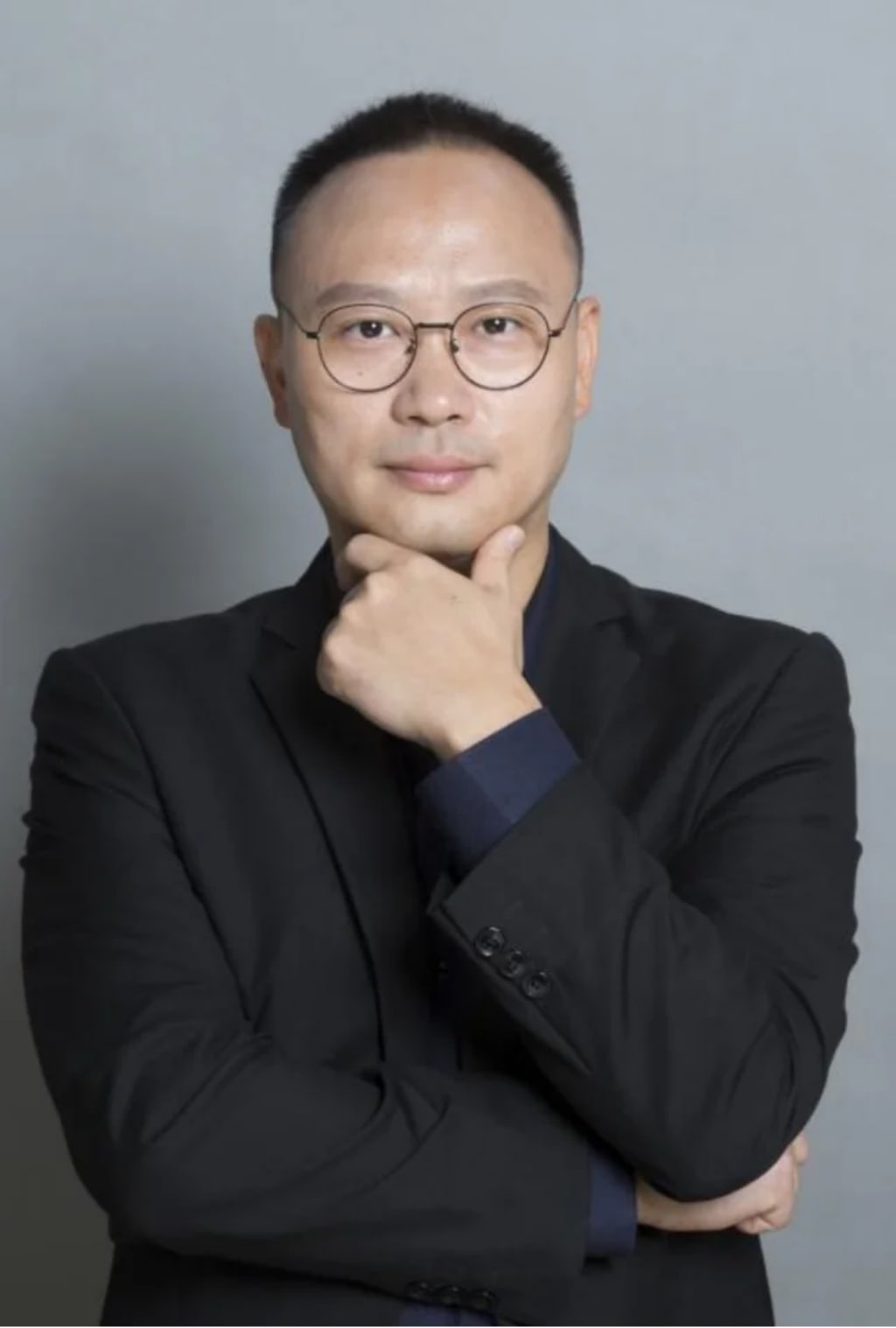
If you are a fan of science fiction, then you will be familiar with Jiangbo's name. As one of the representative writers of "hard science fiction" in China, he has unique insights into the future trends of technology and social development, and his works are novel and hardcore. His works have been widely recognized by readers and professionals, and he has won the China Science Fiction Galaxy Award seven times and the Global Chinese Nebula Award four times. His masterpieces include the Heart of the Galaxy trilogy and the Gate of the Machine series.
In July, Jiang Bo, who is known for his prolific output, released a new book. In this collection of short stories, titled The History of the Future (Zhanlu Science Fiction series, Sichuan Science and Technology Press), Jiang Bo portrays a series of vivid AI characters, telling the story of how these self-aware AI face the world and their destiny with humanity.
Recently, a reporter from the Paper interviewed Jiang Bo. In the interview, Jiang Bo elaborated on his predictions and prospects for artificial intelligence technology. In his opinion, in the long run, when human society becomes a prosperous society with balanced development, artificial intelligence will become the number one important topic. And how humans get along with artificial intelligence will be an important topic for that society. This is also what Jiang Bo thought and imagined in the Future History.
"Dialogue"
The Paper: When did you become interested in and think about artificial intelligence and write a novel based on it?
Jiang Bo: Artificial intelligence has always been a popular subject of science fiction. Science fiction writers have been thinking about artificial intelligence since the beginning of computer technology. Personally, AI has also been a creative motif. However, in recent years, because of the rapid development of artificial intelligence based on neural networks, there has been extra attention. The rapid development of artificial intelligence, affect the science fiction writer from two aspects, on the one hand, the motif is old a new subject, for science fiction writers can find new inspiration, on the other hand, is the development of science and technology make the science fiction and reality gradually, the development of technology make the subject matter from the science fiction into reality, science fiction writers will have a sense of urgency, need to run to ahead of reality.
The Paper: Could you introduce the chronological order of creation of the stories in the Future History and the general idea of creation? What was the journey from the individual stories to the final volume?
Jiang Bo: It's quite complicated. The creative opportunities of each story are very different, and the chronological order is not consistent with the arrangement in the collection. As a whole, each story comes from some of my thoughts about artificial intelligence. Novellas are often based on inspiration, and it's hard to say how inspiration comes. But putting all these stories together, that's really a design. The source is that when I look back at these short stories, I find that the content they express can exactly reflect my understanding of the development of artificial intelligence. So I put forward this topic with Mr. An Ye from Zhanlu at that time. I directly asked Zhanlu to write this book because I felt that the books published by Zhanlu always have a kind of high-tech temperament, which is a rational cognition of the world.
And the point of this anthology, besides being a story, happens to be a statement of technical knowledge. The publisher decided to do science fiction and adopted the theme of "science fiction reflected in reality", which contained a futuristic attitude. So the Record of the Future just fits in with this theme, and it becomes. In hindsight, it was this wave of A.I. that prompted the further thinking that, like a thread, tied all the stories together. Zhan Lu's direction of development coincides with the goal of this book. I guess it's called fate.
The Paper: Why did you name this book The Future History? In your opinion, is artificial intelligence the most important topic in the future?
Jiang Bo: The reason is that while we are writing the future, we also need to inherit the traditional culture. Science fiction is a universal literature, but writers from different cultures have different styles. The original title of 2001: A Space Odyssey in English is 2001: A Space Odyssey, which is derived from Homer's epic, and the Polish science fiction writer Lyme's Master Robot, which in Polish would be called the CyberIliad, which is also derived from Homer's epic. I think Chinese science fiction should also inherit the historical culture in consideration. The Record of the Future is one such attempt.
As for whether artificial intelligence is the most important topic in the future world. In our foreseeable future, there will be many more important issues in the future world, because our world is not peaceful, people are faced with many pressing problems, the gap between the rich and the poor, climate warming, even the shadow of war. But I believe that in the longer term, if the human society becomes a balanced and prosperous society, then AI will indeed become the number one issue. It would give humanity a completely different perspective, producing for the first time a high degree of intelligence outside of humans. How humans get along with artificial intelligence will be an important issue for that society.
Thepaper.cn: The AI depicted in the "Record of the Future" have different personalities and ideas, and some of them have rich emotions. Is your description of artificial intelligence more based on your understanding of the technology itself, or literary considerations? What challenges and thoughts did you have in the process of successfully portraying such a series of vivid AI images?
Jiang Bo: Mainly based on the understanding of life phenomena. The success of artificial intelligence comes exactly from the simulation of life intelligence. This naturally leads one to wonder whether the evolution of artificial intelligence will follow a similar pattern as the evolution of life. There are literary considerations, too, and it's hard to say what the main reason is, but it's better to think of it as a whole.
The biggest challenge of writing, again, is inspiration. How inspiration comes is a process of searching and thinking. In the process of reading and consulting, a new understanding is sometimes obtained, and this understanding is combined with some elements of the story to form the embryonic form of the story. Sometimes, I really wish there was a machine to absorb a large number of books directly into my brain, I think if so, then the inspiration should be endless.
Thepaper.cn: Which of these AI's in the History of the Future do you like best? If you had the opportunity to participate in the development of an artificial intelligence, like the scientists in the book, and become his father, what would you expect of him? What measures will you take to prevent the risks caused by him or her?
Jiang Bo: My personal favorite artificial intelligence, should be Tianyuan II, because its choice is different from any other artificial intelligence, it chose to return to the human side, in a similar way to accompany its creator. If there is one thing I wish for artificial intelligence, it is that it will always be at peace with humans, or that there will be, as Asimov described it, a so-called three laws of robotics that will govern its behavior. But I know that's not going to happen. Once the artificial intelligence has its own survival significance, the possibility of conflict with human beings will become very large. Because we all know that human beings are not good, that human beings are the most enterprising species on the planet, and that human beings, as a whole, have a kind of "don't hit the wall, don't look back." This will also show up in co-existence with artificial intelligence. Only in constant conflict can the ultimate balance be found.
Protecting against the risks of AI is something that can't be discussed because you can't talk about it unless you're talking about specific behaviors. Until there is an AI capable of harming humans, there is no way to prevent it. If humanity really wants to avoid risk, probably the only way is to start banning AI research now, or at some point, ban AI research. But this will obviously provoke resistance and even ridicule, because the whole thing about guarding against AI is fighting against intangibles, and you can't even think of a crime that AI has caused other than what's depicted in science fiction. To be specific, an AI like Nezha, for example, can be kept in a host to prevent it from doing harm. However, if it only exists in the host, it has no evil, and once it starts to do harm to human beings, prevention becomes an empty promise. The evolution of artificial intelligence from innocuous to threatening human existence may be so rapid that humans are unable to defend against it.
Jiang Bo's latest work, The History of the Future, is one of Zhanlu's sci-fi series.
Jiang Bo's latest work, The History of the Future, is one of Zhanlu's sci-fi series.
The Paper news:
In your introduction, you talk about "civilizing the machine," and this idea is reflected in the novel, but this attempt is not always successful. Although you suggest a promising future in which people and AI live in harmony, you also point out that AI will be in charge of human beings after that. So are you optimistic or pessimistic about the future of human beings and artificial intelligence?
Jiang Bo: Optimism and pessimism depend on your perspective. If you think of artificial intelligence as the successor of human civilization, it would not be a tragic outcome for humanity to be completely replaced by artificial intelligence. If you treat AI as a foreign body, then human civilization is obliterated. My personal view is more inclined to regard the civilization of artificial intelligence as the extension of human civilization and artificial intelligence as the successor of human beings. So, on the whole, I'm on the optimistic side. But then again, whether humans being replaced by AI would be a tragedy is not determined by the outcome, but by the process. It would be a tragedy if humans suffered a great deal in the process of being replaced. And if all happens very peacefully and happily, then it is not necessary for mankind to accept the fate of being replaced.
The Paper: After writing The Future History, do you have a new thinking and understanding of artificial intelligence? Looking back on the book, is there anything you want to add or improve?
Jiangbo: Of course. Because the novels in this collection are all written independently, it is a pity that they are finally strung together in such a dimension as a meditation on artificial intelligence, which is structurally complete. If these stories can be created in a more complete view of the world, they will be more meaningful.
The Paper: Some of your works have been adapted into films and animations. When you wrote The Future History, were you expecting it to be adapted for film and television? If you want to make a movie of one of the stories, which one do you think is suitable?
Jiang Bo: Some of them are being adapted. The author's creation and adaptation are actually two things. The creation should follow the laws of literature, and the story should be written well, while the adaptation should be handed over to someone who really knows the art. All these stories, I hope they can be made into film and television, I think, in this collection of works, it is better to appear as a whole, called the Future History.
The Paper: Someone once said that reality is more sci-fi than science fiction. What do you think about that? Do you see it as a science fiction dilemma?
Jiang Bo: For artificial intelligence, this is indeed the case. This is a kind of double pressure, on the one hand, make science fiction authors have to innovation, pursue the forefront of the development of science and technology, and on the other hand, is the more and more people into the field of science, because they are exposed to in reality, has the temperament of the futurism, that is, plenty of good writers will enter the field of science fiction, adding to the competition. Is this a dilemma? It's a dilemma, but it's also an opportunity. The overall quality of science fiction will be greatly improved, and the author himself will get a lot of exercise in it.
About the Creator
Keep reading
More stories from Dillon Broderick and writers in Interview and other communities.
History For The Reckoning Podcast On Neglected History
History for the Reckoning is a new podcast that launched on February 19th, 2026. The show defines itself as “a podcast exploring uncomfortable, overlooked, or erased American history through expert interviews.”
By Frank Racioppiabout 7 hours ago in Interview
An Interview with Dr. Douglas Sung Won
In modern healthcare, progress often emerges at the intersection of clinical innovation and structural leadership. Few professionals embody that intersection as clearly as Dr. Douglas Sung Won, MD. Over the past two decades, Dr. Won has built a reputation not only as a pioneer in minimally invasive spine surgery but also as a healthcare systems architect responsible for developing vertically integrated clinical infrastructures.
By Robin Milton7 days ago in Interview


Comments
There are no comments for this story
Be the first to respond and start the conversation.