
Rabbi Sarah Hronsky, Interfaith Cooperation and Social Justice: Hunger, Homelessness, and Durable Partnership
Rabbi Sarah Hronsky: How does interfaith cooperation stay durable while addressing hunger, homelessness, and polarization?

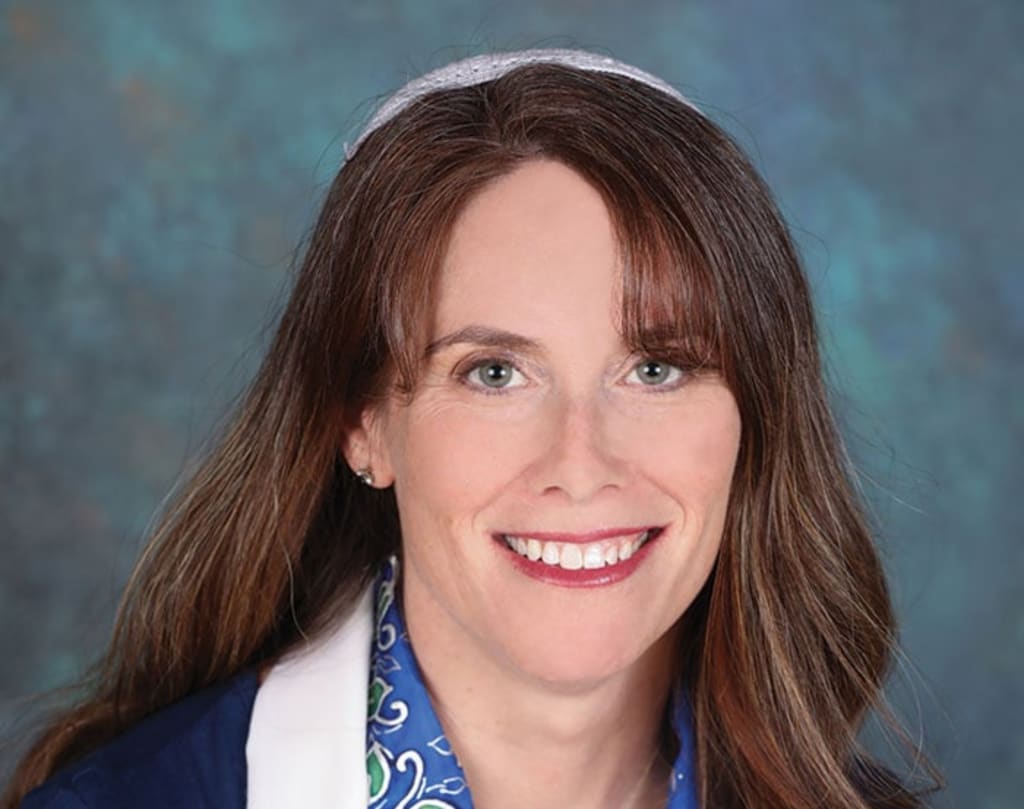
Rabbi Sarah Hronsky is Senior Rabbi of Temple Beth Hillel, serving since July 2003 after ordination at Hebrew Union College–Jewish Institute of Religion in Los Angeles. She holds master’s degrees in Hebrew Letters and Jewish Communal Service and is a Fellow of the Shalom Hartman Institute’s Rabbinic Leadership Initiative. She is the President of the Los Angeles Council of Religious Leaders and Immediate Past President of the Board of Rabbis of Southern California. Honored with the 2023 Los Angeles Pioneer Women Award, she focuses on interfaith dialogue and social justice, including homelessness, and serves on the North Hollywood Interfaith Food Pantry Board.
In this interview, Scott Douglas Jacobsen speaks with Rabbi Sarah Hronsky, Senior Rabbi of Temple Beth Hillel, about durable interfaith cooperation and service amid polarization. Hronsky says durability grows from shared moral commitments—loving the neighbor and the stranger—and from showing up repeatedly for honest dialogue. She critiques misconceptions that reduce believers to denominational caricatures. Grounding hunger and homelessness work in Torah and rabbinic tradition, she describes practical adaptations: discreet deliveries, expanded pantry hours, multi-faith distribution partnerships, and joint training and action. Hartman learning, she adds, strengthened pluralism and provided a supportive cohort. For navigating antisemitism, fear, and stress with compassion.
Scott Douglas Jacobsen: What makes interfaith cooperation durable?
Rabbi Sarah Hronsky: While challenges are easily identifiable, so is the common base that faith leaders share. We hold tightly to binding morality, based on creating a just world. This often means lifting shared values such as loving one’s neighbor, caring for the widow, the stranger, the orphan—the most vulnerable. Centering oneself in space of wholeness and completeness in order to bring this to the larger community around. While issues may pull us apart, and the tensions in political divides and polarization are very real, we can usually unite and bridge together over preservation and well-being of humanity.
Jacobsen: What are common misunderstandings faith communities have about each other?
Hronsky: Faith communities, like the rest of the population, can get caught up in assuming that because you are x you must fully believe y. All too often it is assumed that the overarching denomination sets the beliefs of all the individuals and this is simply untrue. For example, because one identifies as Jewish, they must hate Palestinians. Because you are white and Christian, you must believe in all that White Christian Nationalists believe including xenophobia and the domination of men over women. Because you are Catholic, you must be pro-life and anti-choice. One’s faith is a significant part of their identity, but no single person is all one direction or another. Our faith may drive or provide the foundation for our choices, but it does not dictate all. There is also the divide created between those who identify with faith and those who do not. Assuming one is better than the other, or one is more zealous, misconstrues matters.
Jacobsen: How do you connect Jewish teaching and tradition to work on hunger and homelessness?
Hronsky: Thirty-six times (the Talmud states perhaps thirty-seven times) we are commanded to care for the widow, the orphan, and the stranger. These categories indicate the most vulnerable, the most marginalized in society—the ones for whom access to food and shelter would be most limited. We are also taught in the Holiness Code in Leviticus to “love our neighbor as we would wish to be loved ourselves,” and a few verses later to “love the stranger” similarly (Leviticus 19). This is not about emotional love; rather, love is demonstrated by actions of care. Food, shelter, and access to medical care are precisely these kinds of responsibilities and endeavors.
For the neighbor and the stranger alike, we are commanded to provide for their needs—whether they are individuals I know, individuals from the same community, or strangers geographically, ethnically, religiously, etc. Each person, no matter their background, is deserving to be cared for equally, in the same manner that I would wish to be cared for.
Our sages taught that when establishing a Jewish community we are obligated to create a kuppah—a charity fund that it is mandatory to give to each week, with several individuals overseeing its distribution to those in need (Babylonian Talmud, Sanhedrin 17b; Mishneh Torah 9:13). Thus, while a house of study, a house of worship, and a place for burial are essential components of establishing a Jewish community, right alongside these core elements exists a command to care for all in the community. Providing food and advocating for the unhoused is exactly what my faith demands of me.
A further example comes from Deuteronomy 24:19–21:
“When you reap the harvest in your field and overlook a sheaf in the field, do not turn back to get it; it shall go to the stranger, the fatherless, and the widow—in order that your God may bless you in all your undertakings. When you beat down the fruit of your olive trees, do not go over them again; that shall go to the stranger, the fatherless, and the widow. When you gather the grapes of your vineyard, do not pick it over again; that shall go to the stranger, the fatherless, and the widow.”
While there are 613 commandments for the Jewish people, caring for others—shared humanity, and knowing that each human being was created in the image of God—compels me to live the value of providing for the most vulnerable as best I can. The world can be hard, and the tasks to repair it overwhelming. By supporting and working in the food pantry, I can take one small action to live my faith and my values, and to bring about a spark of hope and light.
In Pirkei Avot we read: “Rabbi Tarfon said: It is not your duty to finish the work, but neither are you at liberty to neglect it.” I will not be able to end hunger or homelessness, but I also cannot ignore it.
Jacobsen: As President of the Board of Rabbis of Southern California, what trends are you seeing in community needs?
Hronsky: This is a little tricky for me to answer. The trends I see around increasing hunger and the growing needs of the greater community are not necessarily related to the work I have done, or continue to do, with the Board of Rabbis.
I have had many conversations with interfaith leaders about the expanding needs at our food pantries, particularly for people who fear going to work or fear ICE raids. Our work has changed dramatically. Last week, during a Zoom meeting with the Los Angeles Council of Religious Leaders, we each identified where need has increased and how we have adapted to meet it. For example, some pantries have shifted to food delivery rather than in-person distribution. In one case, a truck drops food at a private neighborhood location, and an individual quietly distributes it to those who would typically come to the pantry.
Another religious group has significantly increased its food supply—by thousands of pounds—which is now delivered to distribution partners in the downtown area. Yet another has linked a frozen-meal service within the Jewish community to a variety of service partners, many from multiple faiths, for broader distribution. Another group identified a new resource and asked that its link be shared more widely: a program that pays street vendors, who are afraid to be out on the streets, to prepare food safely at home, which is then provided to the unhoused through drop-in centers.
Still another faith partner shared that they extended their food-pantry hours, offering only a few small distribution slots at a time so that no recipient is left standing in a line and vulnerable to ICE activity. On and on, adaptations and ideas have been shared and then adopted. This is partnership—working together to respond to increasing needs.
Jacobsen: How do you keep interfaith spaces safe and honest?
Hronsky: I might need clarity on the question, as I am not certain I am able to answer in a manner that fully addresses what you are interested in. What I can say is that, during this particularly polarized time, I have found that continuing to come to the table—and continuing to offer respectful spaces for individuals to share their narratives—matters. No matter how hard it is, coming together again and again makes a difference in seeing the other as human.
In addition, literally doing the work together as much as possible makes a difference. Continuing to bring individuals of different faiths into shared spaces allows for humanizing rather than demonizing. This happens, for example, through shared community work on distribution days at the North Hollywood Interfaith Food Pantry. It is difficult to make sweeping claims about this faith or that faith when you know that the person who identifies with x faith is a good person, someone caring for others, someone you laugh with while sorting food, packing bags for those in need, or working the car line together to make sure another person does not go hungry.
The same is true when we bring groups together for training in nonviolent demonstration and then march side by side, crying out against the brutality of ICE and demanding the release of individuals from detention centers. Honest work, honest conversation, and honest gathering matter.
On Sunday, I joined the AME Church’s Founder’s Day celebration with a few other interfaith leaders, where we worshipped together and learned from Stacey Abrams. Gathering in a traditionally Black church, learning side by side, and being welcomed into their space allows me to honor their truth, grow from it, and deepen allyship.
There are many other examples. On Friday, February 6, several interfaith leaders—Catholic, Jewish, Hindu, and others—will participate in a Habitat for Humanity build. We choose to swing hammers, wield paint brushes, and help a specific family and community, all while growing in friendship and partnership. I have also been part of a group planning a significant gathering in March of religious leaders from across Los Angeles to come together in conversation, learning, and action. The title of the event is A Multi-Faith Response to the Current Constitutional Crisis.
Creating spaces to learn, to listen, and to act allows us to keep showing up for one another. Do I always feel safe in every space? No. Do I keep coming back? Yes. If I am not at the table, my voice will disappear.
Jacobsen: What did the Shalom Hartman leadership experience change for you during polarization or rising antisemitism?
Hronsky: I am currently not studying at the Shalom Hartman Institute. However, the foundation it provided taught me to be more pluralistic in my thinking and gave me a vast cohort of individuals across North America and Israel to reach out to at any time. I learned to work closely with—and to be open-minded enough to learn from—Jews whose observance differs from mine and whose understanding of what it means to be Jewish also differs from mine. The Shalom Hartman Institute continues to step into the fray of breaking down walls of polarization through several podcast series and in-person learning opportunities. It is a strong model for engaging in complex dialogue around complex issues.
Jacobsen: What have you learned about service delivery that you did not learn in seminary?
Hronsky: Seminary is a wonderful builder of foundations and learning blocks. However, most of what I have learned about being in service to others comes from my upbringing in a Jewish home that taught everyone to participate in making a better community—everyone must give back to help others. That grounding was further strengthened by being welcomed into a synagogue pulpit deeply steeped in social justice and action. For the past 23 years, I have grown and learned alongside my congregants and my movement, continually finding ways to remain in service.
Jacobsen: What would you most want secular readers to understand about faith-based interfaith work?
Hronsky: While each person’s individual efforts make a difference in healing and repairing our world, those efforts are uplifted and can become more impactful when we include others. While faith may be an important driver of the service work we do, interfaith efforts—and working alongside those who do not identify with any faith—can increase our impact and bring us closer together. Interfaith work helps us build bridges, recognize how much more alike than different we are, and engage with one another’s shared humanity.
Jacobsen: Thank you very much for the opportunity and your time, Sarah.
Scott Douglas Jacobsen is a blogger on Vocal with over 100 posts on the platform. He is the publisher of In-Sight Publishing (ISBN: 978–1–0692343) and the Editor-in-Chief of In-Sight: Interviews (ISSN: 2369–6885). He writes for The Good Men Project, International Policy Digest (ISSN: 2332–9416), The Humanist (Print: ISSN 0018–7399; Online: ISSN 2163–3576), Basic Income Earth Network (UK Registered Charity 1177066), A Further Inquiry, The Washington Outsider, The Rabble, and The Washington Outsider, and other media. He is a member in good standing of numerous media associations/organizations.
About the Creator
Scott Douglas Jacobsen
Scott Douglas Jacobsen is the publisher of In-Sight Publishing (ISBN: 978-1-0692343) and Editor-in-Chief of In-Sight: Interviews (ISSN: 2369-6885). He is a member in good standing of numerous media organizations.
Keep reading
More stories from Scott Douglas Jacobsen and writers in Interview and other communities.
Don Jr., Influence-Peddling, and the Ethics of Power Proximity
Irina Tsukerman is a human rights and national security attorney based in New York and Connecticut. She earned her Bachelor of Arts in National and Intercultural Studies and Middle East Studies from Fordham University in 2006, followed by a Juris Doctor from Fordham University School of Law in 2009. She operates a boutique national security law practice. She serves as President of Scarab Rising, Inc., a media and security strategic advisory firm. Additionally, she is the Editor-in-Chief of The Washington Outsider, which focuses on foreign policy, geopolitics, security, and human rights. She is actively involved in several professional organizations, including the American Bar Association's Energy, Environment, and Science and Technology Sections, where she serves as Program Vice Chair in the Oil and Gas Committee. She is also a member of the New York City Bar Association. She serves on the Middle East and North Africa Affairs Committee and affiliates with the Foreign and Comparative Law Committee.
By Scott Douglas Jacobsen13 days ago in Interview
Part 2 Interview With Joe Patterson, Author Of Melanin Memoirs
This is my second interview with Joe Patterson. His 4th anniversary writing on Vocal will be in March 2026. He has one achievement on Vocal, The Other Foot. He has over 17,000 reads on Vocal since he started on Vocal in 2022. Joe Patterson is very creative poet and rapper. Joe is deep thinker and I feel it is reflected in his latest published book, Melanin Memoirs.
By Mariann Carrolla day ago in Interview
The Golden Kids Runway Teen Segment Went Viral in the Room Thanks to River Mason Eromosele and His Best Friends
New York Fashion Week is built on moments, but the ones people remember usually have a human story behind them. River Mason Eromosele brought exactly that to the runway, not just by walking, but by bringing his two best friends, Kellen Younker and Dylan Umana, into the experience with him. It became one of those nights where fashion felt less like a performance and more like a celebration of who these teens are becoming.
By Michelle Du'Boisa day ago in Interview



Comments
There are no comments for this story
Be the first to respond and start the conversation.